
THE APEX TIMES
Collin Klein leans on old lessons as Kansas State’s Sunflower Showdown history looms
The Wildcats own a long run over Kansas in the rivalry, and Kansas State’s head coach is looking past the streak to what the program can carry forward.
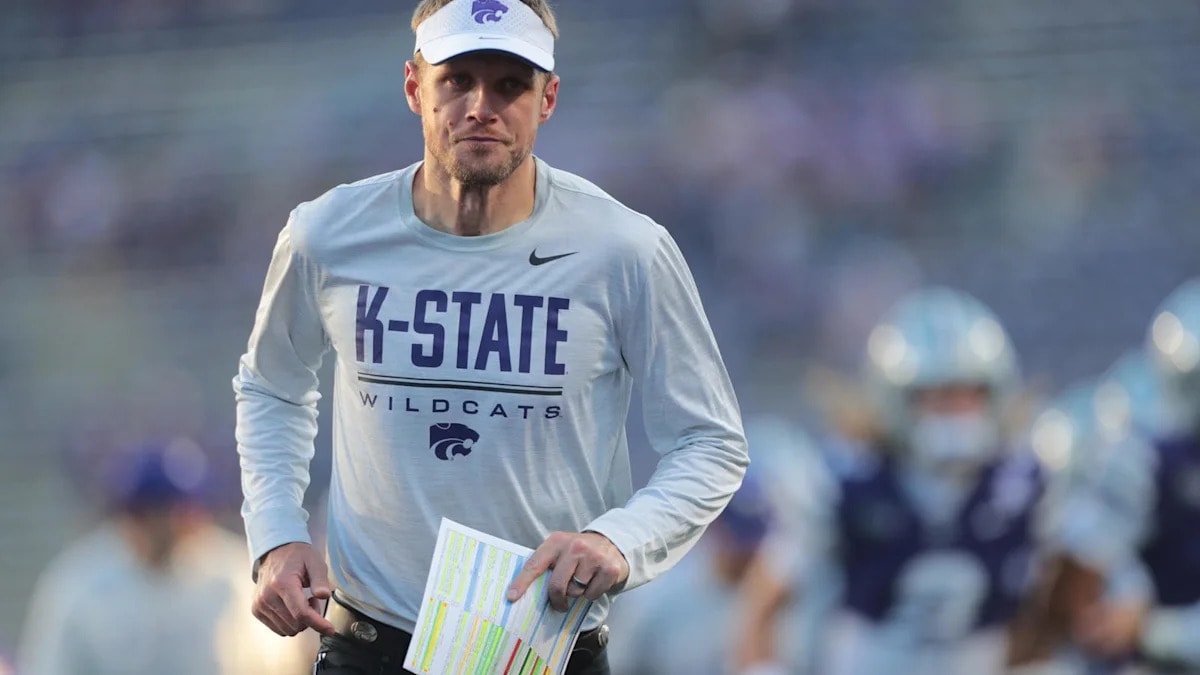
Kansas State coach Collin Klein is entering another Sunflower Showdown with a reminder that stretches and momentum do not erase the sting of the most recent defeat. In coverage of the matchup, Klein was framed as having “bad memories” from the last time Kansas State lost to Kansas in the rivalry that has come to define both programs’ recent history.
One of the most important numbers in the background is simple: Kansas State has won 17 straight games against Kansas in the Sunflower Showdown. That kind of run changes how teams prepare. It can set expectations inside a program, affect how opponents evaluate risk, and become a shorthand for identity. Yet Klein’s comments, as characterized in the report, emphasize that the coaching staff still treats the most recent loss as relevant information, not a footnote.
The Sunflower Showdown matters in multiple ways beyond a single win. For Kansas State, it is a recurring test of how quickly the program can reestablish order after setbacks, and how it manages the emotional temperature that rivalry games bring. For Kansas, it is a chance to interrupt a dominant trend and reset the direction of the series, especially when long streaks start to harden into narrative.
Klein’s focus on “bad memories” also highlights a broader coaching challenge in college basketball. Coaches often must balance recruiting-era realities and changing rosters with the need to keep the team’s mindset consistent across seasons. A long head-to-head advantage can create confidence, but it can also tempt a staff to assume the outcome. Klein, according to the way the report portrays him, is indicating that the staff will not take comfort from the streak itself.
Kansas State’s rivalry advantage has been measurable on the floor, but the more subtle question heading into this game is whether Kansas State can convert its preparation into the kind of disciplined performance that rivalry opponents try to disrupt. Kansas and Kansas State play under different styles and recruiting priorities, but the rivalry’s recurring themes often come down to execution in half-court situations, possessions managed under pressure, and composure when the game turns physical or chaotic.
There is also a psychological layer for both sides. For Kansas State, the streak can be used as motivation, but it cannot function as a substitute for a game plan. For Kansas, the longer Kansas has gone without success, the more the pressure tends to shift onto the visiting or underdog narrative, even if the opponent is the one with the longer win history. In rivalry settings, that pressure can shape shot selection, tempo control, and the willingness to play through adversity.
What to watch next is whether Kansas State can keep its approach tightly aligned with the fundamentals rather than relying on past results. Klein’s framing suggests a preference for learning from the most recent loss while still acknowledging what Kansas State has built in the matchup. If the Wildcats can treat the rivalry as a fresh contest instead of a continuation of a trend, the history behind the scoreboard becomes less important, and the coaching staff’s preparation becomes the story.
For Kansas, the key is whether it can impose enough structure early to prevent Kansas State from settling into its preferred rhythms. Rivalry games often reward teams that make their opponent uncomfortable without forcing their own mistakes. If Kansas can narrow the execution gap and reduce Kansas State’s comfort, it gives the Jayhawks a path to turning the series narrative.
As the game approaches, the broader picture remains the same: Kansas State’s 17-game edge is a fact, but Klein’s emphasis on last loss memory underscores that the staff’s attention is on the present moment. The next Sunflower Showdown will determine whether Kansas State’s recent dominance stays firmly intact or whether Kansas finally finds a way to change the direction of the series again.
Why It Matters
- A 17-game rivalry win streak is a program identity marker, but it also raises the challenge of staying focused on the current contest.
- Rivalry psychology is often decisive, and Klein’s emphasis on learning from a past loss suggests Kansas State will approach the game with caution rather than complacency.
- For Kansas, breaking a long run affects more than one game, it can shift how the teams recruit, develop, and build confidence across seasons.
Sources
Key Facts
- Kansas State and Kansas meet in the Sunflower Showdown rivalry.
- A report characterizes Kansas State coach Collin Klein as having “bad memories” of the last Kansas State loss to Kansas.
- The series history referenced in the report states Kansas State has won 17 straight against Kansas in the rivalry.
- The report frames the matchup as one where past results matter, but the most recent defeat still influences how the program thinks about the game.