
THE APEX TIMES
Entering his seventh season with San Francisco, the veteran right tackle said his focus is earning a permanent place in the organization’s “10-year wall,” a marker of sustained trust and commitment.
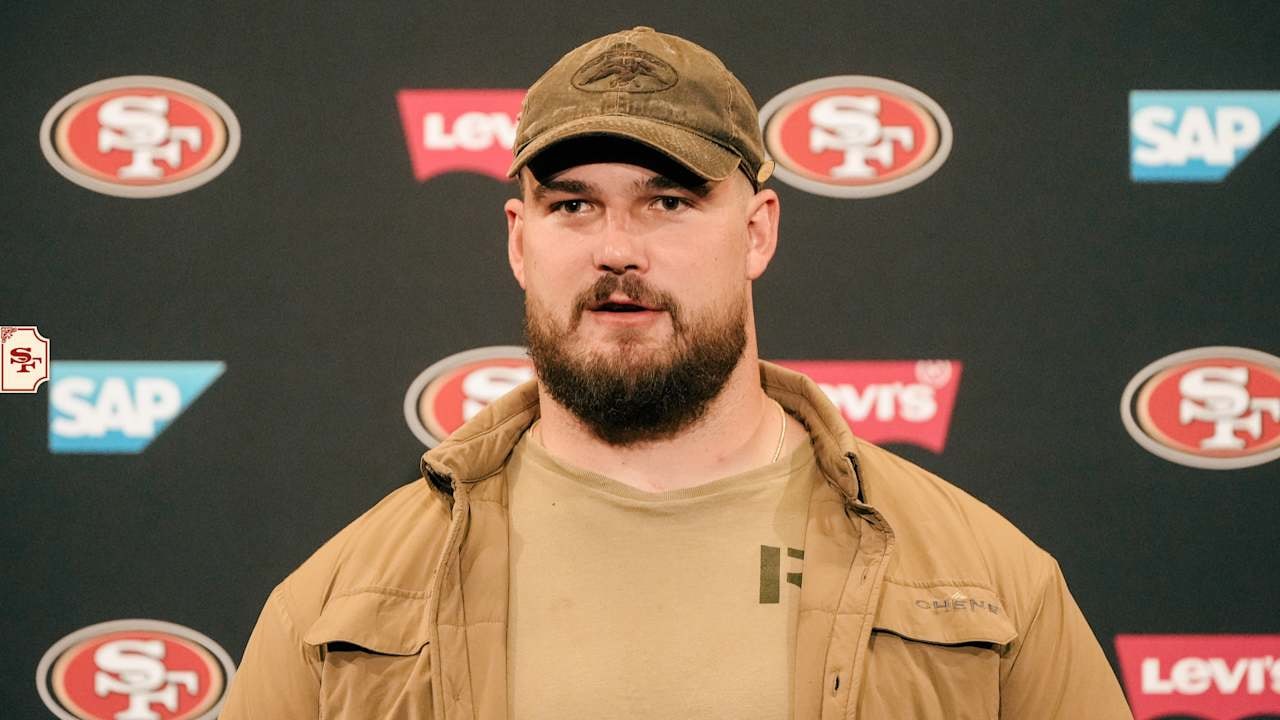
Colton McKivitz is going into his seventh season with the San Francisco 49ers with a message that sounds simple but lands as a statement of intent. In an offseason interview released by the team, the veteran right tackle tied his near-term work to a long-term milestone, saying he wants to be on the 49ers’ “10-year wall.”
For the 49ers, the 10-year wall is less about headlines and more about continuity. It is a public representation of players who stay in the building long enough to become part of the franchise’s identity, not just its yearly roster. McKivitz’s framing is that of a player who is thinking past the current calendar year, and who views durability, reliability, and buy-in as the route to earning that distinction.
McKivitz’s comments also reflect the kind of role veteran offensive linemen are asked to play inside an NFL organization. Even when the spotlight falls on skill position players, the right tackle position is still a daily test of communication, technique, and problem-solving against different fronts and pass-rush angles. The 49ers, in their public notes, present McKivitz as a steady presence whose mindset is built on preparation and continued acceptance of responsibility.
When McKivitz looks at his current chapter, he is not discussing the goal as a legacy-for-legacy’s-sake. Instead, he describes it as something that grows out of being trusted by the team over time. The “10-year wall” becomes a symbol for the relationship between a player and the organization, a way of saying: if you do what is asked, consistently enough, you earn a place in the team’s story.
That approach matters in a league where roster turnover is constant. Teams reshape their offensive lines through injuries, performance swings, cap realities, and the annual churn of personnel decisions. For a franchise, having an experienced player who is focused on extending his time with the team can help stabilize the culture and the on-field habits that younger teammates try to absorb.
McKivitz’s goal also provides a useful lens for what to watch from this point forward. In the short term, offseason training is where line communication, footwork timing, and pre-snap adjustments are refined. In the longer term, earning a spot on the 10-year wall requires more than a single season of solid play, it requires a multi-year ability to remain dependable as roles evolve.
If McKivitz gets what he says he wants, his milestone will not be a one-time accomplishment. It will be the byproduct of repeated seasons that keep him in the team’s plans. For San Francisco, the payoff would be continuity on the right side of the offensive line, and for McKivitz, the satisfaction of aligning his work with the kind of franchise commitment the 10-year wall represents.
At the same time, it is worth keeping the practical caveat of any NFL career. A player’s path can change due to scheme fit, health, or other personnel decisions. Still, McKivitz’s stance gives the clearest indicator yet of how he wants to define his remaining time in a 49ers uniform: as a deliberate pursuit of trust that lasts long enough to become permanent in the building.