
THE APEX TIMES
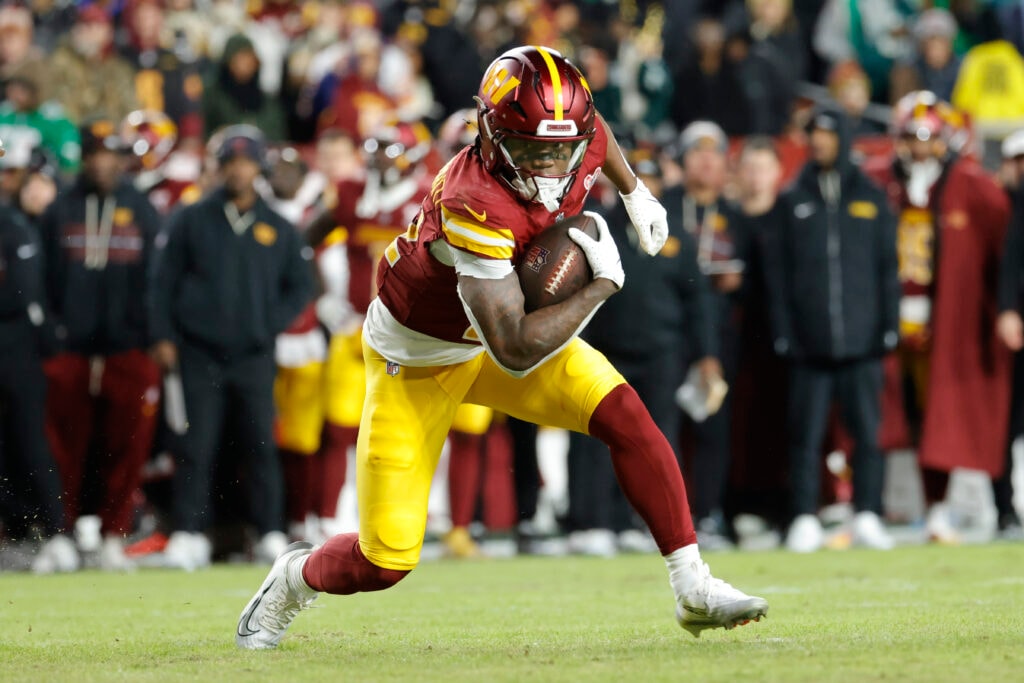
Commanders appear headed for a running back committee in 2026
Washington’s front office has been active in reshaping its backfield, but the clearest read heading into the 2026 season is that the Commanders may not settle on a single, unquestioned No. 1 rushing option.
The Washington Commanders are likely to enter the 2026 NFL season operating with a running back-by-committee approach rather than a clear-cut, every-week featured RB1, according to reporting highlighted by Pro Football Rumors. The storyline matters because the league’s most efficient rushing attacks often come from stable usage patterns, consistent pass protections, and a defined role for the lead back, even if other backs are involved. For Washington, the expectation is that multiple backs will share meaningful snaps, carries, and situational work.
Pro Football Rumors points to ESPN’s John Keim in describing the team’s direction at the position. The key premise is that the Commanders have done enough work to revamp their running backs room this offseason, yet not enough to strongly report the presence of one dominant, definitive feature back. Instead, the plan appears to be distributing production across the depth chart, which can help limit the wear and tear on any single player and keep game plans flexible.
In practical terms, a committee approach usually means the coaching staff is prioritizing package-level decisions: one back for early-down power and short-yardage, another for swing routes and pass protection needs, and a third for specific personnel groupings. Teams that avoid an RB1 often do so because they believe their overall production is best when the offense can match the defense on a down-by-down basis, or because the roster composition includes backs with complementary skills rather than a single profile that dominates every scenario.
The Commanders’ offseason work, as characterized in the report, suggests an attempt to improve depth and overall efficiency at running back. Even without naming specific players or detailing exact roster moves in the available material, the broader takeaway is that Washington’s front office is still building toward certainty at the position. If the Commanders cannot identify a single back who consistently earns the early-down load, the offense will likely be structured around multiple contributors, with workload potentially shifting week to week based on matchups and practice evaluations.
That has ripple effects beyond pure rushing attempts. A running back room that functions as a committee can change third-down identity, because pass-protection reliability and receiving comfort often determine how confidently an offense stays on schedule. It can also affect play design, since coaches may call more diverse running concepts if they expect different backs to see different looks. Over time, the success of the committee approach tends to hinge on whether one back eventually separates in role clarity, or whether the staff genuinely sustains multiple high-leverage contributors.
The Commanders’ 2026 approach will be tested early, because the first month often reveals who handles the operational burdens of the position. In training camp and the preseason, the lead-back question typically becomes less theoretical, showing up in which back gets the first reps with the first-unit offense, who is trusted in pass-protection assignments, and who earns the red-zone touches that tend to define a starter’s value.
For fans and evaluators, the most important thing to watch is whether Washington’s committee remains stable or evolves into a more traditional hierarchy. If the offense shows consistent efficiency and the backfield usage tightens around one or two players, that can quickly create an effective “de facto” RB1 even if the team never publicly announces one. If usage stays spread out and production is distributed widely, it will reinforce the idea that Washington is prioritizing flexibility over feature-back certainty heading into the postseason push.
sourceTrail must include the original source URL and every materially used research URL. Since additional research did not produce new corroborating primary materials, this story relies on the Pro Football Rumors write-up that referenced ESPN’s John Keim and does not attempt to confirm specific personnel details beyond that general framing.
Why It Matters
- A committee structure can change how Washington builds its run game identity, including third-down planning and red-zone utilization.
- If the Commanders do not establish a clear hierarchy, the offense may rely more on matchup-based play-calling than on a single weekly workload.
- The running back room’s pass-protection and receiving roles become more important when multiple players share high-leverage touches.
- The 2026 lead-back question will likely become clearer as camp reps and early-season usage settle into a more repeatable pattern.
Sources
Key Facts
- Pro Football Rumors reported that the Washington Commanders are likely to use a running back committee in the 2026 season.
- The report frames Washington as having revamped its running backs room this offseason but still lacking a definitive RB1 heading into 2026.
- Pro Football Rumors attributes the committee expectation to ESPN writer John Keim.
- The broader expectation is a distribution of meaningful roles across multiple backs rather than a single primary feature back.