
THE APEX TIMES
Commanders fan vote spotlights a running back roster crunch, with Robert Henry Jr. vs. Kaytron Allen as the debate
With the NFL’s 53-man cutdown approaching, a Commanders fan community turned the final running back decision into a two-man referendum, weighing different styles as the team builds depth for the rebuild grind.
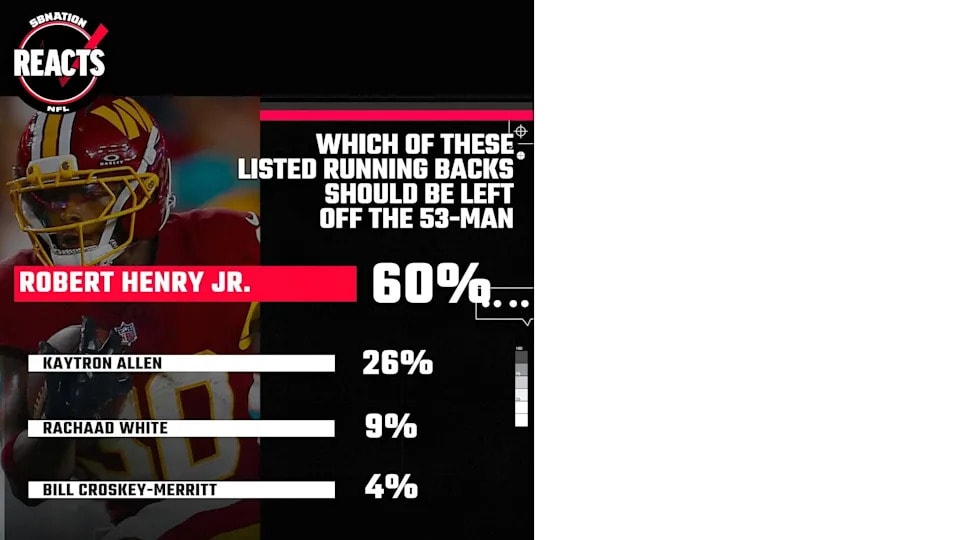
A Commanders fan poll is turning one of the least glamorous parts of the NFL calendar into a full conversation: which running back should make the final 53-man roster? In a matchup framed as a choice between “electric” Robert Henry Jr. and “physical” Kaytron Allen, Hogs Haven readers voted on a dilemma that shows up in some form on nearly every NFL rebuild roster. The premise is simple, the math is not. Once teams feel more confident that they have a capable base of talent, every extra body becomes a difficult decision because roster spots do not expand for depth.
In the early stages of a franchise rebuild, roster cuts can sometimes look routine, because the gap between the top group and the rest is more obvious. This poll, however, leans into the opposite problem: when depth rises across multiple groups, front offices are no longer only deciding between “good” and “bad.” They are deciding between players who bring something real to the table, even if they do not fit the same role every week. That is the context for why Henry and Allen became the center of attention, with voters using a style lens rather than a single stat-driven argument.
Robert Henry Jr. is presented in the poll discussion as the more “electric” option, the kind of back who can change a drive with burst and space touches. Kaytron Allen is presented as the more “physical” option, the kind of back who can earn tough yards in tight spots and provide the more physical presence teams often want when the game slows down and defenses settle in. The broader point for Commanders fans is not just which player is better in the abstract, but which skill set the roster needs most in the specific mix of personnel the team will carry into the regular season.
The debate matters because the final cutdown is rarely about a single roster spot. It usually reflects a team’s plan for how the running game will be deployed, how often the offense will lean on certain run concepts, and how much special-teams value the coaching staff expects from the backfield. A running back who profiles as a change-of-pace or big-play threat can justify a spot even when the weekly workload is limited, while a more physical back can be valued for role consistency in short-yardage and late-game situations.
There is also a roster-versus-replacement angle that the poll captures indirectly. When teams expose a player to waivers, it is not only a football decision. It becomes a business decision about whether other teams will see enough value to claim him. The poll’s framing suggests voters understand how a deeper roster can increase the odds that two comparable players will compete for one spot, and that the “wrong” cut would not necessarily stay gone. That is why fan discussions like this often treat the final cutdown as a franchise-level consequence, even if it is, in practice, a team-by-team calculus.
For Commanders supporters, the bigger takeaway is how the organization’s roster identity could be shaped by the kind of running back the final group includes. If the team leans more toward Henry’s burst, the offense might emphasize spacing runs and quick opportunities. If the team keeps Allen for physicality, the weekly game plan could better support a grind-it-out approach and inside run efficiency. Either way, the election-style nature of the poll reflects a real NFL truth: the running back room often becomes the clearest mirror of what a team believes it needs most.
What to watch next is not just which back makes it, but how the coaching staff uses the remaining backs on game day roles. The first glimpse usually comes from how frequently the player is asked to handle early-down duties, whether one back is prioritized as a between-the-tackles option, and how often special teams reps factor into the decision. Until the team confirms its own roster decisions, the fan vote remains a window into priorities rather than a verdict on the final roster.
Why It Matters
- The final running back group can report how the Commanders want to attack defenses, whether through burst and space or physical, inside productivity.
- A roster decision at running back affects more than carries, it influences special-teams deployment and weekly role planning.
- When depth is stronger across the roster, teams can face multiple similar-quality options for limited spots, making one cut potentially consequential.
- How the organization balances different back styles can also shape the offense’s identity early in the season.
Sources
Key Facts
- A Commanders fan poll from Hogs Haven framed the 53-man cutdown as a running back decision.
- The poll matchup specifically compared Robert Henry Jr. described as “electric” versus Kaytron Allen described as “physical.”
- The story’s framing emphasized how roster cutdown decisions become harder when depth across the roster is deeper.
- The poll treats the running back spot as a role-fit question, not only a single-player performance question.
- The debate is presented as an early look at the kind of tradeoffs teams face during the final roster reduction.