
THE APEX TIMES
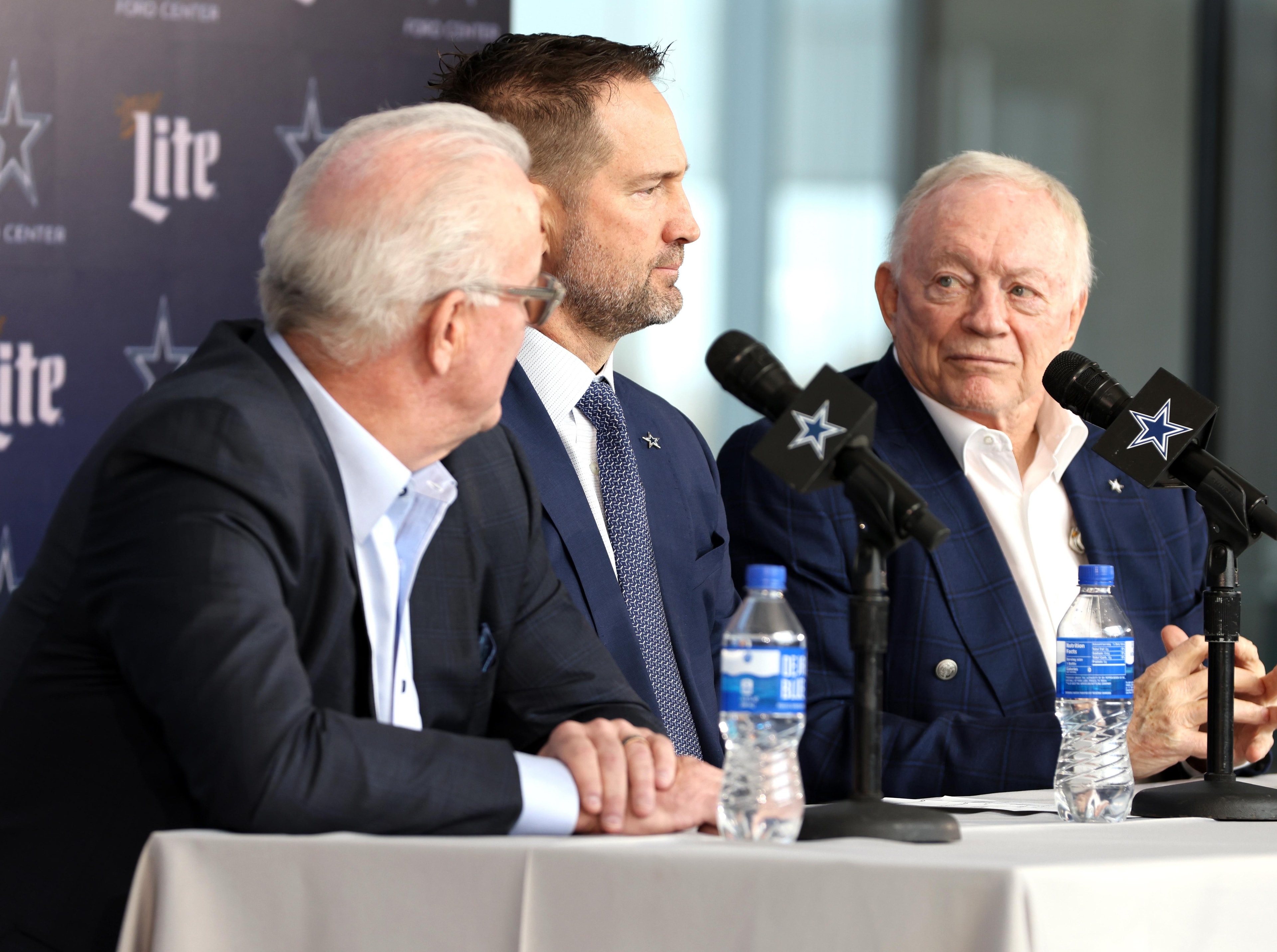
Cowboys coach Brian Schottenheimer faces a familiar NFL question: what does “enough” look like?
With expectations fixed by Dallas’ reputation and fan base, the measure for Brian Schottenheimer this season will likely be less about process and more about whether the team can quickly reverse momentum.
What fans often call a “hot seat” is usually a product of timing and constraints. In the NFL, a head coach can adjust the scheme, manage the week-to-week details, and set the tone in the building, but the broader levers available to turn around a struggling roster are limited. Brian Schottenheimer, now the Cowboys’ head coach, will be evaluated in that context, where an early stumble can compress the patience of everyone around the program.
An NFL front office facing performance pressure does not have the luxury of starting over on short notice. When the problem is personnel, teams can draft and develop, but the impact usually arrives later. They can make targeted free-agent moves, trade selectively, or adjust coaching responsibilities, yet wholesale roster resets are difficult and expensive. That reality shapes how quickly a coaching staff is judged, because the head coach becomes the most visible part of the system, even when deeper issues may require more time to solve.
Schottenheimer’s challenge, then, is partly about message control and partly about results. The first-order goal for most contenders is consistency, because inconsistency creates a chain reaction: it alters play-calling, it strains third-down conversion plans, it forces more conservative decision-making, and it changes how players practice. In a market like Dallas, where the expectation level is persistently high, “working through it” can be interpreted as “not improving,” even if the underlying effort is real.
There is also the matter of organizational structure. The Cowboys’ leadership group has a range of internal options, but the ability to make sudden, sweeping personnel or executive changes is not automatic. The point is not that accountability cannot happen, but that the timeline is often dictated by contracts, ownership involvement, and the cost of replacement. In that environment, the head coach can be treated as the immediate answer to a broader question, which is why the phrase “hot seat” tends to attach quickly when wins are not coming.
For Schottenheimer, the most practical way to blunt scrutiny is to narrow the gaps that show up in games: execution on offense, discipline and coverage on defense, and the ability to protect leads or answer when opponents score. Even without turning the season into a crisis narrative, the NFL’s evaluation cycle is unforgiving. A team that starts poorly often has to compress its growth curve, and compressing that curve typically increases the visibility of the head coach’s decisions, from game management to in-game adjustments.
What to watch next is not just whether the Cowboys win, but how the team responds to early tests. Sustained performance in close games, steadier offensive rhythm, and fewer major second-half collapses are the types of indicates that can suggest coaching is translating into stability. Conversely, if the team repeatedly looks unprepared in the same areas, the “process” defense becomes harder to sustain. In short, Schottenheimer’s season will likely be assessed on acceleration: whether Dallas can move from frustration to reliability quickly enough to shift the conversation from expectations to identity.
Why It Matters
- Coaching pressure in the NFL often reflects not only tactics, but also how quickly a team can stabilize execution.
- Early-season results can compress decision-making timelines for organizations, increasing the coach’s visibility.
- For a franchise like Dallas, expectation levels create less tolerance for slow starts even when roster or scheme changes take time.
- If improvement is not evident early, it can complicate how the staff manages weekly adjustments and player roles.
Key Facts
- Brian Schottenheimer is the head coach of the Dallas Cowboys.
- A central theme of the discussion is how NFL teams have limited immediate options when trying to reverse fortunes.
- The evaluation of a head coach is framed as highly time-sensitive, especially during an early-season stretch.
- The piece focuses on what constitutes fair expectations for Schottenheimer in Dallas’ environment.