
THE APEX TIMES
Cubs edge White Sox in extras as Nico Hoerner’s night cuts through the chaos
A 7-5 game that turned into an always-on, playoff-style grind ended with the Cubs taking the extra-inning win over the White Sox, after swings of lead and scoring that never quite settled into a steady rhythm.
The Cubs found a way through another tense night against the White Sox, winning 7-5 in extras in a game described as playoff-caliber baseball, even as it played out like a physical, competitive scrap. The headline for Chicago was the late, winning push, but the throughline was a premium performance from Nico Hoerner, whose night stood out even as the contest’s temperature stayed high from early scoring to late sequence momentum.
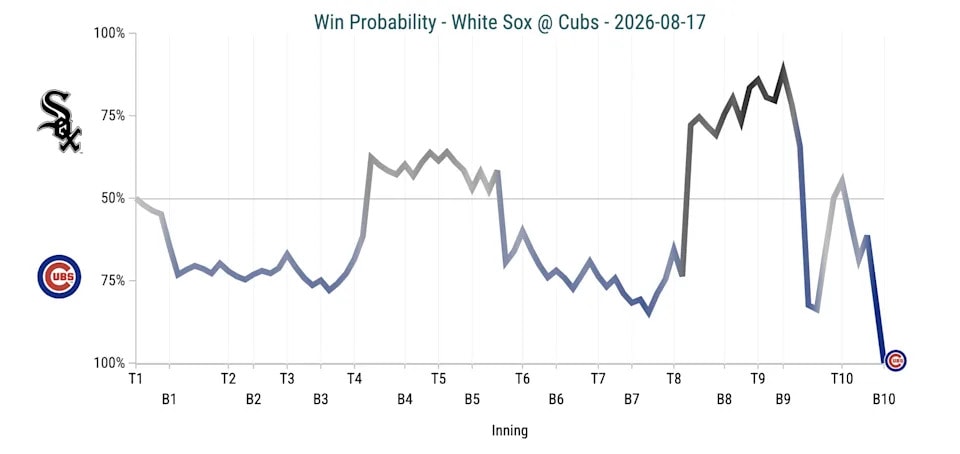
From the start, the Cubs set an early tone. The game preview notes that for the first three innings it appeared to be “a lovely night at the park,” suggesting Chicago jumped out early and built enough of a platform to look comfortable for stretches. That comfort did not last, however, and the White Sox responded quickly enough to keep the outcome in question rather than allowing the Cubs to separate.
Chicago’s lead did not hold. The White Sox added three runs in the fourth inning to take control, a swing that changed the game’s pacing and forced the Cubs back into catch-up mode. In a contest where both teams threatened repeatedly, that fourth-inning response was the kind of momentum shift that alters late-game decision-making, especially when there is still room for multiple tie paths as the innings progress.
The Cubs answered with two runs in the fifth to retake the lead, keeping the game tethered to the same back-and-forth pattern. The preview highlights that scoring occurred in six of the 10 innings, and just as importantly, it specifies that there was never an inning in which both teams scored. That detail captures how each run burst came with a pause, giving the opposing side a clean, immediate chance to respond.
After the Cubs’ fifth-inning surge, the White Sox regained traction again in the late innings. The preview indicates that the White Sox scored two runs in the eighth to take the lead for the decisive stretch, setting the table for extras. With both clubs trading momentum multiple times, the final margin in extra innings felt less like a single turning point and more like the inevitable result of a game that kept refusing to become routine.
What makes this matchup especially notable is not just the final result, but the feel of the four-game series picture as described in the preview. The Cubs and White Sox have, in the author’s framing, pushed each other hard “through four games,” implying that Chicago has not been able to treat this as a contained, low-drama series. Instead, these contests have taken on the intensity and volatility typically associated with postseason baseball, only now wearing the regular-season schedule label.
For the Cubs, the key takeaway is that they can absorb a lead shift, respond with their own late run creation, and still finish the job when the game extends beyond regulation. For the White Sox, the takeaway is more uncomfortable: they can produce multi-run swings, but the Cubs have been able to counter them quickly enough to keep matches alive, then carry the momentum into the extra-inning ending.
Why It Matters
- An extra-inning win in a series that is already described as difficult reinforces the Cubs’ ability to win tight games against a specific opponent.
- The repeated lead changes and late-inning scoring patterns point to a matchup that will likely demand bullpen management and disciplined late-game execution.
- Hoerner’s standout night, emphasized in the preview, adds another layer to Chicago’s identity in games where momentum swings are frequent.
- The description of “four games” worth of push-and-pull suggests the series dynamic is more intense than a one-off result.
Sources
Key Facts
- The Cubs defeated the White Sox 7-5 in extra innings.
- The preview describes Hoerner as a standout contributor on a night that still included significant drama.
- Chicago jumped out early and stayed in control through the first three innings.
- The White Sox scored three runs in the fourth inning to take the lead.
- The Cubs scored two runs in the fifth inning to retake the lead.
- The White Sox scored two runs in the eighth inning to take the lead again.
- Scoring occurred in six of the 10 innings, and there was no inning in which both teams scored.