
THE APEX TIMES
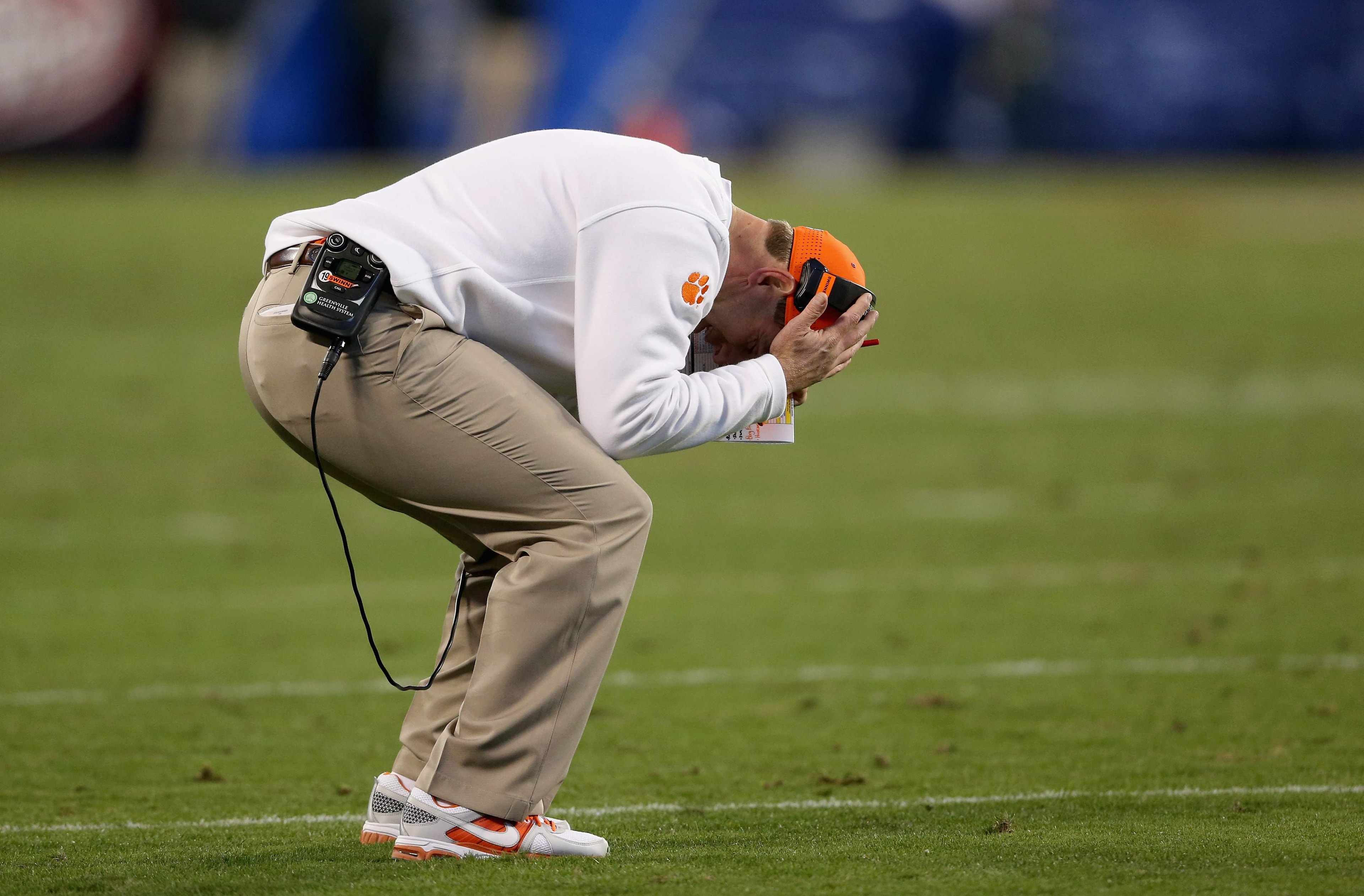
Dabo Swinney faces renewed scrutiny over Clemson quarterback decision-making
A national quarterback debate has resurfaced in Clemson’s 2026 season as critics question Dabo Swinney’s preference not to lean on an experienced transfer-portal option early, tying the move to the Tigers’ uneven start.
Clemson’s quarterback decision for the 2026 offseason has become a centerpiece of fresh criticism toward Dabo Swinney, with a national debate focusing on why the Tigers did not move more aggressively for an experienced transfer-portal quarterback. The renewed attention arrives as Clemson sits in a difficult stretch, described in national reporting as a 3-2 start, and as The Athletic’s analysis frames Swinney’s choice as a defining factor in what it characterizes as an offensive collapse.
The key point of contention is not merely who has taken snaps, but roster construction and developmental timing. According to the report, while several major programs pursued an aggressive approach under center through the transfer portal, Clemson’s offseason plan emphasized an internal answer. That contrast is central to the criticism, which casts the quarterback decision as a primary explanation for Clemson’s drop-off on offense.
The reporting also indicates that the scrutiny is being amplified by the way Clemson’s early-season results have played out. A 3-2 start is not a terminal mark in college football terms, but it often changes the tone of how each remaining game is evaluated, especially for a program that expects to contend in the ACC and cycle through high-level quarterback play. In that environment, quarterback stability tends to be judged not just by wins and losses, but by offensive consistency, third-down efficiency, and the ability to protect leads or sustain drives.
Clemson’s criticism is happening in the context of a broader trend across college football, where transfer-portal quarterbacks are increasingly treated as accelerants rather than long-term bets. The report highlights that other leading programs “reloaded” at the position while Clemson passed on that same path. For fans and analysts, that makes the decision easier to compare. For coaches, it raises the risk of being labeled as resistant to a market that can supply experienced arms quickly.
It is also worth noting that the debate, as presented in national coverage, is focused on the decision to pass on an experienced transfer-portal quarterback rather than on a single game or a single player. That matters because quarterback evaluation in college is rarely linear. Even when a team lacks the most proven option available, it can still succeed through system fit, decision-making, and execution. Conversely, teams can have talent and still underperform if the offense does not click.
For Clemson, the practical question now is how quickly the offense can demonstrate reliability despite the criticism. The narrative being formed nationally is that quarterback choice led to offensive collapse, which sets a high bar for the remainder of the season: improved play-calling clarity, steadier quarterback reads, and fewer possessions that end early. In a schedule with typical ACC pressure, those changes have to show up on the field soon to shift the conversation away from personnel and toward performance.
What to watch next is whether Clemson’s offensive identity changes in response to the scrutiny. That includes how the staff manages the quarterback situation week to week, whether the running and passing game become more synchronized, and whether the team can create sustained drives instead of brief bursts. If Clemson’s offensive struggles persist, the national critique will likely intensify. If the team shows clear progress, the debate may narrow to how long it took for the current plan to develop rather than whether it was the wrong choice at the start.
As of now, the story is less about confirmed behind-the-scenes details and more about how the offseason quarterback decision is being interpreted through early-season results. Until Clemson’s games provide a counterargument with sustained offensive production, Swinney’s choices at the position will remain a focal point of national discussion.
Why It Matters
- Quarterback decisions shape not only on-field performance but how programs recruit and build depth, especially in the transfer-portal era.
- A 3-2 start increases pressure on offensive execution because each remaining ACC game can quickly affect the path to postseason qualification.
- If national narratives harden around personnel choices, it can influence public expectations and internal evaluation benchmarks.
- How Clemson responds in the next stretch could determine whether the season becomes a recovery story or a cautionary tale about roster-building timing.
Key Facts
- National reporting describes renewed scrutiny on Clemson coach Dabo Swinney tied to his offseason quarterback decision.
- The report says the criticism centers on Clemson passing on an experienced quarterback from the transfer portal.
- National coverage links the quarterback choice to an offensive collapse in Clemson’s 2026 season.
- The article frames Clemson’s early-season performance as a 3-2 start.
- The story contrasts Clemson’s approach with other major programs that reportedly pursued transfer help at quarterback.