
THE APEX TIMES
Dallas Goedert talks adapting as the Eagles offense keeps changing
In an offseason marked by evolution across the NFL, the Philadelphia Eagles’ veteran tight end says staying productive means meeting new looks with confidence, not routine.
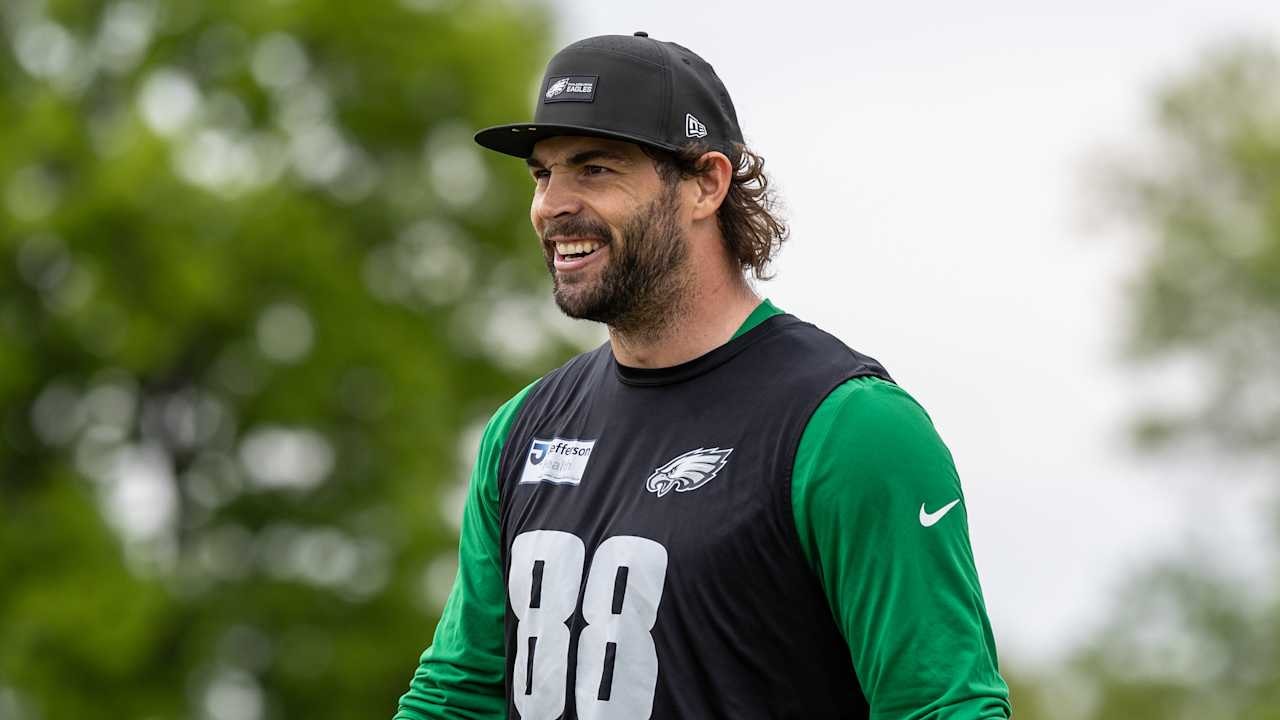
The Philadelphia Eagles’ offense is evolving in the way most NFL offenses do, by shifting personnel packages, tempo, and route design to attack what defenses show. Dallas Goedert, now firmly established as a veteran leader at tight end for the Eagles, addressed that reality directly: he expects change to come every year, and he views getting pushed out of a comfort zone as part of the job rather than a threat to his production.
Goedert’s comments center on the tight end position itself, which has expanded beyond traditional seam routes into a more versatile role in modern passing games. As offenses add more motion, use condensed formations, and create multiple leverage points across the formation, tight ends are asked to communicate, align correctly, and earn space in different ways. The Eagles, like the rest of the league, are trying to keep their concepts flexible enough that they do not become predictable.
In that context, Goedert described his own approach as one of adaptation. Rather than treating changes in scheme and coverage as something that derails timing, he frames them as a challenge that can produce improved results once players learn how defenses are responding. The underlying theme is that comfort is valuable, but it cannot be the goal. When defenses adjust, offensive players must adjust faster.
What stands out in the way Goedert talks about the position is that the tight end role is not just about catching passes. Tight ends are also key to how offenses set up run-game spacing, match protection assignments to front structures, and keep coverage honest by threatening different areas of the field. That “complete player” expectation is part of why NFL offenses increasingly demand tight ends who can function across a range of formations rather than in a single, repeatable script.
The broader NFL backdrop helps explain why the subject came up when it did. Even when teams keep their core identity, the league continues to reward offenses that can vary how they attack coverage pre-snap and how they stress defenders after the snap. For the Eagles, having a veteran tight end who can process change quickly matters, because tight end production often depends on a fine balance of timing, leverage, and recognition.
From here, the practical question for Philadelphia is how Goedert’s role continues to fit into the Eagles’ passing-game adjustments as training camp approaches. Fans will be watching whether the Eagles lean on him in the same ways they have in recent seasons, or whether his targets and alignment patterns shift as the offense tests new formations and route structures against different looks.
For Goedert, the personal throughline is straightforward. The NFL will keep demanding that he handle new answers from defenses, and the tight end position will keep asking for adaptability. His message suggests he is prepared for that cycle, treating change as an expected part of performance rather than a disruption to it.
Why It Matters
- For Philadelphia’s offense, a dependable veteran at tight end can help stabilize production as the team experiments with different packages.
- Tight ends increasingly need to contribute across passing and run concepts, so role clarity and adaptability directly influence game-plan flexibility.
- As NFL offenses evolve, how players handle new coverage and timing demands can determine which concepts become repeatable.
- Goedert’s emphasis on embracing change points to how the Eagles may evaluate readiness and chemistry ahead of the next season.
Key Facts
- Dallas Goedert discussed the evolution of the NFL offense and how that affects the tight end position.
- The Eagles’ tight end framed adaptation as a necessary part of staying productive when scheme and coverage change.
- Goedert described being taken out of a comfort zone as a challenge that can lead to successful outcomes.
- The remarks were shared through the Philadelphia Eagles’ official team publication on June 23, 2026.