
THE APEX TIMES
Dan Lanning keeps open the possibility of an offensive play-caller change after Oregon’s struggles vs. UCLA
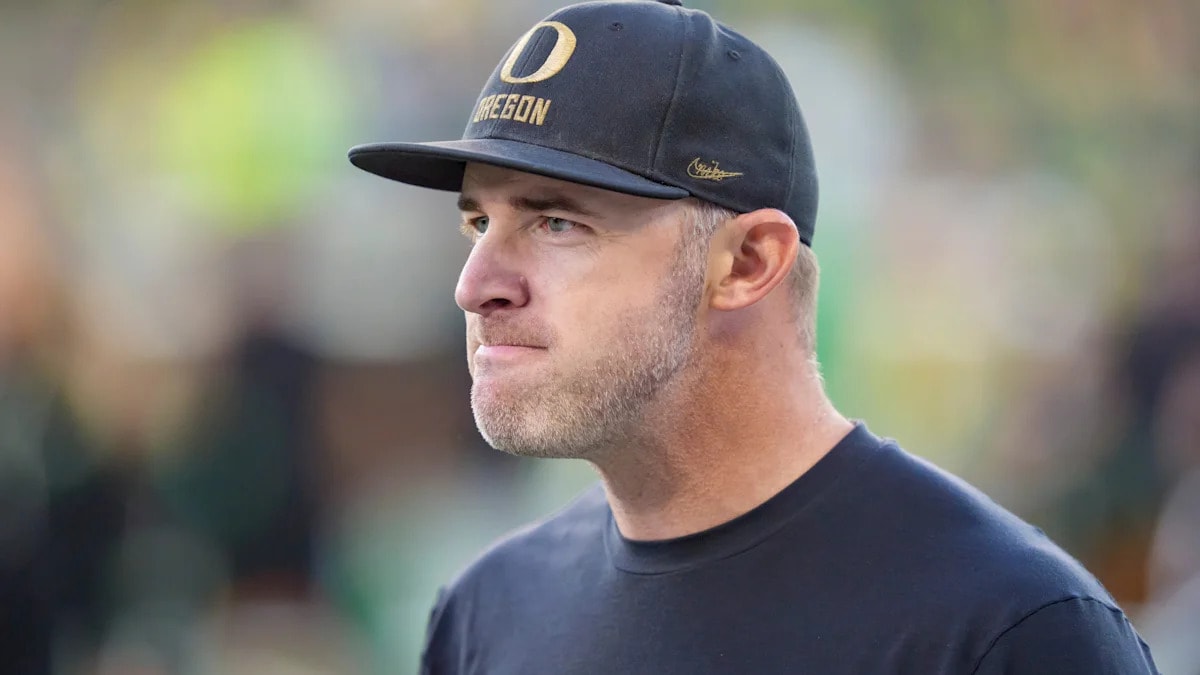
The Ducks’ offense sputtered in Saturday’s matchup with the Bruins, prompting questions about coordinator Drew Mehringer and whether head coach Dan Lanning will adjust the play-calling. Lanning indicated the door is not fully closed.
Oregon’s offensive performance against UCLA on Saturday fueled fresh questions about the Ducks’ play-calling, and head coach Dan Lanning’s response suggested changes are possible even if he is not committing to a timeline. Midway through the third quarter, Oregon faced a 10-6 deficit and the Ducks had been unable to establish any sustained rhythm on offense.
According to the account, Oregon had managed less than 100 total yards at that point while also committing four turnovers. Those two problems, combined, quickly narrowed the margin for error and limited Oregon’s ability to respond, especially after the Ducks fell into a scoring deficit.
The struggles also put Oregon’s quarterback situation back in the spotlight, particularly the performance of backup Dylan Raiola. The report noted that two weeks earlier Raiola had a strong showing against USC, but against UCLA he had thrown for just 36 yards by that point in the game.
The immediate coaching question centered on whether offensive coordinator Drew Mehringer’s approach would be re-evaluated. The Ducks have long operated with a clear identity on offense, and a night like this raises the issue of whether the scheme is being executed, the play designs are producing, or the communication and decision-making are falling short.
Lanning, however, did not present the discussion as closed. As framed in the report, he left room for the possibility of an offensive play-caller change, even while acknowledging the broader reality that fixing an offense often requires more than swapping one role. If Oregon’s early-season issues persist, the prospect of a staffing adjustment could move from contingency to necessity.
For Oregon, the next question is not only what the coaching staff does, but how quickly it can produce offensive continuity. Turnovers and low yardage are rarely a one-factor problem, and the Ducks’ ability to limit mistakes will likely be evaluated as closely as whatever play-calling responsibility is in question.
What to watch next is whether Oregon’s offense shows a measurable improvement in both ball security and efficiency in the coming weeks. If the Ducks continue to struggle in ways similar to Saturday’s early game flow, Lanning’s comments could report a deeper pivot in how Oregon attacks defenses, beyond minor in-game tweaks.
Why It Matters
- A potential play-calling shift would represent one of the most direct ways Oregon can try to stabilize offense when games are tightening late in the first half.
- Ball security and sustained drives often determine whether a quarterback rotation or offensive rhythm can take hold, so the turnaround plan will matter regardless of who calls plays.
- If Oregon’s offensive problems linger, the staffing conversation could become a weekly storyline and add pressure to the Ducks’ remaining schedule.
- The matchup also increases scrutiny on how Oregon adapts in real time when drives stall, especially against disciplined defenses.
Key Facts
- Oregon’s offense struggled against UCLA, with the Ducks down 10-6 midway through the third quarter.
- The Ducks had recorded less than 100 total yards by that point and committed four turnovers.
- The report highlighted backup quarterback Dylan Raiola’s production, noting he had thrown for 36 yards by that stage.
- Questions focused on offensive coordinator Drew Mehringer and whether Oregon could change its offensive play-calling.
- Head coach Dan Lanning indicated the door is not fully closed on an offensive play-caller change.