
THE APEX TIMES
Davis Webb seeks steadier Broncos run game as Denver closes preseason with Vikings
The first-year Broncos play caller is emphasizing execution from the line and consistency in the rushing attack, with the preseason finale serving as a final proving ground for players chasing the 53-man roster.
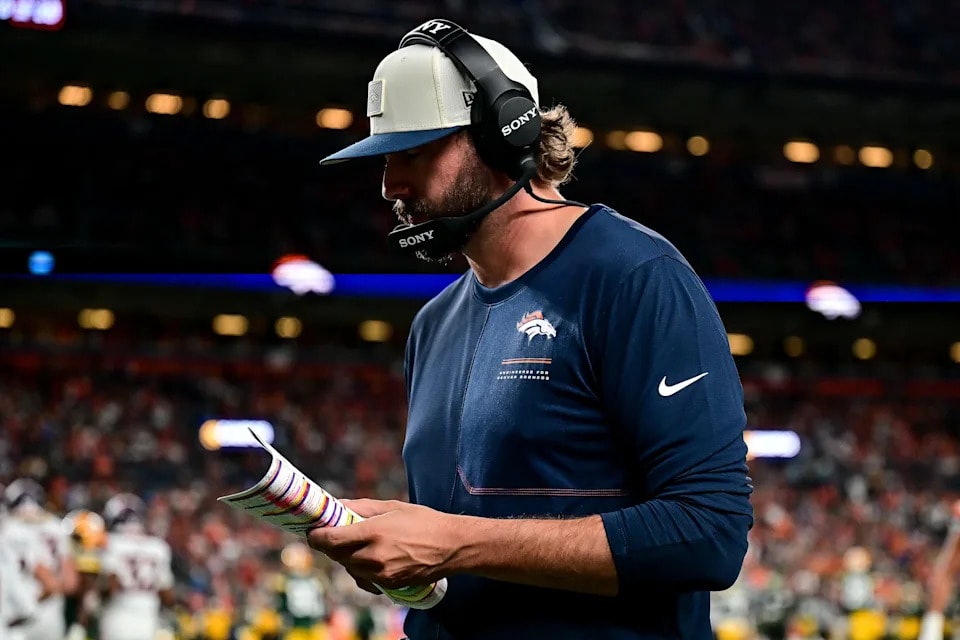
The Denver Broncos’ push toward roster decisions is reaching its last checkpoint, and offensive coordinator Davis Webb is making one theme clear as the team closes its preseason stretch: the running game has to look more coherent. Ahead of the preseason finale against the Minnesota Vikings on Friday, Webb is framed in reports as a play caller focused on how the offensive line’s blocking translates into reliable run production, and on reducing the kind of miscues that can disrupt rhythm.
Webb’s emphasis matters in Denver because the run game is not just a production goal, it is a structure goal. In the Broncos’ offseason and training-camp process, a consistent rushing attack typically affects everything that follows, including third-down efficiency, play-action timing, and the way defenses have to defend the middle of the field. The report’s focus on “coalescing” suggests the staff wants a sharper, repeatable pattern rather than flashes that disappear the moment game flow changes.
According to the team coverage, this is also a message born from what has been visible across training camp and the first two preseason games. Webb is hoping the Broncos can correct mistakes and miscues before the roster cuts, not simply by changing schemes, but by tightening execution. In preseason, those corrections tend to show up in the details: how quickly the offensive line identifies stunts and twists, whether the run reads stay consistent, and whether the offense can carry its run-game identity from drive to drive.
For players, Friday’s game functions as a final audition. The report describes it as the last opportunity for many roster hopefuls to make the case that they deserve a spot on the final 53-man roster. That context gives the run-game focus added urgency, because players on the line and those running the ball can benefit directly from visible, repeatable outcomes. When the offense is moving on the ground, it can also create clearer evaluation windows for pass protection, play selection, and situational discipline.
Webb is in his first year as a play caller, and the transition from calling conceptually to calling consistently is often the crux of the early-season learning curve. The Broncos’ staff is essentially trying to compress that learning curve into the preseason timeline. A focus on running-game steadiness, in this framing, is an effort to build trust in what the offense can do under pressure, and to keep the play-calling process from being overly reactive when the first plan fails.
There is also a practical angle to this week’s urgency. Preseason finales often become the most efficient time for staffs to separate performance from opportunity, because the margin for experimentation shrinks once cut day approaches. Even when starters are limited or rotations are fluid, the staff still wants a clear answer to a basic question: can the unit execute enough to be trusted in regular-season game management situations? The report’s emphasis on blocking and run game suggests Denver believes those are the areas where execution can be most measurable.
The broader NFL lesson is that consistency is frequently built through repetition and clarity, not through a single adjustment. If Webb’s plan works, it should show up in how defenders are held off the line of scrimmage, how quickly blocks develop into lanes, and how the Broncos avoid the false starts that come from miscommunication. If it does not, the offense may still be effective at times, but the staff will likely have less certainty about what to trust once the regular-season demands tighten.
As the Broncos and Vikings prepare for Friday, the storyline to watch is whether Denver’s rushing attack looks more organized and repeatable, particularly at the point where the offensive line’s blocking should create the run game. For Webb, the goal is not just to run more, it is to run with a level of consistency that allows play calling to settle in, and gives the team a cleaner basis for its final roster decisions.
Why It Matters
- A steadier run game can influence the entire offensive balance, from play-action timing to third-down efficiency.
- Preseason finales carry outsized roster-evaluation weight, making execution themes especially visible for fringe players.
- As a first-year play caller, Webb’s ability to foster consistency can shape how confident the staff feels about regular-season structure.
- If Denver’s offensive line can consistently win early, it changes how the team can defend against its own miscues and self-inflicted setbacks.
Key Facts
- Denver’s preseason finale against the Minnesota Vikings is set for Friday.
- Offensive coordinator Davis Webb is entering his first year as the Broncos’ play caller.
- Webb is hoping for more consistency in the Broncos’ running game, tied to offensive line blocking.
- The report frames Friday as the last chance for many players to make a case for a spot on the final 53-man roster.
- Coaches have seen mistakes and miscues across training camp and the first two preseason games, and the staff is looking to correct them before the cutoff.