
THE APEX TIMES
Deion Sanders’ Colorado moment shifts from spotlight to scrutiny, and the doubts in Boulder are widening (Part 2)
A new installment of a two-part analysis argues that Coach Prime’s public-facing brand momentum is no longer translating into stable program lift, leaving Colorado to navigate a harsher post-superstar reality.
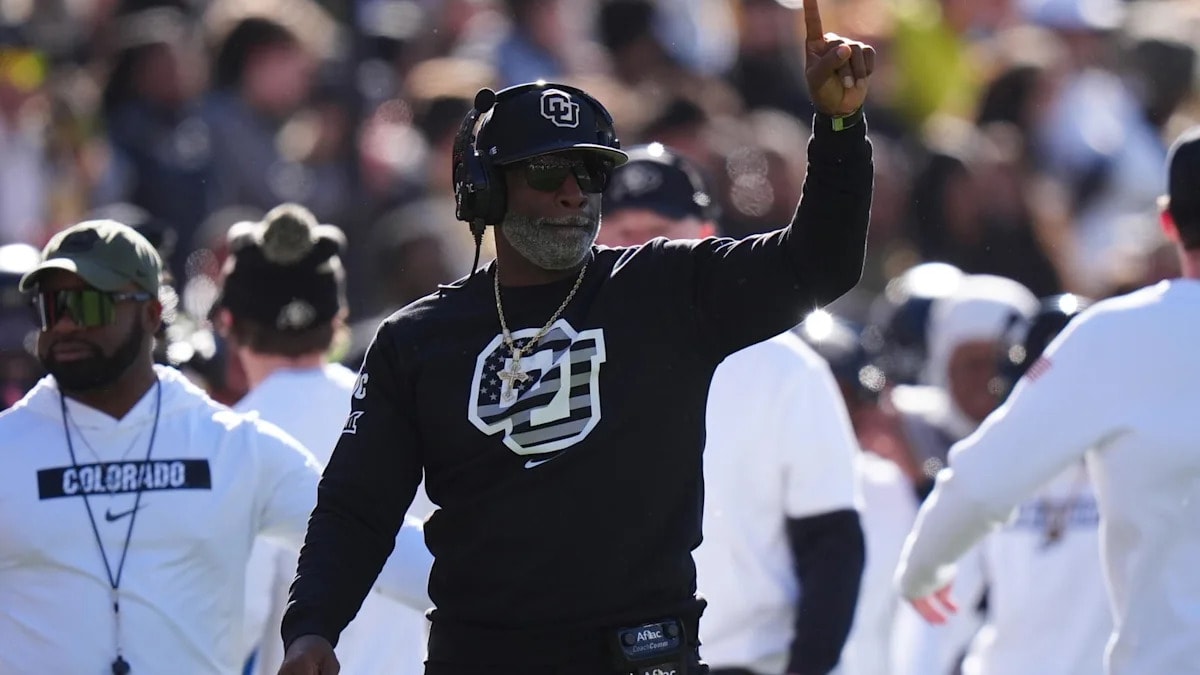
What happens after the hype is no longer enough is the central question behind a new Yahoo Sports analysis of Deion Sanders’ tenure at the University of Colorado Boulder. In Part 2 of a two-part series, the argument is not simply that results have cooled, but that the mechanism behind the initial surge, Sanders’ star power and surrounding attention, is harder to convert into long-term momentum as the program moves deeper into a post-superstar era.
The series frames Colorado’s current challenge as a disconnect between expectation and sustainability. Even with Sanders remaining the face of the program, the analysis suggests the culture shift he helped accelerate is now colliding with realities that star recruiting and public visibility cannot fully rewrite on their own. The program, according to the framing, is trying to “survive” the transition period without the same level of external reinforcements that fueled the earlier climb.
A key theme in the installment is that the attention driving the Sanders era has begun to fragment. Rather than functioning as a single engine for performance, the analysis describes distractions that come with high-profile branding opportunities. The implication is that a coach’s time, messaging focus, and administrative bandwidth become harder to shield when the national spotlight is also tied to brand deals and constant media demand.
From there, the series points to a “crumbling legacy” narrative in Boulder. That does not necessarily mean the Sanders project has no redeeming value, but it suggests the program is losing some of the aura that once made everything feel possible. In that context, “hot seat” language matters because it reflects what fans, boosters, and decision-makers often measure first in college football, the visible trajectory of a program and whether it appears to be trending in the right direction.
The analysis also emphasizes that college football is not only about on-field strategy, it is also about resources and recruiting advantages that can be either reinforced or undermined by public perception. In the series’ telling, Colorado’s problem is not merely tactical. It is structural, as the program tries to operate through a phase where the initial attraction of a superstar head coach is less of a differentiator and where sustained financial and recruiting support becomes more decisive.
Even without detailing specific season turning points in the excerpted material, the thrust is clear: when the early narrative is fading, patience becomes harder to justify. A coaching staff can inherit a cycle of expectations that rises faster than performance can stabilize, and when that happens, scrutiny often shifts from “can this work?” to “is this working yet?” That is the psychological pivot the series highlights.
For Colorado, the story line being previewed is what will determine whether the Sanders era is remembered as a reset that created a durable platform, or as a brief burst that did not fully translate into lasting program stability. The next watch item is less about headlines and more about whether the program can keep assembling talent and building depth in a way that does not depend primarily on the coach’s national profile.
For readers, the most important caveat is that this Yahoo Sports installment is analysis, not a primary document from the school, the athletic department, or the conference. It argues a case about perception, incentives, and sustainability. Any concrete evaluation of the “hot seat” would ultimately require official program reporting, measurable performance indicators, and longer-term recruiting and development trends that are not established in the limited excerpted information here.
Why It Matters
- In college football, public perception can accelerate recruiting and media attention early, but sustainability depends on repeatable roster building and support systems.
- If the initial attraction of a high-profile head coach diminishes, programs often face a sharper gap between expectations and results.
- A “hot seat” narrative can affect internal decision-making, booster confidence, and the willingness of recruits to view the program as an ascending destination.
- Branding and media focus raise a practical question for any coach, how to balance national profile with the day-to-day work of building depth and development.
Sources
Key Facts
- The story is presented as Part 2 of a two-part Yahoo Sports series examining Deion Sanders’ tenure at the University of Colorado Boulder.
- The analysis argues Sanders’ “hot seat” concerns are not cooling and ties that to fading momentum after an initial period of attention and hype.
- The installment describes potential distractions from high-profile branding deals as part of why the program is not stabilizing the way it first appeared to.
- It frames Colorado as struggling to remain competitive in a post-superstar era without additional reinforcements.
- The piece uses the concept of a “crumbling legacy” in Boulder to describe how expectations may be turning into doubt.