
THE APEX TIMES
Lachance powered the Sooners to a Game 1 Finals win over North Carolina, adding a rare postseason milestone with two home runs in the opener.
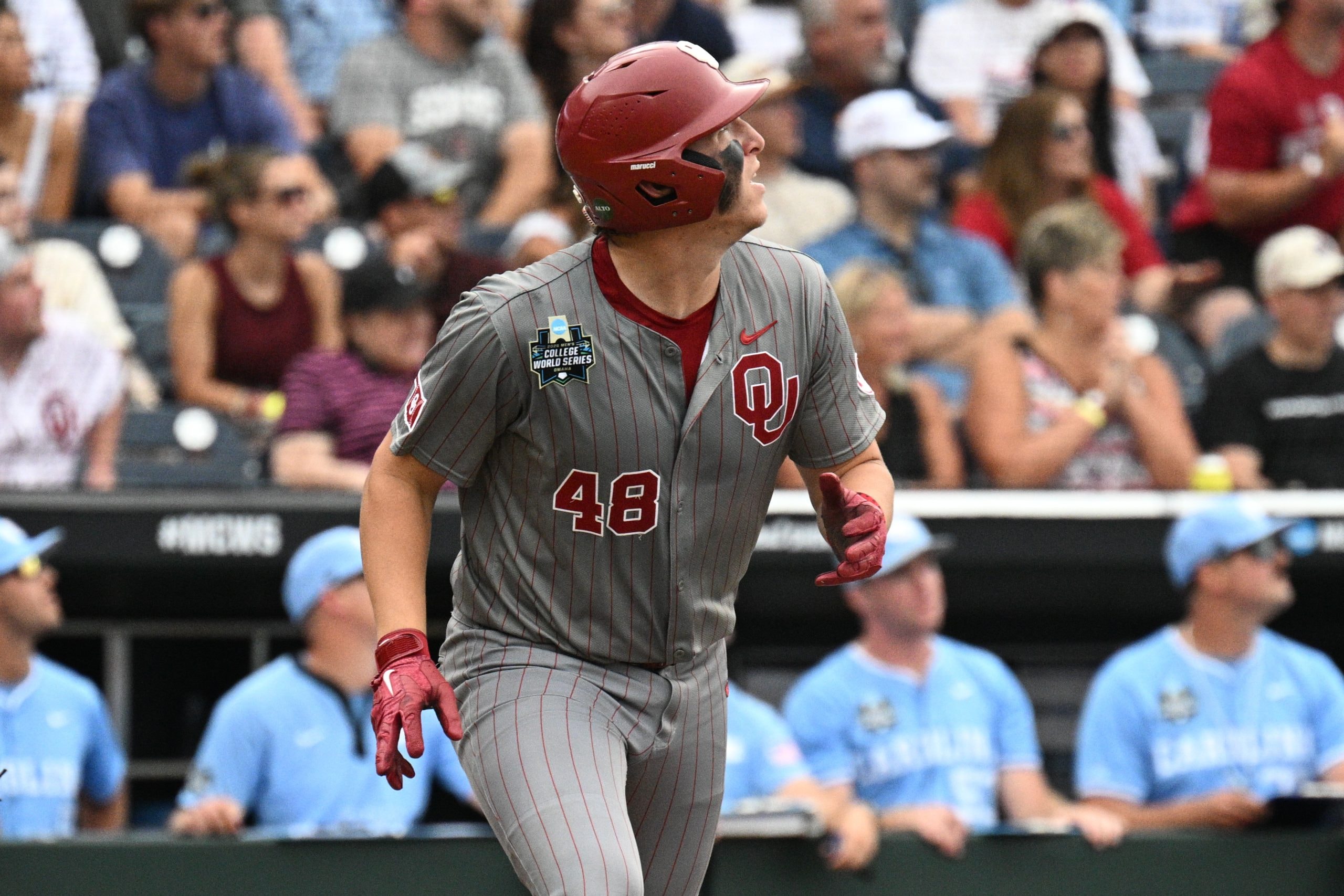
Oklahoma’s Deiten Lachance delivered a two-home-run performance to help the Sooners take Game 1 of the College World Series Finals against North Carolina, turning the opening act of the championship series into a clear offensive statement. The win gives Oklahoma an early advantage in the best-of format, with the Finals shifting from regular-season consistency to the kind of game-to-game swings that usually decide college baseball’s biggest stage.
The notable part for Lachance was not only the impact on the scoreboard, but the placement of his power within the history of the event. Saturday Down South reports that Lachance joined an “exclusive group” by producing a multi-homer game in the College World Series Finals, a distinction that is uncommon because the Finals feature the nation’s sharpest pitching and the smallest margins for mistake.
In the same report, the two-homer day is framed as a centerpiece of Oklahoma’s Game 1 success. With the championship series underway, that kind of output can reshape how both teams approach the next inning, not just in the immediate at-bat but across the rest of the lineup as pitchers look for safer matches and more predictable ball locations.
Oklahoma’s offensive surge mattered beyond one day because the College World Series Finals typically reward teams that can sustain pressure even when an opponent adjusts. After an early punch like Lachance’s, the next questions become whether the Sooners can keep producing with additional hitters, and whether North Carolina can neutralize the long-ball threat without sacrificing the ability to score in the middle innings.
For North Carolina, the response will likely hinge on identifying what allowed Lachance’s power to play in Game 1. Even without overreacting to a single outing, a multi-homer Finals game changes the scouting emphasis, forcing more deliberate pitching decisions and a more careful plan for the rest of the Oklahoma batting order.
It also sets the tone for Lachance’s postseason narrative. Multi-home-run performances at this stage are remembered as individual highlights, but they also tend to become part of a player’s legacy with the program, especially when they arrive in the championship series itself. If Oklahoma can carry momentum into Game 2, the Sooners’ focus will remain on consistent at-bats rather than one repeatable moment.
What to watch next is whether Oklahoma’s offense can convert that early authority into sustained production across the series, and whether North Carolina can make the kind of in-game adjustments that turn a Finals opener into a recoverable loss. Lachance’s Game 1 output already placed him at the center of the championship conversation, and the rest of the series will show whether it was a one-game spike or the beginning of a larger, sustained title push.