
THE APEX TIMES
Deone Walker’s second act: can Buffalo turn a promising rookie into a true defensive identity?
With Jim Leonhard set to steer the Buffalo Bills’ defense into a more aggressive, fast-attacking style, the spotlight is on whether Deone Walker can take the next step inside the front.
After a strong rookie season, Deone Walker is entering his second year with a simple question hanging over Buffalo’s defensive front, how high can the potential climb. In the Bills’ offseason conversations, Walker’s development has become a natural focal point because Buffalo is also in the middle of a broader transition on defense, one tied to new coaching priorities and a shifting schematic emphasis.
The Bills’ change begins at the top of the coaching structure on the defensive side. Following the firing of former head coach and defensive designer Sean McDermott, Buffalo has moved toward a defensive approach that, according to reporting, values playing quickly as part of the assignment rather than primarily leaning on rigid place-and-assignment soundness. That philosophical shift can affect how individual players practice, how they are evaluated, and what traits coaches ask them to display on each snap.
Jim Leonhard’s role as defensive coordinator adds another layer to the discussion. Leonhard is bringing his vision to the unit, and the fit question is not abstract, it shows up in the way the front is expected to operate. For a player like Walker, Buffalo’s framework presents an opportunity, but it also creates a higher bar. A big defensive lineman can be evaluated in more ways than just effort and size, coaches now want to see whether the player’s movement, tempo, and physicality match the scheme’s intent.
Walker's ceiling, as framed by the Bills’ offseason direction, is likely to be measured by whether he can translate the new emphasis into repeatable production. If Buffalo is pushing a more physical, aggressive brand of defense in preparation, the front has to consistently win space and create disruption quickly enough to keep the defense playing on schedule. That makes a second-year lineman’s progress more consequential, because the margin for error tends to shrink when the staff prioritizes speed of execution.
The timing also matters. A sophomore season can be where raw traits become consistent habits, and the position is especially sensitive to scheme interpretation. In practical terms, the Bills’ defenders have to learn not only where they line up, but how the team wants them to react and accelerate within the assignment. For Walker, the question is whether his growth shows up in the microscopic details, leverage, hand timing, first-step burst, and the ability to play through contact without losing the moment.
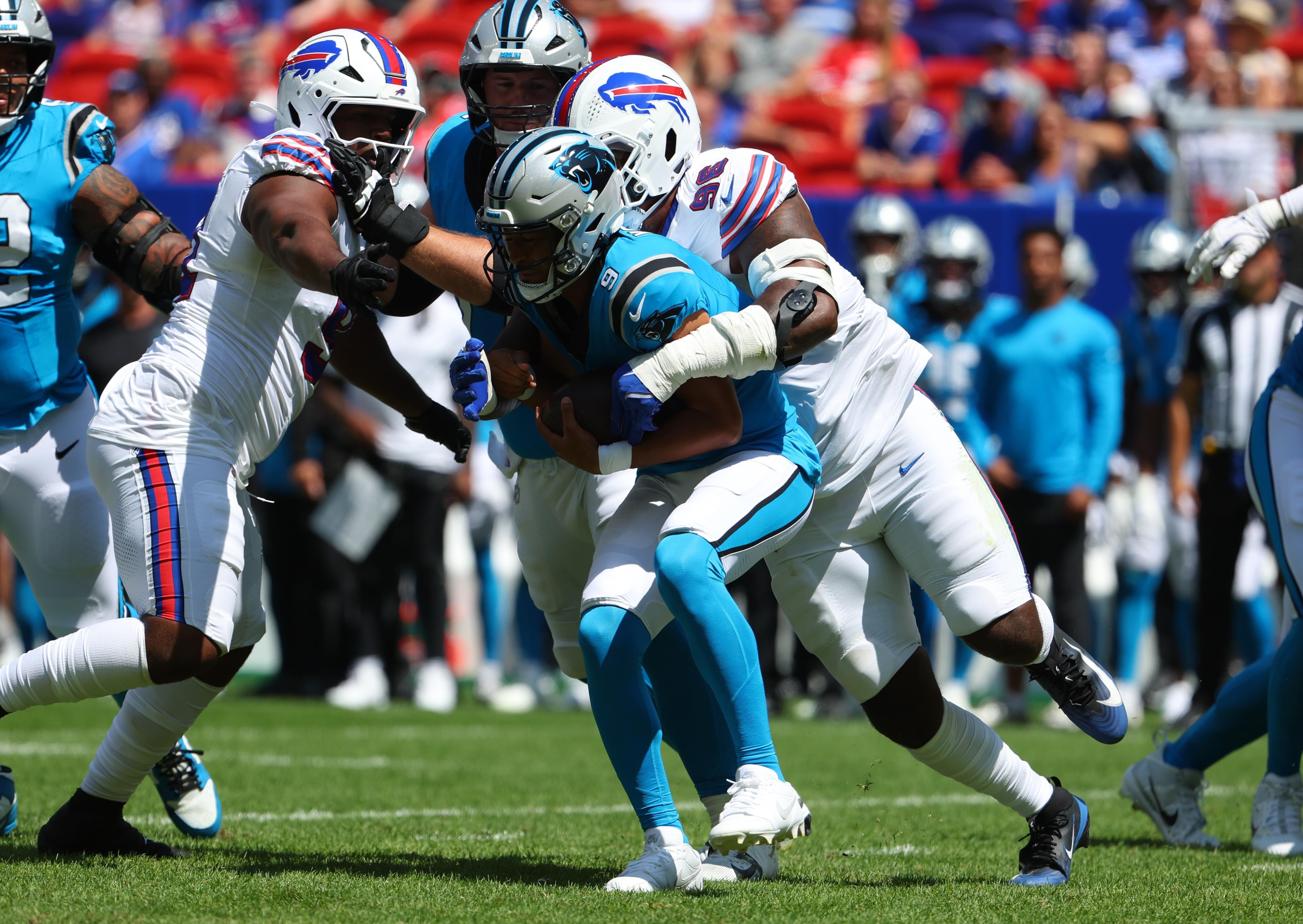
Buffalo’s decision to embrace a more physical and aggressive defensive preparation approach also means teammates will be watching. When a team changes emphasis, it often changes the roles around the player. If the front is expected to attack faster, those actions can pull linebackers and secondary defenders into different decision-making windows, changing how the entire defense functions as a unit. In that sense, Walker’s development is not just about one player’s performance, it’s about whether the defensive line becomes the engine for the new style.
Why It Matters
- If Walker’s second-year growth aligns with Leonhard’s priorities, Buffalo’s defensive line can become a reliable trigger for the scheme’s faster tempo.
- A scheme that rewards quick execution can raise the importance of front-seven consistency, turning Walker’s development into a roster-wide issue rather than a positional one.
- How well Walker adapts to a new emphasis could shape how the Bills evaluate other defensive linemen and the overall balance of the front.
- The Bills’ defensive identity shift sets a tone for training camp and the early regular-season adjustment period, where fit questions often become clear.
Key Facts
- Deone Walker is entering his second NFL season after a reported strong rookie year with the Buffalo Bills.
- Buffalo has introduced a new emphasis on defense during the offseason, including a focus on playing quickly as part of the assignment.
- Jim Leonhard is the Bills’ defensive coordinator, and his scheme vision is part of the reason teams and players are re-evaluating fit across the roster.
- The transition followed the firing of former head coach and defensive designer Sean McDermott, who previously shaped Buffalo’s defensive identity.
- The reporting describes Buffalo’s preparations as leaning toward a more physical, aggressive approach.