
THE APEX TIMES
Diamondbacks fail to convert timely chances again, falling to Cardinals despite productive contact
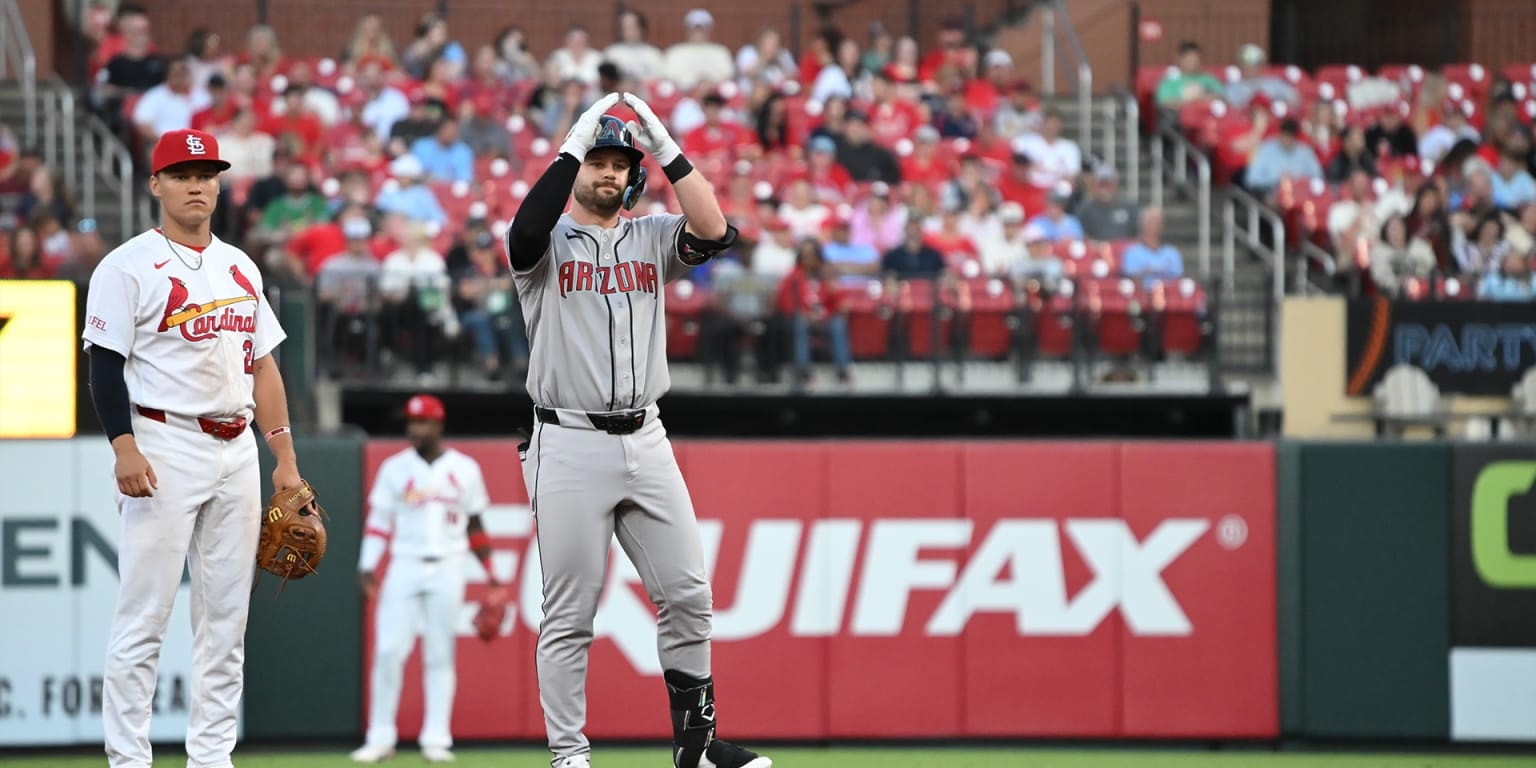
St. Louis again proved a harsh setting for Arizona’s offense, where batted balls found barrels and baserunners, but the timing never lined up when runs were needed.
The Diamondbacks’ trip to St. Louis ended with the same frustrating pattern. They put together enough contact to move the ball, but in the moments that mattered most, clutch hitting did not arrive. MLB’s game recap framed it as a sequencing problem, the kind that can make a team look lively for long stretches while still leaving the scoreboard unchanged when late innings arrive.
According to the report from, Arizona’s hitters did not lack opportunity. Instead, the issue was that hits failed to come with the right runners in place. The recap pointed to “timely” problems, describing a night where the Diamondbacks could accumulate baserunners and balls in play but could not consistently turn that into runs.
The story also hinged on pitching and how the matchup played out after the first few turns through the order. The recap specifically credited Cardinals starter Miles Mikolas Kelly? Actually the title says “Kelly’s quality start,” which indicates a Cardinals starter named Kelly delivered a strong performance. MLB characterized it as a quality start that went for naught for Arizona, in the sense that Arizona never managed to break through in the way that would force the game into late relief leverage.
For Arizona, that meant the offense’s “conversion rate” was missing. The MLB write-up described Diamondbacks contact without the accompanying outcome, a familiar baseball dilemma where line drives, extra-base looks, and accumulated hits do not automatically translate into runs if opponents keep making plays and if rallies do not overlap in the right inning.
That is where the recap’s broader explanation mattered. It described factors the Diamondbacks could not fully control, including batted-ball results and the luck that determines whether a rally becomes a multi-run burst or a series of productive outs. The emphasis suggested that Arizona’s evening contained both redeemable stretches and a key inability to land the big hit with runners positioned to score.
Baseball’s margins are thin, but the immediate takeaway for Arizona is that the offense still has to solve its late-inning conversion problem. Even when the Diamondbacks’ approach generates baserunners, the next step is tying those opportunities to situational hitting, not just accumulating statistics that look better at the end than they feel during critical at-bats.
Looking ahead, the watch item is how Arizona responds in subsequent games when the pitching matchups tighten and every at-bat compresses in value. If the Diamondbacks can pair solid contact with higher-leverage outcomes, the team’s overall run profile should stabilize. If not, they are likely to keep encountering the same type of “hits without the right sequencing” frustration, no matter how many individual at-bats look strong on paper.
For St. Louis, the win reinforces the value of keeping opponents from turning baserunners into innings that change the score. When a team can prevent the big inning while riding strong starting pitching, it can afford to let opponents have their chances as long as the timing never fully arrives. The Cardinals’ side of the story, as framed by MLB, was built on that control plus the payoff from clutch sequencing when it appeared.
Why It Matters
- For the Diamondbacks, the loss underscores a conversion problem, where productive contact is not translating into the correct innings.
- Against teams that protect leads, sequencing and leverage become as important as overall offensive output, and Arizona did not consistently win those moments.
- For the Cardinals, the win illustrates how starting pitching can hold up while an offense is allowed to create traffic without breaking the game open.
- The next test for Arizona is whether it can pair baserunner creation with high-impact hits in later innings when games swing quickly.
Key Facts
- The game took place in St. Louis, with the Diamondbacks facing the Cardinals.
- MLB’s recap said Arizona’s hitters struggled with timely run production.
- The article described Arizona’s issue as hits and baserunners not aligning with the right sequencing to turn opportunities into runs.
- MLB highlighted a Cardinals starter named Kelly delivering a quality start.
- The recap emphasized batted-ball outcomes and timing as key factors in the result.