
THE APEX TIMES
Dillon Dingler’s clean catch job comes with a second job: keeping his eyes on the game while the helmet is behind the plate
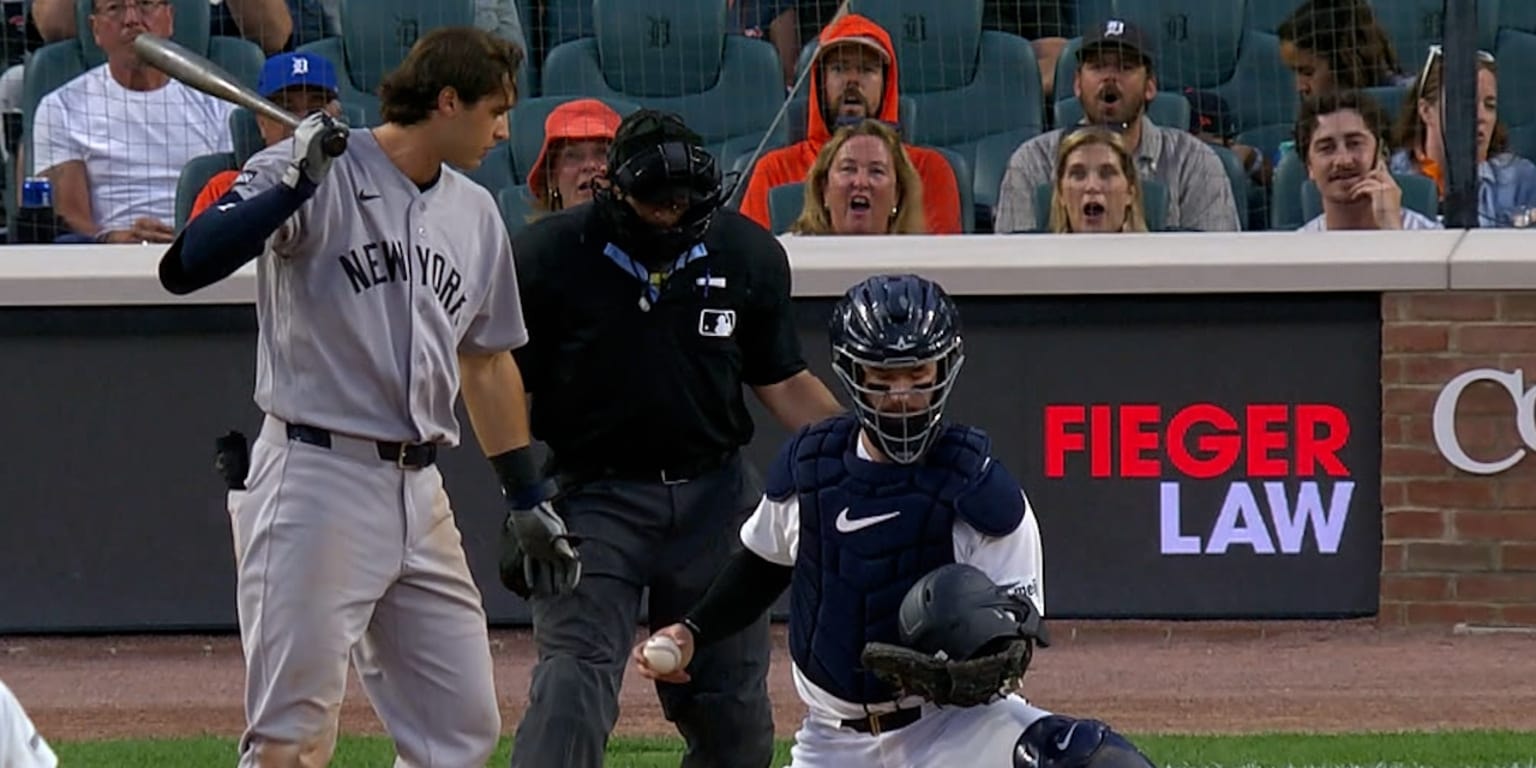
With one out at Comerica Park against the Yankees, Tigers catcher Dillon Dingler had to line up Kyle Finnegan’s 97 mph fastball while dealing with an added obstacle behind home plate.
On a Tuesday night at Comerica Park, the hardest part of catching was only part of the story. The other part was what sat behind the plate, and how quickly Dillon Dingler had to account for it while tracking a 97 mph fastball from Tigers reliever Kyle Finnegan.
Dingler was set in his receiving stance with one out when Finnegan sent a pitch that arrived at the plate with the kind of velocity that compresses every decision. In that moment, catching is already a tight sequence of locating the ball, receiving it cleanly, presenting a target, and absorbing what comes next. Dingler still had to do all of that, even as he had to manage the added “helmet” obstacle in the area behind home plate.
The play was a reminder that the catcher's job is not limited to the glove hand. It requires navigation of the entire environment around the strike zone, including the physical objects that can affect sight lines, balance, and the ability to lock in as the pitch arrives. Dingler’s positioning “in a good spot to receive” was the visible setup, but the challenge was in executing it with a fastball that forced him to stay compact and decisive.
Finnegan’s 97 mph pitch is the kind that rewards elite timing and punishes a small mistake. Against a hitter’s view, the difference between a routine receive and a disruptive one can be measured in fractions of a second. For a catcher, that timing gets even more complicated when something behind the plate can change what he sees and how he tracks the ball through the final approach into the mitt.
What made the moment notable was how ordinary the outcome can look, even when the conditions are anything but ordinary. The helmet obstacle did not change the pitcher’s intent, the strike-zone target, or the speed of the pitch. But it added a real-world distraction behind home plate, turning a standard receiving task into a multi-layer focus problem.
For Detroit, the episode fits a familiar theme in bullpen nights and late-inning sequences: pitchers can bring velocity and movement, but catchers are the ones who must translate those offerings into reliable outcomes. That is especially true in games where the Yankees apply pressure with consistent at-bats, forcing every pitch to be earned in real time rather than on reputation alone.
The broader takeaway for baseball is that “catching” rarely happens in a vacuum. Even when the glove meets the ball, the job includes managing the space around the plate so clean mechanics survive under speed. Dingler’s ability to handle both the pitch and the added obstacle highlighted the kind of details that do not always show up in box scores but matter when games tighten.
Why It Matters
- It underscores how much of a catcher’s performance depends on managing sight lines and body positioning under extreme pitch velocity.
- It offers a practical look at the communication and execution required for a bullpen pitcher’s top-end fastball to be handled cleanly.
- For teams facing elite lineups like the Yankees, small receiving disruptions can have outsized impact on at-bat quality and pitch sequencing.
- It reinforces that many of the sport’s biggest execution demands happen between pitches and behind the plate, not just on the mound.
Key Facts
- Detroit catcher Dillon Dingler faced a situation at Comerica Park against the Yankees in a game played on Tuesday.
- Dingler had one out when the relevant pitch was thrown.
- Kyle Finnegan delivered a 97 mph fastball to Dingler.
- Behind the plate, Dingler had to work around an added helmet obstacle while receiving.
- The moment illustrated that catching requires adapting not just to pitch speed, but also to what is happening in the physical space around home plate.