
THE APEX TIMES
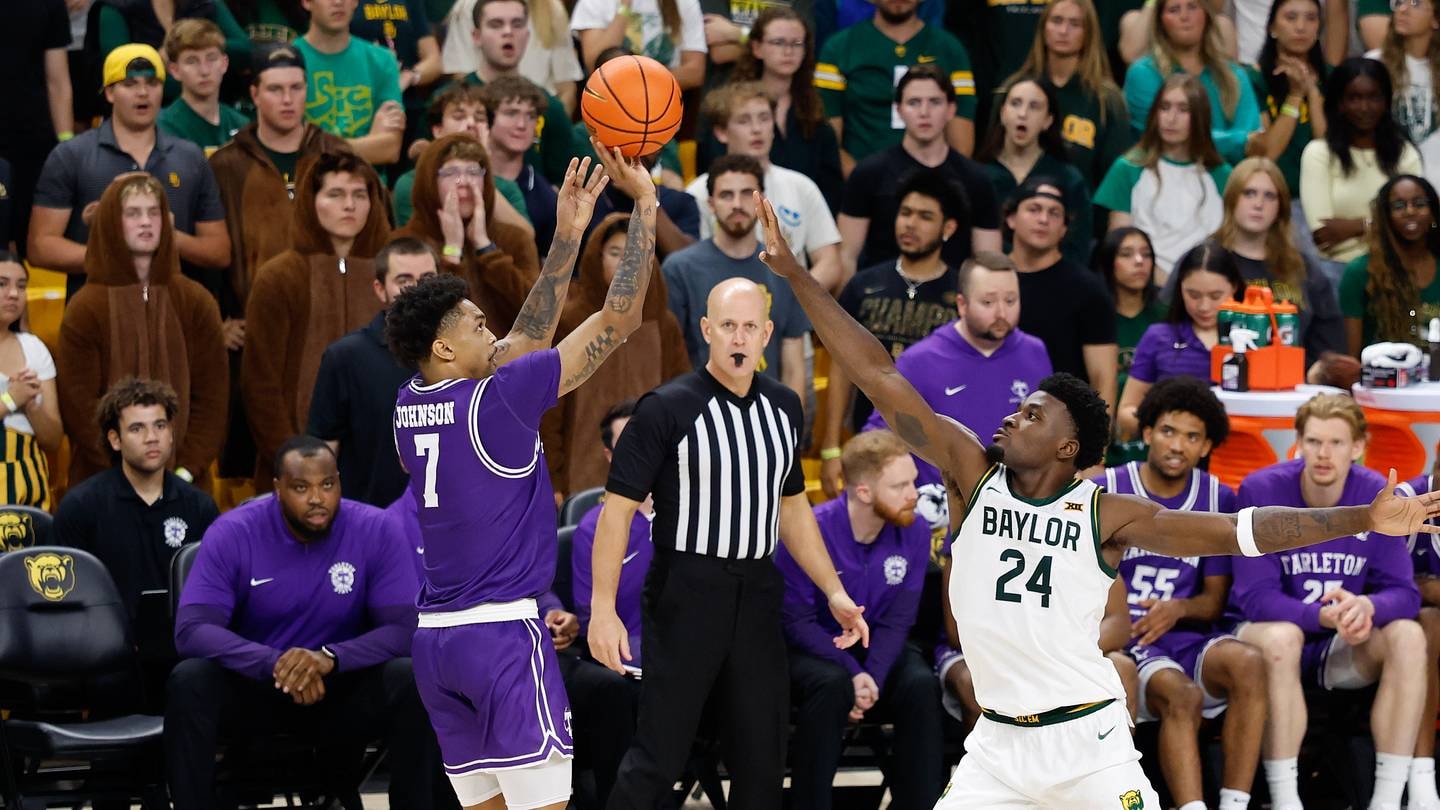
Dior Johnson’s return gives UCF a key continuity piece for 2026-27 under Johnny Dawkins
With UCF trying to build on a breakthrough NCAA Tournament appearance and a third season in the Big 12, the Knights’ plan for 2026-27 is increasingly tied to how Dior Johnson fits back into the program.
UCF is entering 2026-27 with momentum and uncertainty at the same time. The Knights made the NCAA Tournament for the first time since 2019, a jump that came during the program’s early Big 12 stretch. As coach Johnny Dawkins begins his 10th season at UCF and tries to turn that postseason return into something more sustainable, the most important personnel question the staff faces centers on Dior Johnson and what his return means for the team’s identity in Year 3 of Big 12 play.
In college basketball, continuity can be as valuable as talent when a team is trying to adapt to a new conference environment. UCF has already shown it can reach March again, but the Big 12 is unforgiving to teams that cannot stabilize their rotation and decision-making. Johnson’s presence, as framed by coverage from Busting Brackets, is positioned as a stabilizing factor, suggesting the Knights view his return as more than just another body on a roster.
Dawkins’ third Big 12 season carried the weight of proving that the program’s NCAA Tournament berth was not a one-off. The same idea will drive how UCF approaches the offseason and early conference schedule in 2026-27. If UCF can pair the experience that comes from getting to the tournament with role clarity and reliable production, the Knights can start to separate themselves from the middle of the league rather than simply chase favorable matchups.
Johnson’s impact is likely to be measured in how he influences UCF’s “in-between” moments, the possessions that decide close games in the Big 12. That includes whether UCF can maintain its structure when possessions stretch, whether the offense can generate higher-quality looks without forcing late-clock desperation, and whether the team’s end-of-game execution looks more consistent than it did before the postseason breakthrough.
Still, expectations should be held carefully at this stage. The available reporting frames Johnson as UCF’s most important transfer for 2026-27, but it does not, in the material currently visible, lay out specific statistical production, a formal roster status, or any guaranteed tactical role. Until UCF’s official roster updates and preseason depth chart context are confirmed, the most accurate way to describe Johnson’s importance is as a potential continuity and fit driver for Dawkins’ Big 12 adjustment.
The storyline to watch is how quickly UCF can translate tournament experience into regular-season habits. A team that reached the NCAA Tournament can often bring confidence, but the Big 12 requires it to show that confidence in tougher road environments and against deeper nightly game plans. Johnson’s return, if it matches UCF’s internal expectations, could help the Knights handle that transition by strengthening the rotation’s center-of-gravity as Dawkins moves into a new phase of his tenure.
For 2026-27, UCF’s best case is that Johnson’s role allows the Knights to keep building instead of rebuilding. The team’s next test will come early, when the league’s strength is on full display and the margin for error is small. If UCF’s preseason structure lines up with what the staff is indicating about Johnson, the Knights could turn their postseason appearance from a highlight into a foundation.
From a wider perspective, UCF’s rise in the Big 12 matters because it shifts how the league’s middle tier competes. One of the key reasons teams struggle in new conferences is finding consistent on-court answers, and the Knights are betting that a familiar, returning piece can reduce that uncertainty. How Johnson’s return is integrated will therefore be one of the clearest indicators of whether UCF is ready to contend more regularly or remains in the chasing pack.
Why It Matters
- If Johnson’s return provides roster continuity, UCF has a better chance to translate a tournament berth into repeatable regular-season performance in the Big 12.
- Big 12 scheduling punishes instability, so the team’s ability to lock in rotation roles is likely to matter as much as individual talent.
- Dawkins’ next step as a program builder depends on whether UCF can turn postseason confidence into a clearer identity on both ends of the floor.
- For UCF, competing more reliably in the league’s middle and upper tier determines whether the Knights can stay on a consistent March path rather than making it sporadically.
Key Facts
- UCF made the NCAA Tournament for the first time since 2019, according to the provided reporting.
- Johnny Dawkins is beginning his 10th season as UCF’s head coach.
- UCF is in its third season in the Big 12.
- The coverage identifies Dior Johnson as UCF’s most important team transfer for 2026-27.
- The reporting frames UCF’s 2026-27 challenge as building on NCAA Tournament momentum within the Big 12.
- The current material does not provide additional confirmed details on Johnson’s statistical profile or specific on-court role.