
THE APEX TIMES
Dodgers and Brewers collide in the NLDS over baseball’s “small ball” question
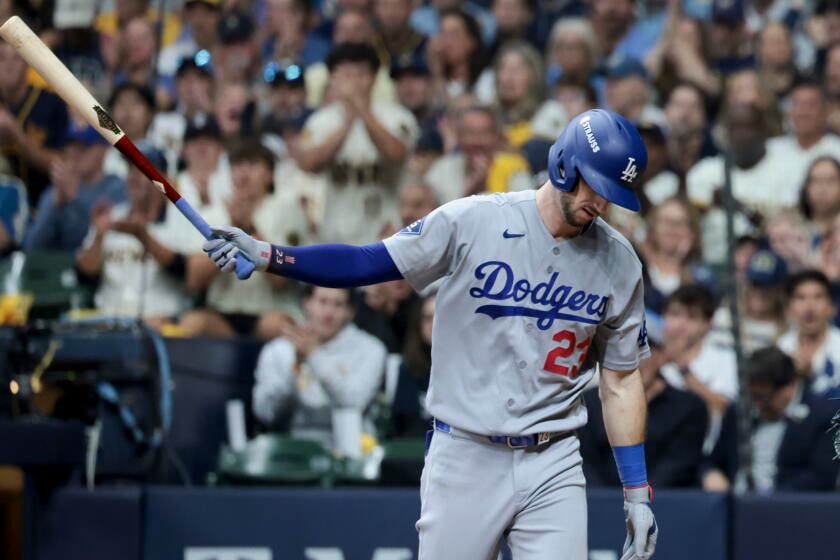
In Game 1 of the NLDS, Los Angeles leaned on its postseason pitching-and-power blueprint while Milwaukee mixed in base-running pressure and timely execution, a contrast that defined the early series storyline.
Baseball’s postseason instinct is to protect outs and let elite pitching decide at-bats. That is why the question at the center of Game 1 of the NLDS between the Los Angeles Dodgers and the Milwaukee Brewers felt almost philosophical: is there any “law” that says teams like the Dodgers cannot manufacture runs with small, repeatable actions such as stolen bases and sacrifice bunts? According to Yahoo Sports’ Samat Shaikin, Milwaukee executed the kinds of plays that keep pressure on the opponent, and Los Angeles, despite carrying its own plan into the game, came up short.
In Shaikin’s framing, the stakes of October do not eliminate the value of game-state baseball. Even when runs are hard to come by and pitchers dominate leverage counts, small-ball choices can still change how often a defense has to make throws and how quickly a pitching staff is forced into uncomfortable pitch counts. The argument is not that stolen bases and sacrifice bunts should be constant or reckless, but that selectively using them can prevent a team like the Dodgers from settling into its preferred rhythm.
The Dodgers and Brewers matchup also underlines how a team’s identity shows up in the margins. Los Angeles has typically emphasized power and damage in the bigger moments, a style built around turning good at-bats into high-leverage outcomes. Milwaukee’s approach, as described in Shaikin’s account, leaned on executing its own game plan: creating movement on the basepaths and committing to fundamental plays that, while not flashy, can compress the field for a defense and force pitchers to navigate to contact with runners in play.
Shaikin’s headline challenge is especially pointed because postseason baseball does not eliminate strategic variety. Teams face the same constraints that everyone does, but the “when” of baseball decisions is what separates teams in series. A late-inning stolen base is different from an early attempt when the pitcher is in command. Likewise, a sacrifice bunt is different when it is used to set up a specific hitter or when the opponent is forced to play the infield in a way it may not want to.
Game 1 of the NLDS therefore functioned as an early test case for a broader idea: the best teams do not treat postseason baseball as a single genre. They borrow from the regular season when it helps, but they adapt it to the leverage of October. If Milwaukee’s execution is a template, then the series could feature more teams deciding that small-ball tools are not archaic, they are options.
Still, it is important not to overcorrect from one game. Even in postseason series, strategy is constrained by what pitchers throw, what defenses allow, and what the umpire’s strike zone permits on any given night. A stolen base attempt can succeed or fail for reasons unrelated to the underlying plan, and a sacrifice bunt can be a masterpiece or a wasted out depending on timing and lineup matchups.
What to watch next is whether the Dodgers respond to Milwaukee’s early pressure by incorporating more base-running aggression and more willingness to trade an out for a runner in scoring position, or whether they insist the best answer is to win the strike-throwing battle and let their power do the rest. Conversely, Milwaukee will likely be watched for whether it keeps finding the same opportunities to execute small-ball plays, or whether Los Angeles adjusts its defensive positioning and pitcher/batter matchups to blunt those looks.
Either way, the opening chapter matters less for the abstract debate than for what it indicates about series planning. In a tight playoff environment, the teams that can execute both traditional and situational baseball often have the best chance to stay ahead when the game becomes a sequence of decisions rather than one big swing.
Why It Matters
- If Milwaukee can continue to apply base-running and situational pressure, it forces Los Angeles to spend more of the series reacting rather than dictating.
- The series can become a template for whether “small ball” remains a viable tool in modern postseason run production.
- Strategy decisions early in a Division Series often shape bullpen usage and the timing of when teams take risks later.
- How the Dodgers respond to Milwaukee’s execution will be a key indicator of whether Los Angeles adapts in-game or stays with its preferred identity.
Key Facts
- The matchup is the National League Division Series between the Los Angeles Dodgers and the Milwaukee Brewers.
- Yahoo Sports columnist Samat Shaikin questioned whether there is a “law” that prevents the Dodgers from playing small ball in postseason baseball.
- Shaikin’s account contrasts Milwaukee’s execution with Los Angeles’ approach in Game 1.
- Shaikin frames postseason baseball as a setting where elite pitching is prominent and runs are at a premium, which makes base-running and sacrifice decisions especially consequential.
- The story emphasizes the strategic value of plays like stolen bases and sacrifice bunts when used selectively in high-leverage game states.