
THE APEX TIMES
Dodgers links two trailblazers to a small New Hampshire start
A look back at how Don Newcombe and Roy Campanella formed a bond in the minor leagues, long before each became a defining figure in Brooklyn and beyond.
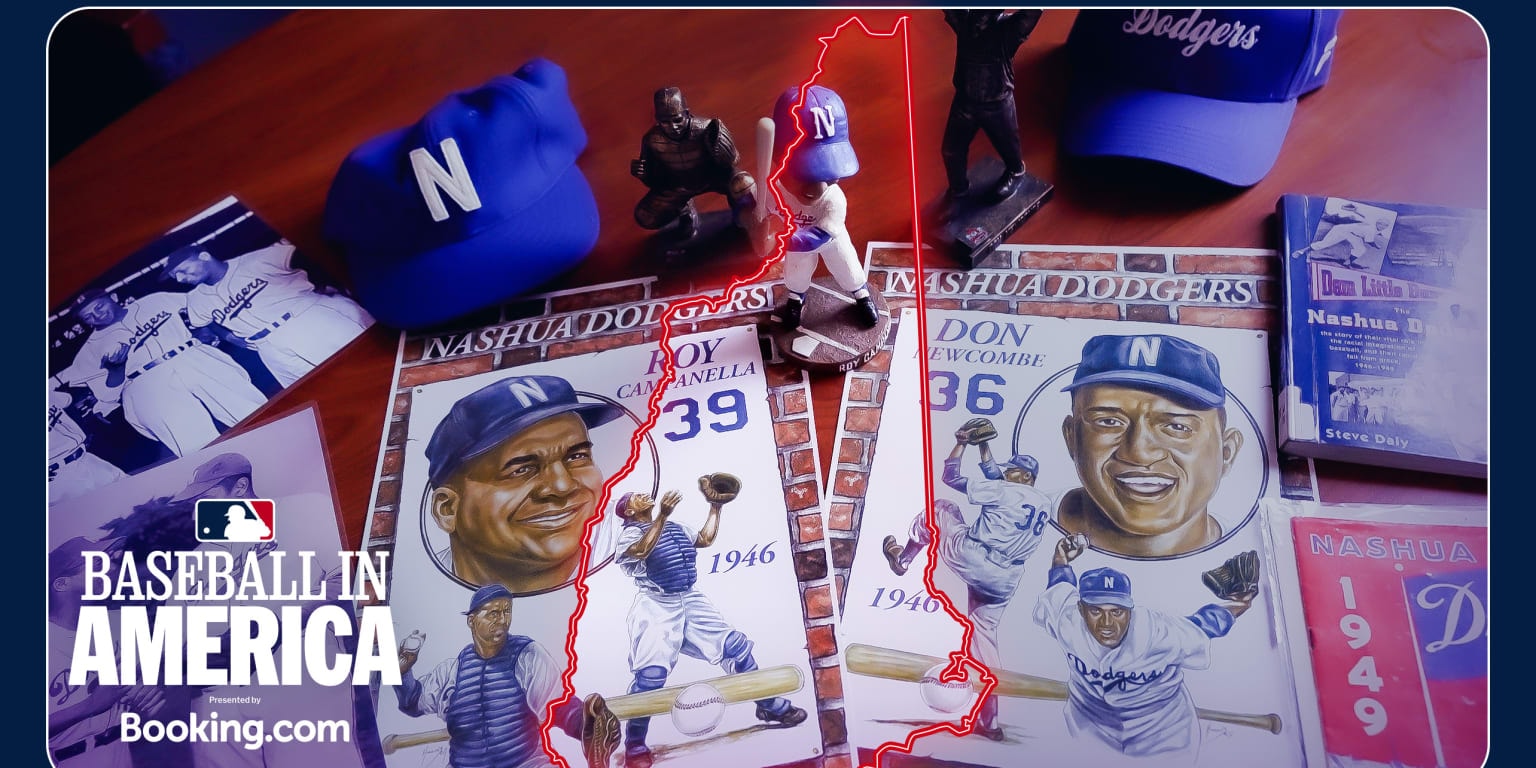
Baseball history is often told as a straight line from adversity to achievement, but the sport’s deeper story runs through smaller towns and shared dugout experiences. In a feature published by MLB, the Los Angeles Dodgers are spotlighting two franchise-linked trailblazers, Don Newcombe and Roy Campanella, whose paths converged early as minor-league teammates during the era of segregated baseball.
The piece places their origin story in New Hampshire, framing their beginnings in a “tiny town” setting as a reminder that the forces shaping their careers were not confined to big-city ballparks. It ties that small-town start to a larger national narrative, specifically the struggle and determination that Jackie Robinson’s breaking of baseball’s color barrier represented and the way that other stars’ journeys became part of the same collective history.
According to MLB’s account, Newcombe and Campanella developed more than a workplace familiarity while playing together in the minors. The emphasis is on bonding, the kind that forms when players share the grind of travel, limited resources, and constant evaluation by organizations that, at the time, were still only beginning to transform how they recruited and integrated Black players.
What makes the story of Newcombe and Campanella resonate in a Dodgers context is that each later became central to the integration era’s major-league transformation. MLB’s feature uses their early-teammate connection as a bridge between the iconic moment associated with Robinson and the broader roster of people who helped make the sport’s change permanent rather than symbolic.
The Dodgers’ decision to elevate this history in the lead-up to the 250th anniversary of the United States is also about placement. MLB describes the publication as part of a summer road trip series, connecting baseball’s cultural footprint across the country. In that framing, the “tiny town” detail functions as more than trivia, it’s the point where national change meets local life and where young players learned how to endure, perform, and keep going.
For fans, the practical takeaway is not a change in a current season’s standings. It is a change in perspective, seeing MLB’s integration-era figures as human beings with first stops, mentors, routines, and friendships that predated the headlines. That is especially relevant in an era when baseball’s modern pipelines are widely discussed, because it underscores how opportunity and access can be shaped by geography, institutions, and the people already in the room.
Going forward, the most important thing to watch is how these historical features connect to present-day Dodgers identity. The team’s baseball past is often summarized by achievements at the top level, but MLB’s choice to stress a shared minor-league bond suggests the Dodgers want the foundation stories to matter too, including how players supported each other while the sport’s power centers were still catching up.
Why It Matters
- It broadens integration-era storytelling beyond marquee moments by emphasizing early teamwork and shared hardship in the minors.
- It reinforces the Dodgers’ role in celebrating baseball history tied to their franchise legacy.
- It situates major-league change within local communities, linking national progress to specific places and starting points.
- It offers a model for how MLB can contextualize player achievements by tracing relationships formed before fame.
Key Facts
- MLB published a Dodgers-focused feature tracing early history tied to Don Newcombe and Roy Campanella.
- The story highlights their start in New Hampshire and frames it as a small-town beginning within a national baseball timeline.
- MLB reports that Newcombe and Campanella were minor-league teammates and bonded during that time.
- The feature is presented as part of MLB’s “Baseball in America” series marking the 250th anniversary of the United States.
- Jackie Robinson’s breaking of baseball’s color barrier is used as the historical anchor for the series’ broader look at integration-era experiences.