
THE APEX TIMES
Draymond Green steps in to defend Stephen Curry against “unrealistic” fan expectations in new debate
Amid ongoing talk about what modern NBA stars should deliver, Draymond Green pushed back on the idea that Stephen Curry should be held to a version of team success built for someone else’s role.
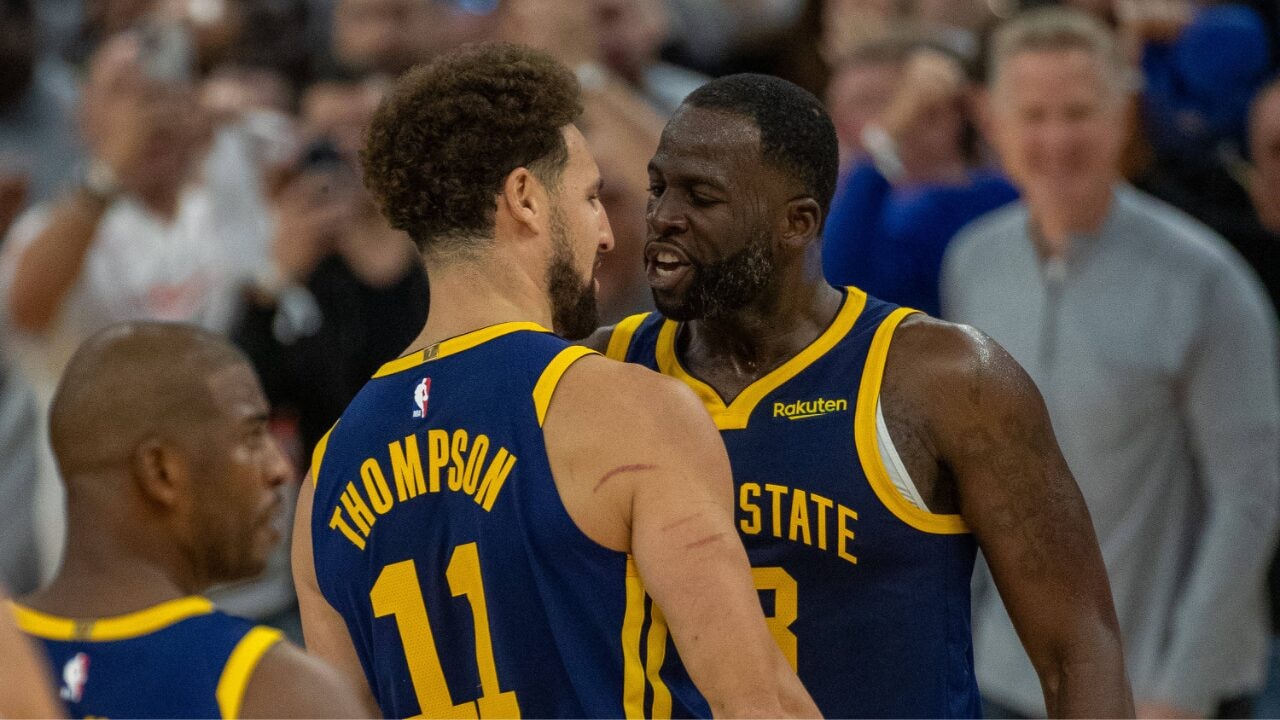
Draymond Green has entered a familiar kind of basketball debate, one that starts with expectations and ends with blame. In a discussion highlighted by Yahoo Sports on Aug. 27, Green defended Stephen Curry as fans argued about whether Curry’s standards should be judged differently from the Warriors’ other major perimeter identity. Green’s broader point, as characterized in the report, was that comparisons and expectations often ignore how NBA roles and championship paths actually work.
The argument has gained momentum because Curry’s Warriors legacy is regularly contrasted with the career turns of his former co-stars. In this case, Yahoo Sports notes a comparison to Klay Thompson and Thompson’s move to Miami, which has led some fans to treat Curry’s current timeline as if it should produce the same kind of outcomes. Green, again according to the report, rejected that logic and framed it as a mismatch between what a player can realistically be asked to do and what audiences assume they must deliver.
What makes Green’s comments notable is not that they defend Curry, but the way they push back on the premise of the debate itself. Green’s stance, as described by Yahoo Sports, suggests the fan conversation has drifted from basketball evaluation to narrative punishment, where a star is expected to “solve” every era shift and roster change with the same formula. That is a distinct kind of pressure, one that lands hardest on players whose teams once built their identities around fit, chemistry, and system mastery rather than a single, repeatable stat line.
For context, Curry’s place in Golden State history has always been tied to more than numbers. Even when the surrounding pieces look different from one season to the next, Curry’s value tends to show up in how the offense is structured: spacing that starts before the ball is touched, decision-making pace that affects every cut and pass, and gravity that changes matchups without requiring constant isolation possessions. Green’s reported defense implicitly argues that Curry’s role is often misunderstood when the comparison is made only through a results lens.
The Warriors’ identity also helps explain why these disputes never fully fade. When a franchise has had a “big three” era, fans tend to freeze the trio’s championship window into a single template. After that window changes, comparisons become less about basketball mechanics and more about who is perceived to have moved on “correctly.” Green’s intervention, as presented by Yahoo Sports, appears designed to stop that template from turning into an expectation scoreboard.
Where this goes next will be less about one comment and more about how audiences evaluate the Warriors’ star in the years since the roster landscape shifted. If the debate continues, it could shape how media and fans talk about Curry’s production relative to teammates and successors, and whether they allow for different roles across different eras. For Green, the stakes are reputational and philosophical: keeping the conversation grounded in role context rather than turning it into an argument about who “should have” ended up where.
At this point, details beyond the Yahoo Sports description are limited in the materials available for review, so readers should treat specific wording and any claim of direct quotes as unverified. Still, the thrust of the discussion, defending Curry against unrealistic expectations, is clear enough to frame it as an ongoing cultural challenge in basketball commentary: how to judge elite players without forcing them into someone else’s story arc.
Why It Matters
- Star-player evaluation in the NBA is often shaped by narrative, and Green’s defense underscores a push to judge roles and systems rather than outcomes alone.
- Comparisons between co-stars can distort how fans interpret each player’s job, especially when franchises change personnel and roster construction.
- If the debate persists, it may influence how Curry’s production is discussed in relation to team-building decisions rather than isolated stats.
- The comments add to an ongoing theme in modern basketball media, where expectations can quickly become personal or prosecutorial rather than analytical.
Sources
Key Facts
- Yahoo Sports reported that Draymond Green defended Stephen Curry amid a debate about fan expectations.
- The reported discussion includes comparisons tying Curry to how others from the Warriors core are being viewed.
- Yahoo Sports specifically references Klay Thompson’s move to Miami as part of the conversation’s backdrop.
- The thrust of Green’s defense, as characterized in the report, is that some expectations are unrealistic because they ignore role and context.
- Green’s remarks highlight a broader pattern in NBA discourse where fan narratives can overshadow basketball fit.