
THE APEX TIMES
Dricus Du Plessis doubts Nassourdine Imavov’s ability to avenge loss to Sean Strickland
As the UFC middleweight title picture points toward a Strickland rematch path, Du Plessis said Imavov has not shown enough evolution to close the gap in what would be a high-stakes opportunity to reclaim championship momentum.
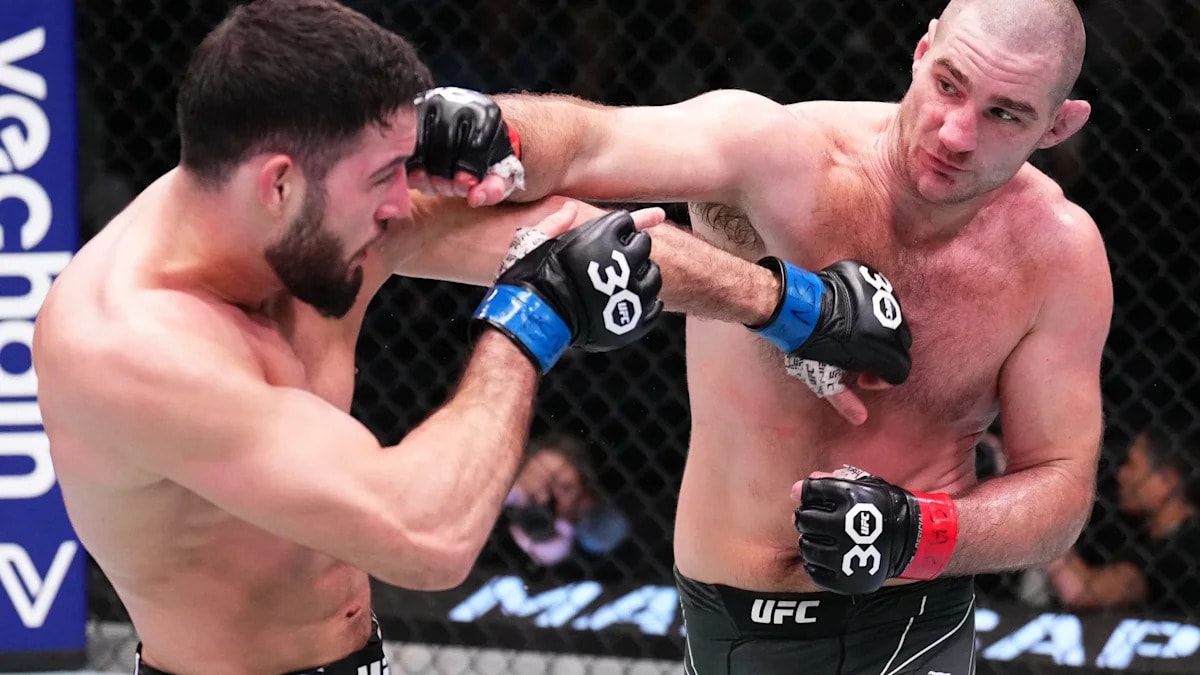
Dricus Du Plessis does not sound confident that Nassourdine Imavov is ready to deliver an avenging outcome against Sean Strickland in the next meaningful middleweight title conversation. In a breakdown published this week, Du Plessis framed his view around the idea that Imavov has not progressed in the ways he believes are necessary to change the result from a prior meeting, and he suggested that the gap between them remains substantial.
The context matters because the UFC middleweight division has become defined by challengers who can turn one good showing into a sustained title run. When a fighter is discussed as the likely next option, the expectation is not just competitiveness, but a clear ability to adjust. Du Plessis, speaking through his assessment of the matchup path, positioned Imavov’s current ceiling as the key obstacle, arguing that Imavov has not evolved enough to overcome Strickland at the championship level.
Du Plessis’ critique was specific in theme rather than technical specificity: he focused on whether Imavov has made the kind of improvements that typically determine who closes rounds late, controls key exchanges, and handles the tactical demands of a title fight. In most title-track conversations, the champion’s advantage is rarely just physical. It is the sense of knowing which responses keep working and which risks stop paying off once the fight turns into a long, strategic chess match.
Imavov, for his part, has been treated as a credible contender because of his ability to mix approaches and stay dangerous across different phases of a fight. But Du Plessis’ stance suggests that, at least from his perspective, those qualities have not yet translated into the kind of championship-specific evolution required to reverse a prior result against Strickland. In the way the division is currently framed, “close enough” is often not enough, especially when the opponent is a proven championship-caliber performer.
For Strickland’s side of the picture, any contender who aims to avenge a loss carries a built-in storyline: the rematch is supposed to answer what went wrong the first time. Du Plessis’ comments imply that this storyline may not be enough to compensate for what he sees as incomplete development, particularly when the champion or next title target is already prepared for the angles a challenger is likely to bring.
What to watch next is how the UFC middleweight title path is formalized and how Imavov responds stylistically if and when the fight becomes official. Even without adding assumptions about timeline or matchup certainty beyond the “projected” frame used in the discussion, the practical measure will be whether Imavov can demonstrate clear, measurable changes in how he sets up offense, defends during momentum swings, and sustains pressure deep into championship rounds.
Why It Matters
- It highlights the standard challengers are expected to meet in the UFC middleweight title picture, where evolution and adjustment matter as much as skill.
- If the title path continues toward a Strickland rematch scenario, it sets expectations about whether Imavov can change the outcome narrative.
- Du Plessis’ comments contribute to the division’s psychological and strategic buildup, which can influence how contenders approach future fight camps.
- The assessment narrows attention to how Imavov has (or has not) developed the specific traits needed for championship-level execution.
Sources
Key Facts
- Dricus Du Plessis said he does not feel Nassourdine Imavov has evolved enough to beat Sean Strickland.
- The discussion centers on a projected next UFC middleweight title-fight pathway.
- The framing is that Imavov is aiming for an “avenging” outcome tied to a prior loss to Strickland.
- Du Plessis offered a matchup breakdown focused on improvement and readiness rather than only moment-to-moment tactics.