
THE APEX TIMES
Duke’s rotation still has openings after first look of the 2026-27 season
At its earliest preseason scrimmage, Duke showed the kind of positional flexibility that can keep games from being predictable, with multiple players and roles still in competition.
Duke basketball opened the 2026-27 season with a scrimmage that suggested the Blue Devils are not locked into a single, unchangeable lineup yet. The overriding theme, as described in the team’s early work, is that “every spot is still up for grabs,” a phrase that points to internal competition rather than a settled rotation.
From the start, the program’s most important message was about options. When a team can move pieces across positions in live action, it complicates scouting. Opponents have to prepare for several defensive looks, and Duke can adjust the tempo and matchups without having to replace players one-for-one. That does not guarantee results, but it does create more decision points for a roster that is still sorting out who owns the high-leverage minutes.
The scrimmage also functioned as an early audition for role definition. Duke’s early-season look matters because the first stretch of college basketball often reveals which players can handle minutes together, which lineups create defensive advantages, and which combinations can create offense without needing perfect shots. Even when the overall roster quality is high, the difference between “good team” and “title picture” frequently comes down to who finishes possessions in transition, who can win on-ball and off-ball defensive assignments, and who can make basic reads quickly when a play breaks down.
The early report framed the Blue Devils as one of the most talented teams in the country, but the more practical takeaway is that Duke’s internal depth gives it room to choose. Programs that are still determining rotation hierarchy can protect themselves against late-season fatigue or matchup problems by having multiple viable lineups. In practice, that means the coaching staff can prioritize chemistry on key stretches rather than forcing a fixed starting five if the scrimmage data points elsewhere.
The team’s approach also matters for how fans and media interpret Duke during the season. A rotation that is still fluid may not produce the same early, easy narrative as a team that appears fully assembled from day one. Instead, Duke’s story becomes one of refinement: how quickly new combinations develop defensive cohesion, how often Duke can play multiple styles without losing execution, and whether players identified as primary contributors can still be moved within the offense and defense without the overall structure collapsing.
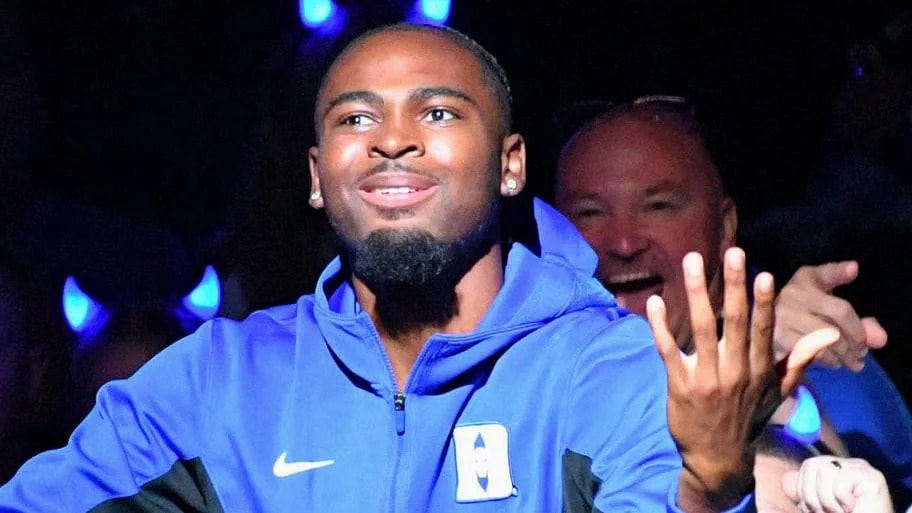
One specific name that surfaced in the preview coverage is guard Sebastian Wilkins, shown in connection with Duke’s preseason atmosphere at Cameron Indoor Stadium. As a guard, his on-court role is particularly relevant to a team competing for positions, because guards frequently set the rhythm of both ends. Whether Duke’s rotation ends up centered around one primary creator or multiple decision-makers, the scrimmage look suggests that the Blue Devils intend to keep evaluating what works best.
Why It Matters
- Rotation uncertainty can become an advantage if it leads to the right lineups for defense and late-game offense rather than constant experimentation.
- Teams with matchup flexibility can adjust more easily to opponents, especially when scouting targets a team’s most common lineup.
- How quickly Duke converts early competition into stable roles will shape its early-season performance and momentum.
- A guard’s development and decision-making often determine whether a “flex” roster plays with structure or without cohesion.
Sources
Key Facts
- Duke began its 2026-27 season with its first scrimmage and the early reporting emphasized open competition for playing time.
- The coverage framed Duke’s rotation as having multiple options across the floor rather than a fully settled lineup.
- The theme of the day was that spots in the rotation remain “up for grabs.”
- The reporting described the team as looking like one of the best in the country during that first scrimmage.
- Sebastian Wilkins was featured in the associated preseason image caption from Cameron Indoor Stadium.