
THE APEX TIMES
Edgerrin Cooper’s absence spotlights how much off-ball linebacker duties shape the Packers’ defense
Green Bay’s off-ball linebacking core leans heavily on Edgerrin Cooper’s movement and instincts. With him out of view, the Packers’ run defense and coverage rhythm become the storyline.
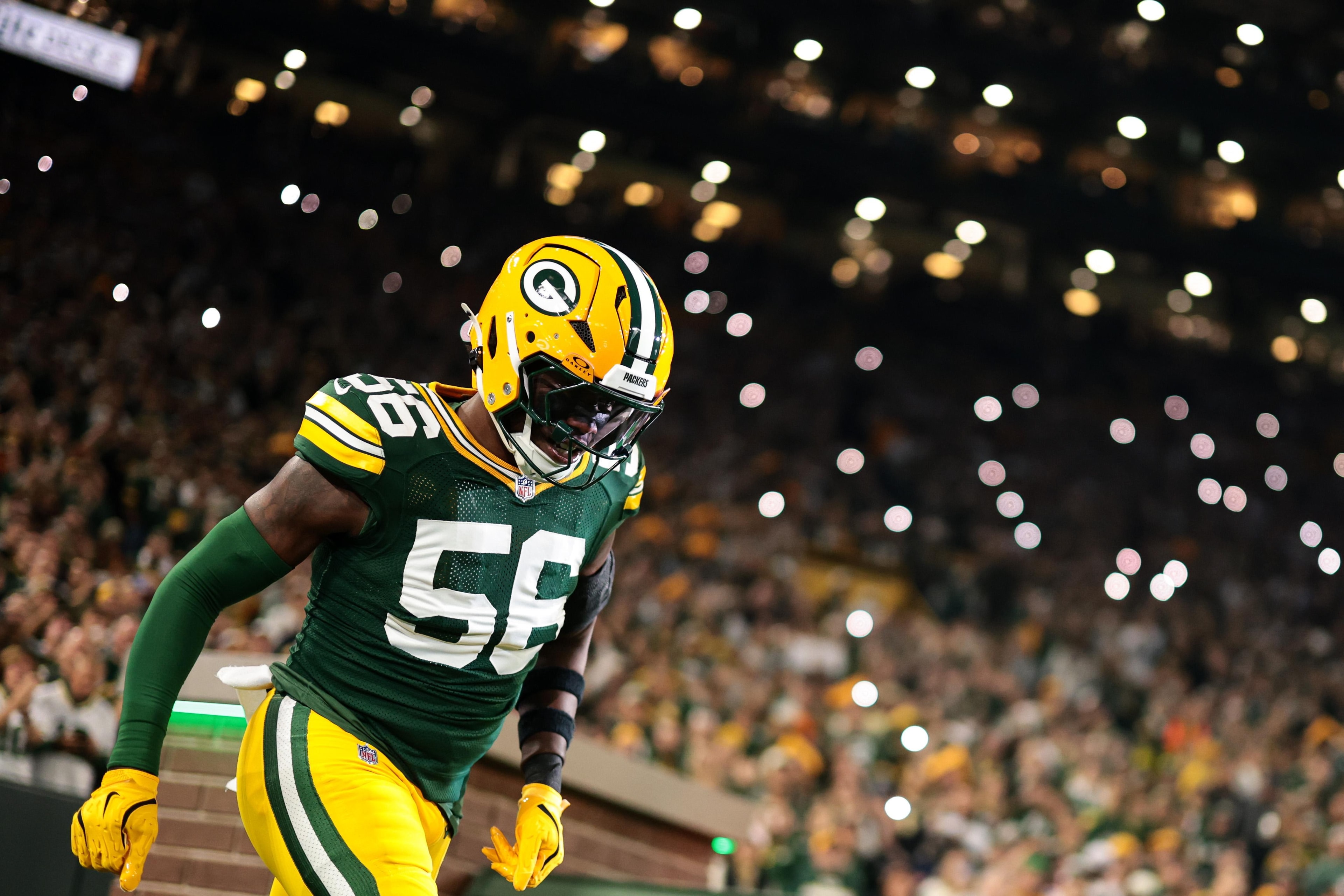
The most notable change around the Green Bay Packers defense is not a switch in scheme, at least not on paper. It is the absence of Edgerrin Cooper, an off-ball linebacker whose profile, according to Yahoo Sports, has been that of a budding star who “just looks different” on the field. That kind of player is hard to replace in the middle of a defense, because his impact is often expressed through spacing, timing, and movement more than through highlight reels that show up in box scores.
Off-ball linebackers are traditionally treated as the least valuable defensive players, a point raised in the Yahoo Sports piece itself. The argument is that, in many defensive systems, the most visible production comes from the pass rush up front or from coverage playmakers in the secondary. But Cooper’s role, as described by the reporter, challenges that assumption. Even without digging into advanced metrics, the basic football takeaway is that an elite off-ball player can change how fast the defense reacts and how consistently it fills its lanes.
What makes Cooper’s absence particularly consequential is what the article frames as his physical and mental traits. The piece characterizes him as faster and more agile than typical athletes at his position, and it emphasizes his ability to change direction and operate with a level of fluidity that shows up in pursuit and in how he transitions into coverage responsibilities. When a player with those traits is removed, the burden shifts to the next linebacker in the rotation to match the same decision speed, not just the same assignment.
The Packers’ defense has to solve the same fundamental problems regardless of personnel. An off-ball linebacker has to identify the run fit, recognize pass protections, and carry responsibilities when offensive formations shift the picture late. With Cooper out of the mix, those responsibilities do not disappear. Instead, the team’s next options must find a way to keep the linebacking unit from looking late to keys, over-committing to one read, or forcing other defenders to compensate for hesitation.
The concern, in other words, is not only who is on the field. It is whether Green Bay can keep its defensive coordination intact when the player who helps make the scheme “move” is missing. In modern NFL defenses, linebackers are often the hinge between the pre-snap picture and the in-play response, and losing that hinge can ripple into the routes the secondary can carry and the gaps the front can trust.
With no further confirmed details provided in the available material beyond the emphasis on Cooper’s absence, the most practical way to gauge the impact is to watch how the Packers’ linebackers manage their reads in early downs and how the group handles play-action and run-and-pass flow. If the defense is consistently on time and the gaps remain disciplined, Green Bay can absorb the loss better than many would expect. If the unit shows repeated late reactions, that would align with the core point of the Yahoo analysis.
Next, keep an eye on how quickly the Packers’ coaching staff stabilizes the linebacker rotation and who gets trusted with the most coverage-adjacent reps. Off-ball linebacking is rarely a one-game issue, because defensive habits carry over across multiple weeks. If Cooper’s absence continues to define the week, it will likely become a longer-term test of depth and of how well Green Bay can maintain its defensive identity without its most prominent mover at the position.
Why It Matters
- If Cooper’s skill set is as central as the analysis suggests, his absence can affect both run fit integrity and coverage response timing.
- Linebacker movement and decision speed can influence how reliably the secondary can carry routes without late help.
- The Packers’ defensive identity may hinge on whether replacements can replicate the same pre-snap-to-snap communication and reading.
- Depth tests around off-ball linebacker roles can become a multi-week storyline rather than a one-game adjustment.
Key Facts
- Yahoo Sports highlighted Green Bay off-ball linebacker Edgerrin Cooper as a budding star whose presence “just looks different” on the field.
- The same piece frames off-ball linebackers as often perceived as the least valuable defensive players.
- The article argues Cooper’s importance shows up through speed, agility, and transition movement rather than only conventional production.
- Cooper’s absence is presented as a meaningful defensive change for the Packers, because off-ball linebackers anchor multiple reads and responsibilities.
- No additional official roster or transaction details were available in the provided material beyond the emphasis on his absence.