
THE APEX TIMES
Eric Morris Puts Oklahoma State on Notice: UCF’s Explosive Offense Is More Than a 3-2 Record
Coming out of a bye week, Oklahoma State faces a UCF team that has shown big-play danger through its backfield and mobile quarterback look, and that has already delivered at least one dominant first-half statement against Houston.
Oklahoma State returns from its bye week to a nonconference test, with defensive coach Eric Morris emphasizing that UCF is more dangerous than its 3-2 record indicates. The matchup sets up a familiar point of emphasis in college football games that hinge on tempo and space: if UCF’s offense can turn short gains into long ones, the Cowboys could be forced into defensive answers for both the run and the quarterback run threat rather than settling into a single-plan approach.
According to the game preview, UCF’s identity centers on an explosive backfield and mobile quarterback play. Morris’s warning is essentially that the Knights can create problems without needing perfect execution every snap, because their rushing attack and quarterback mobility can manufacture chunk yardage and drive extensions even when opponents are disciplined early.
The record matters, but the context around it matters as much or more for how a team prepares. The preview points to UCF’s backfield production and mobility as reasons that the Knights may not reflect their win-loss mark. The implication for Oklahoma State is that defensive game planning cannot simply treat UCF as a standard “record team,” since the personnel profile is built for explosive sequences.
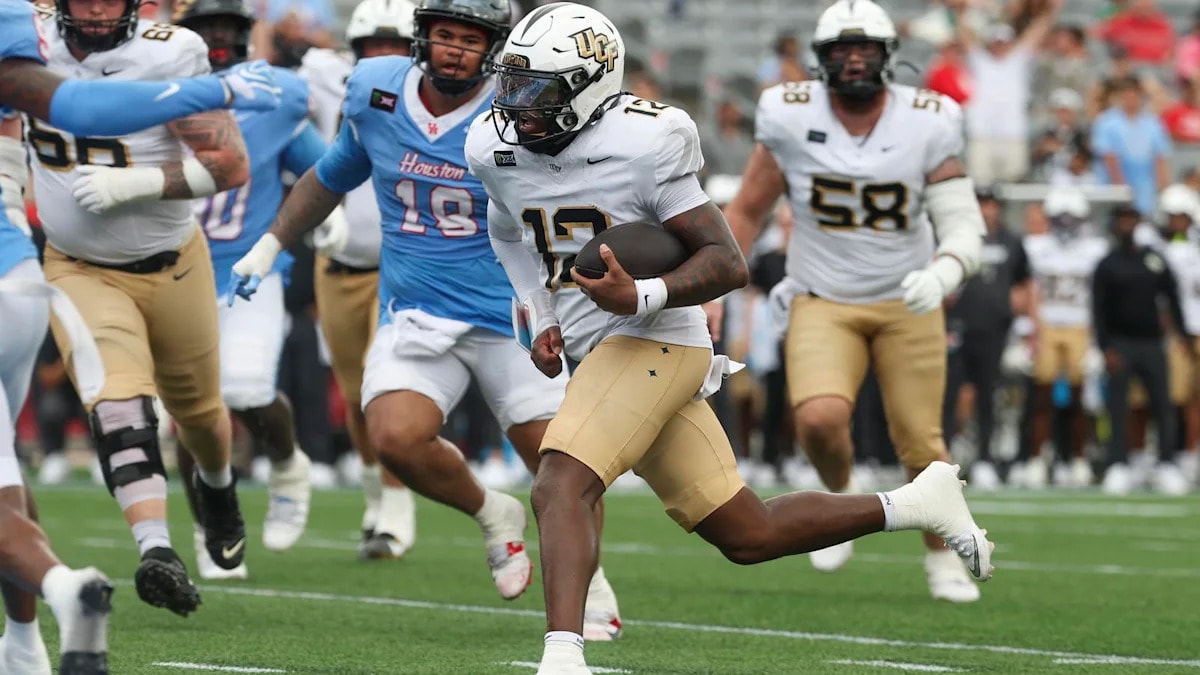
One example cited in the preview is UCF’s performance against Houston, where the Knights reportedly held a 17-0 lead. That kind of early control matters because it changes how an opponent is forced to play. If Oklahoma State allows UCF to establish the early rhythm, the Cowboys could lose the “second-and-manageable” situations that typically help a defense stabilize, turning the contest into a contest of sustained offensive drives and repeated third-down opportunities.
For Oklahoma State, Morris’s message is also specific. The preview says stopping the run will be the biggest priority for the Cowboys. That is a direct acknowledgment of how UCF is designed to operate. A defense that can slow the inside and outside runs can reduce the number of plays where UCF gets to be “one read and go,” and it can also limit how often the offense can reset behind a moving pocket and quarterback designed runs.
Oklahoma State’s situation heading into the game includes rhythm from outside the bye. The preview describes the Cowboys as coming off a three-game winning streak and being ranked No. 18 nationally, which frames the stakes as both confidence and maintenance. Rankings can raise expectations, but after a bye week the practical challenge is continuity: translating what the defense learned in prior wins into execution against an offense built to take advantage of aggressive fits.
What to watch next is whether Oklahoma State can translate its bye-week preparation into early defensive success. If the Cowboys can slow UCF’s backfield impact and keep the Knights from building drives with first- and second-down efficiency, the matchup likely stays within reach. If UCF’s run and quarterback mobility show up early, the game could quickly become a test of Oklahoma State’s ability to generate stop-and-respond sequences rather than simply prevent explosive gains from one side of the offense.
Because this story is built from a single preview report, readers should treat some details as preparatory emphasis rather than a full statistical preview. Still, the core matchup concept is clear: Oklahoma State wants to dictate how UCF runs the ball, while UCF’s plan is to turn the run game and quarterback mobility into big-play leverage regardless of the opponent’s adjustments.
Why It Matters
- Defensive priorities could determine the flow of the game, because a run-focused approach shapes down-and-distance outcomes and limits quarterback run opportunities.
- UCF’s offensive identity suggests the Cowboys may face fewer “standalone” run plays and more packages designed to take advantage of aggressive fits.
- The matchup carries ranked-team implications for Oklahoma State’s national positioning, especially after a bye week.
- UCF’s ability to jump early, as indicated by the referenced Houston start, could force Oklahoma State into higher-risk defensive patterns.
Sources
Key Facts
- Oklahoma State is returning from a bye week and is described as riding a three-game winning streak and ranking No. 18 nationally.
- UCF is described as having a 3-2 record entering the game.
- UCF’s offensive strengths highlighted in the preview include an explosive backfield and mobile quarterback play.
- The preview cites UCF’s 17-0 lead against Houston as evidence of the Knights’ potential.
- Eric Morris warned that UCF is better than its record suggests.
- For Oklahoma State, the preview says stopping the run is the biggest priority.