
THE APEX TIMES
ESPN’s FPI takes a pass at Kentucky’s 2026 schedule as Will Stein begins Year 1
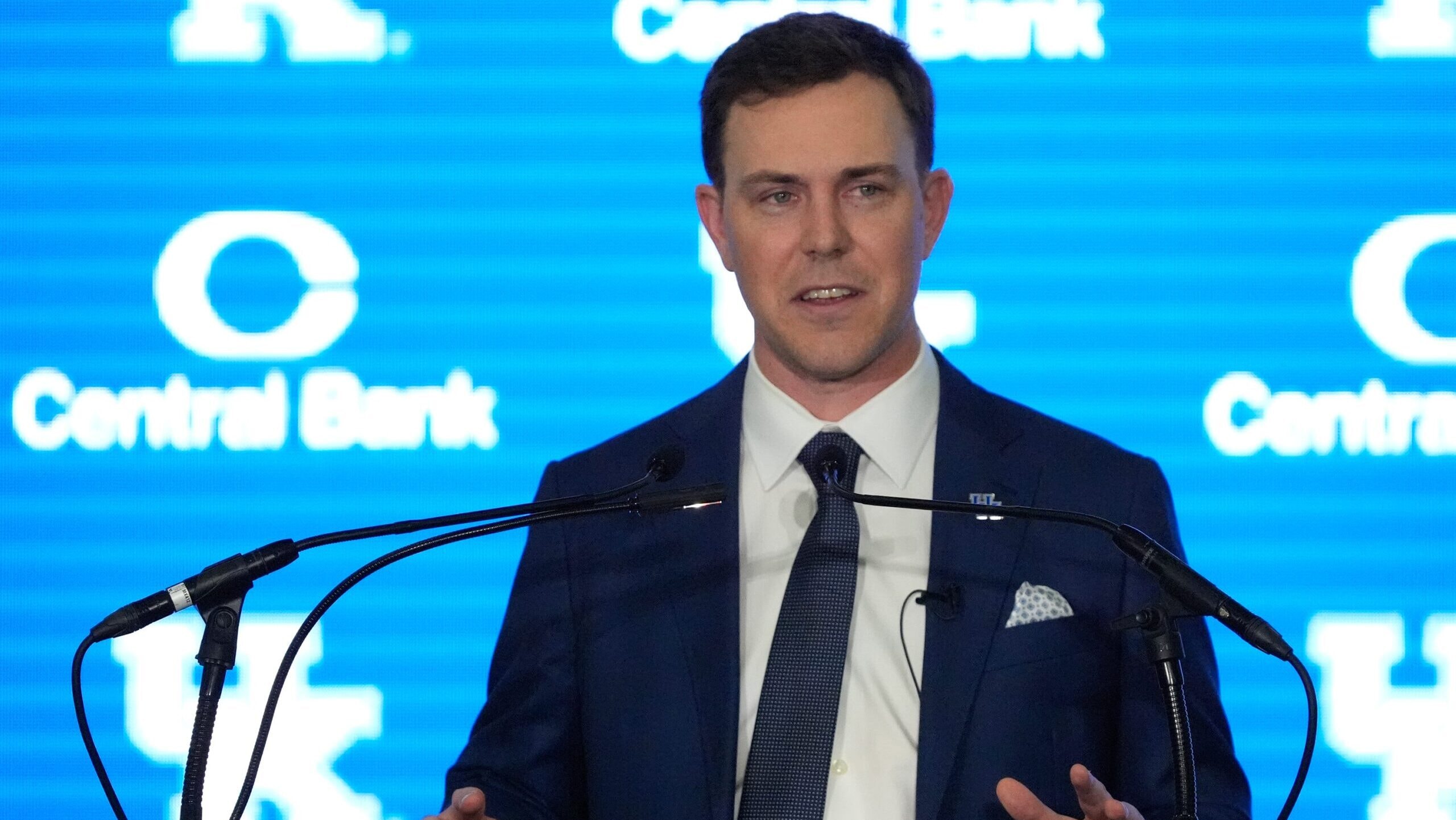
The Wildcats’ first season under head coach Will Stein enters the spotlight again, this time through ESPN Football Power Index projections laid out for each game on Kentucky’s 2026 slate.
Kentucky’s 2026 season is still months away, but ESPN has already started the conversation for the Wildcats. In a preview posted Monday, ESPN’s Football Power Index, or FPI, provides a game-by-game look at what it projects for every matchup on Kentucky’s 2026 schedule as Will Stein’s first year as head coach begins to take shape in fans’ minds.
The timing matters because Year 1 in a new regime often comes with two competing storylines. There is the on-field reality of how quickly a team can adapt to a new voice, new play-calling tendencies, and a new overall identity. At the same time, there is the expectation gap that grows as fans and pundits try to map “instant turnaround” timelines onto a schedule that does not care what year it is. ESPN’s approach gives supporters a concrete framework to discuss those questions, even if it is only a forecast, not a promise.
FPI is not a simple “pick’em” model. It is designed to estimate team strength and translate that into probabilities by weighting factors such as team performance and opponent quality over time, then combining those elements to generate expected outcomes for upcoming games. The reason Kentucky fans tend to focus on these kinds of posts is that they can highlight where a schedule may be more forgiving, where it may be more demanding, and which matchups are treated as “swing” opportunities by an evidence-based projection system.
From Kentucky’s perspective, the biggest backdrop is that Stein is in the early stage of building a roster and a football culture that must fit his staff’s system. A schedule projection, even without the human element of coaching adjustments, can still help clarify what kinds of stretches define a season. If a team’s projection swings from competitive to favored in consecutive weeks, the middle-of-the-year portion of the calendar becomes especially important. If the projection highlights several closely matched games, the season’s outcome may hinge on execution rather than talent alone.
ESPN’s published preview frames the 2026 season as an opportunity for quick results, which is a reasonable way to interpret the stakes of Year 1 in the SEC. The Southeastern Conference is not built around patience. Programs can take the long view, but fans typically measure progress by how often a team turns “should be tough” opponents into winnable games. That is where FPI projections can shape perception, because they give a number-driven explanation for why certain games might be targeted as must-win, and why others might be viewed as development opportunities instead of immediate tests of legitimacy.
Still, the limitations are straightforward. Any pre-season projection is only as accurate as the assumptions it starts with. Over the course of a college football season, teams change rapidly due to lineup stability, early-form injury outcomes, matchup-specific schemes, and the way young players grow once the real competition begins. Kentucky will also face the normal college football variability that models cannot fully capture, especially once the season shifts from preseason narrative to week-to-week adjustments.
What to watch next is how Kentucky’s preseason indicators align with what FPI projects. If preseason indicates suggest the Wildcats are moving toward the kinds of strengths that typically improve a team’s probability of winning close games, then those “toss-up” areas of the schedule become more actionable. If not, then the projections may look optimistic early and overly forgiving later. In either case, ESPN’s schedule-by-schedule probabilities provide a starting point for what Kentucky fans can debate now, while the actual work of Stein’s first season begins to show up on the field.
Why It Matters
- In the SEC, the middle weeks often determine whether a team’s season feels like a competitive leap or a slow build.
- FPI-style previews can spotlight which Kentucky matchups are projected as winnable versus more difficult, shaping early fan expectations.
- Year 1 under a new head coach tends to be judged quickly, and schedule projections become part of that public scoreboard.
Sources
Key Facts
- ESPN Football Power Index is the basis for a game-by-game projection preview for Kentucky’s 2026 schedule.
- The preview is framed as an early look at what Year 1 under head coach Will Stein could resemble.
- The story is published by Saturday Down South on August 29, 2026.