
THE APEX TIMES
Eury Pérez’s command slips early in the third, Marlins chased in Nationals loss
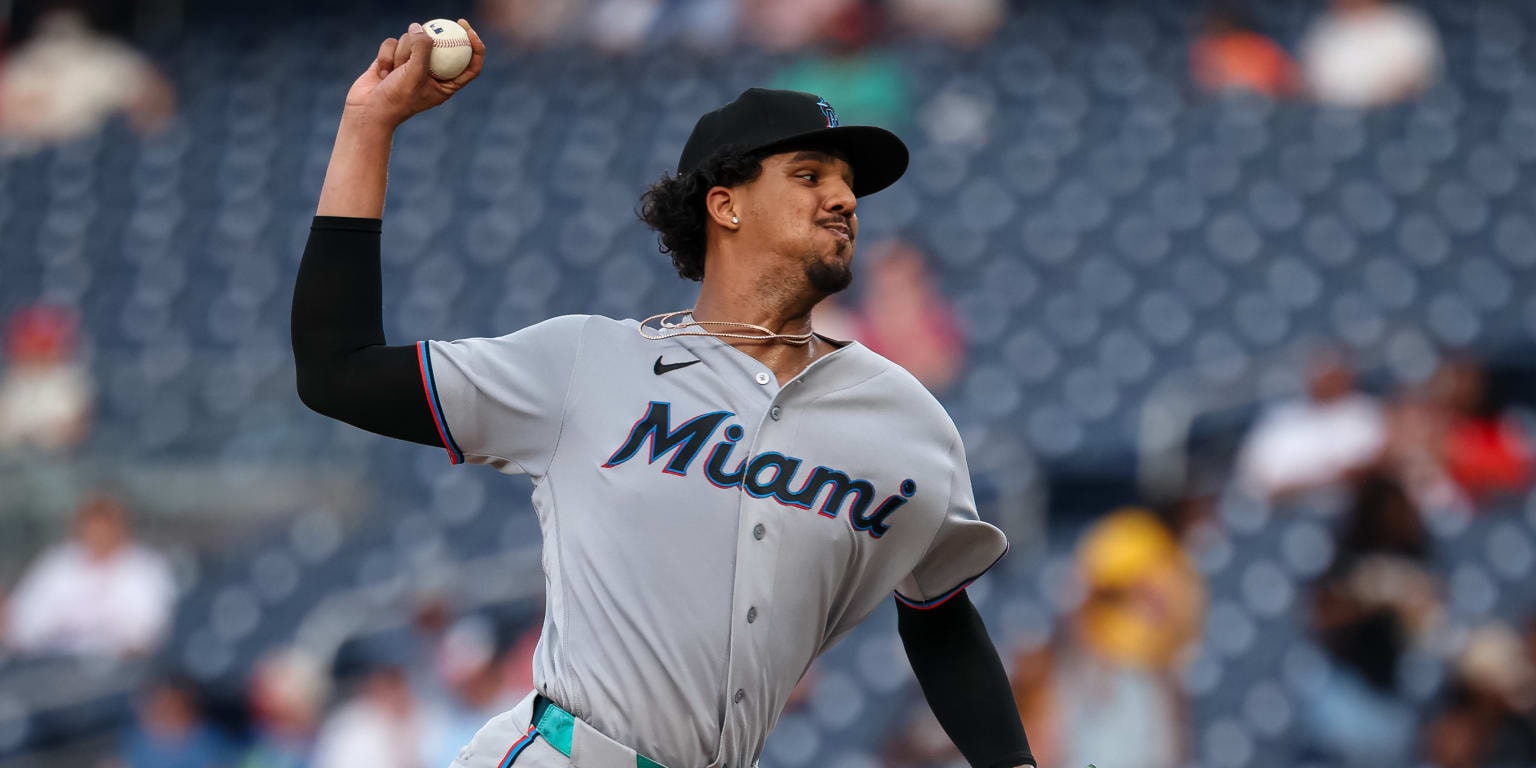
WASHINGTON, Aug. 28, 2026 (Apex Times) - Marlins right-hander Eury Pérez had been sharp entering Friday night, but his control unraveled in a five-run third inning, leaving Miami unable to fully recover after a start that turned suddenly chaotic.
Eury Pérez came into Friday night’s matchup with the Nationals on a roll, and even when his execution wavered in the opening moments of the third inning, it still felt like a temporary snag. He opened the frame by issuing eight straight balls, a stretch that not only stalled the inning, but also shifted momentum toward Washington in a hurry.
What followed was the decisive swing. The Marlins’ starter could not command the zone once the third inning started to unravel, and Miami’s problems escalated as Washington cashed in for a five-run frame. The inning did more than end Pérez’s night early in the context of how baseball innings snowball, it also forced the Marlins to play from behind with limited margin for error.
Pérez ultimately finished with four walks over three innings, a line that reflected both the volume of missed locations and the inability to re-establish an efficient rhythm against the Nationals. Command is often the separator for pitchers who can generate stress without overwhelming swings. In this case, the free passes did the work for the other side, stretching pitch counts and giving Washington additional looks.
Even after the third inning’s damage, Pérez’s outing left the broader theme intact: the gap between his recent form and what showed up Friday was stark enough to matter. When a pitcher has been “sharp” in preceding outings, hitters tend to see that reflected in the strike-throwing. Friday, however, turned into a test of his ability to regain control after the first signs of trouble.
For the Nationals, the inning was the kind of capitalization that tends to define one game against another in the regular season. When the plate appearance advantage is created by walks, it changes how each subsequent at-bat is played, particularly with runners advancing on bases plus-situation at-bats. Washington’s ability to score during that stretch turned Pérez’s early-third volatility into a cushion Miami had to attack later.
For the Marlins, the takeaway is less about one outing’s final result and more about the process of command. A four-walk, three-inning performance is rarely just “bad luck.” It usually reflects a sequence of pitches that missed too far or too often for long enough to allow rallies to take root. The next question becomes whether Pérez can correct the underlying mechanics or approach that led to the long ball streak to start the third.
Going forward, the most important thing to monitor is not only whether Pérez bounces back, but also what his early-inning profile looks like. If his ball-strike numbers normalize and he avoids the kind of extended run of misses that began the third, the Marlins can return to the advantage that his recent sharpness provided. If command remains unstable, Miami’s bullpen workload and in-game leverage could be forced into tougher territory sooner than planned.
Why It Matters
- For the Marlins, the performance highlights how quickly a command lapse can turn a manageable start into a game-altering inning.
- For the Nationals, the five-run third shows how effectively they can turn free passes into run production.
- The four-walk, three-inning line sets a clear benchmark for what Pérez must fix to regain the strike-throwing and efficiency that his recent stretch suggested he had.
- Pérez’s ability to correct his control affects Miami’s bullpen usage and late-inning options in subsequent games.
Key Facts
- Eury Pérez entered Friday night’s game versus the Nationals after recent success and was described as being “so sharp recently.”
- In the third inning, Pérez began the frame by throwing eight straight balls.
- Washington scored five runs in the third inning to swing the game.
- Pérez finished the outing having walked four batters in three innings.
- The outing followed a pattern of command issues that prevented Miami from limiting damage once the rally started.