
THE APEX TIMES
Falcons’ duo backfield gets league-wide hype as training camp approaches
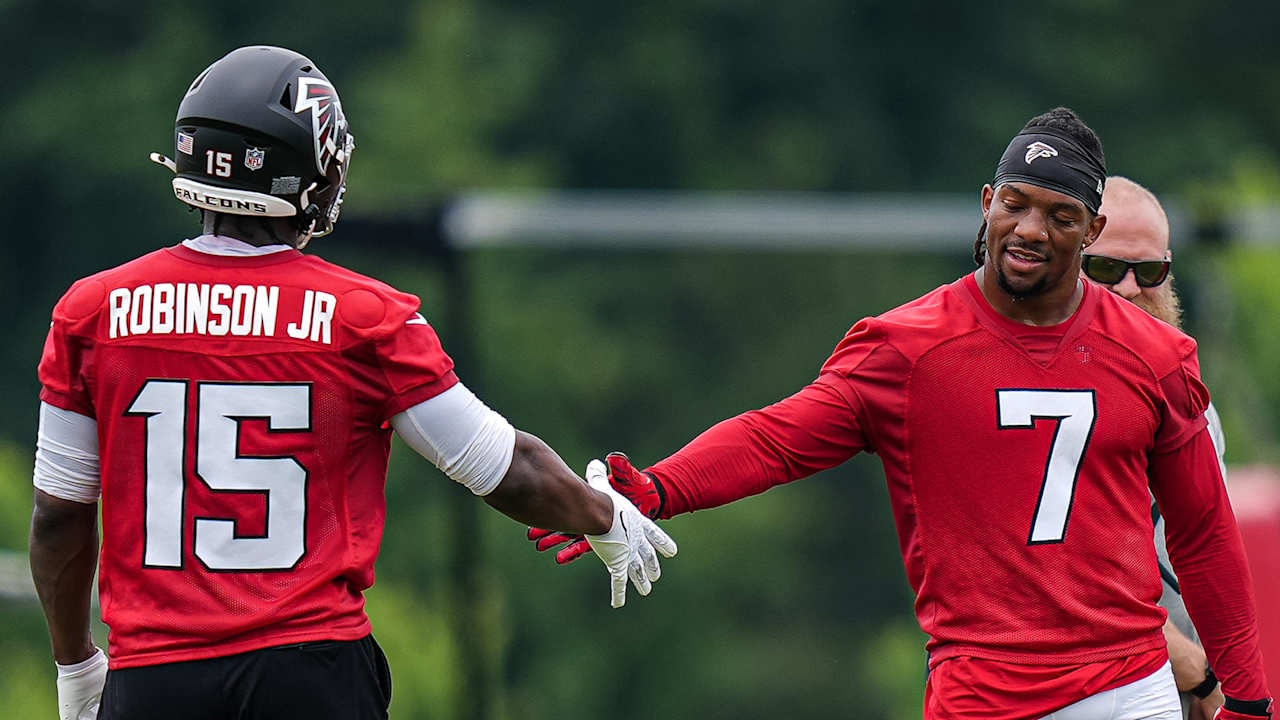
Atlanta’s running backs room, anchored by Bijan Robinson and Brian Robinson Jr., is being treated as one of the NFL’s most impactful one-two punches heading into the 2026 season.
The Atlanta Falcons’ backfield is drawing top-tier attention as the 2026 season nears, with national evaluators pointing to the immediate upside of a pairing they view as rare in today’s NFL. In an organizational preview published by the Falcons, Robinson’s jump and the addition of Brian Robinson Jr. are framed as the foundation for what multiple voices around the league describe as an elite rushing attack heading into camp.
The club’s assessment leans on Robinson’s production and the way it has shaped Atlanta’s offensive identity. According to the Falcons’ write-up, Robinson “ascended to yet another level in 2025” by leading all NFL players with 2,298 scrimmage yards, a production marker that reflects both his rushing load and his role as a steady option in the passing game. The same Falcons preview also highlights a franchise moment, noting Robinson broke Warrick Dunn’s team record for the longest rushing touchdown, running 93 yards against the Los Angeles Rams.
That kind of playmaking, Atlanta argues, is part of why Robinson is not simply viewed as a high-volume runner. The Falcons note that ESPN’s Jeremy Fowler compiled a league-wide consensus ranking of running back position groups ahead of 2026 by consulting coaches, scouts and executives. In that process, Robinson was described as the consensus pick when votes were counted for the NFL’s best running back, and the Falcons’ piece includes an executive quotation used in Fowler’s reporting about Robinson’s ability to create positive runs even when blocking breaks down.
Atlanta’s next question is how effectively Robinson’s talent can be complemented by the man opposite him. The Falcons preview sets the stage for Robinson and Brian Robinson Jr. sharing backfield snaps for the first time as a tandem, while also referencing the recent form of the Falcons’ two-man rushing attack that previously featured Robinson alongside Tyler Allgeier. In other words, the team’s narrative is both forward-looking and continuity-based: Robinson’s established impact is the constant, and the pairing changes while the underlying offensive goal remains the same.
From a football standpoint, a backfield can be “good” without being dangerous as a unit. Atlanta’s framing emphasizes the kind of contrast that coaching staffs tend to covet: a runner who can manufacture big gains and another option who can reinforce durability and balance across a full slate of touches. The Falcons describe the earlier one-two punch as dynamic, dependable and durable, and the club’s current messaging suggests that Brian Robinson Jr. is expected to fill the role of a complementary threat rather than simply rotate as an extra body.
The timing of this discussion matters because preseason optimism tends to focus on position groups that can stabilize an offense when the passing game is pressured or when a game script demands sustained drives. For Atlanta, the stakes are not only about ranking narratives, but about whether the running game can protect playmakers, keep defenses honest, and reduce the margin for error elsewhere on the roster. If Robinson’s 2025 production remains a baseline, the tandem question becomes how efficiently Brian Robinson Jr. and the Falcons’ offensive line can convert opportunities into consistent chunk plays.
Heading into 2026, the Falcons will likely be judged on whether this “one-two punch” identity holds up once opponents have film, adjustments, and game-day personnel in place. Training camp will be where the roles get clarified: how touches are distributed, how often the Falcons run true two-back looks versus different formations, and whether the production from Robinson’s individual baseline turns into more efficient team offense when paired with his new backfield partner. The current league-wide chatter gives Atlanta a measuring stick, but the season will decide whether the hype turns into results.
Why It Matters
- If Robinson’s statistical baseline continues, Atlanta’s ceiling rises quickly when paired production turns into sustained drive success.
- Backfield continuity and role clarity can influence how frequently an offense can run the same concepts before and after defensive adjustments.
- League-wide running back evaluations can affect how opponents prepare, often leading to heavier fronts that test the rest of Atlanta’s offense.
- A strong one-two punch can reduce the pressure on the passing game by improving early-down efficiency and play-calling variety.
- How well the Falcons translate these projections into preseason and regular-season execution is likely to be a major storyline for their offense early in 2026.
Sources
Key Facts
- The Falcons’ official preview says Bijan Robinson and Brian Robinson Jr. will share a backfield for the first season together as the 2026 season approaches.
- Atlanta’s preview points to Robinson’s 2025 output, including 2,298 scrimmage yards, the most by any NFL player that season.
- The Falcons also say Robinson set a team record for the longest rushing touchdown (93 yards) against the Los Angeles Rams.
- The Falcons’ preview describes ESPN’s Jeremy Fowler polling coaches, scouts and executives to compile a running back position group ranking for 2026.
- In that ESPN exercise referenced by Atlanta, Robinson is described as the consensus choice for the NFL’s best running back.
- Atlanta frames the backfield as more than a single-player strength, describing the goal as dynamic production paired with dependability and durability.