
THE APEX TIMES
Falcons join the NFL’s four-quarterback club, a roster trend that’s getting more common
Atlanta’s decision to carry four quarterbacks on its 53-man roster reflects how modern NFL teams are valuing depth, development, and matchup-proofing during a quarterback-driven era.
The Atlanta Falcons have joined the small but growing group of NFL teams keeping four quarterbacks on the 53-man roster, a move that is becoming less unusual as roster construction changes across the league. Historically, most teams avoided the fourth quarterback carry because a quarterback spot has to compete with other needs, especially when practice squad rules and injury risk are factored into the calculus.
In the last several years, though, teams have increasingly treated quarterback depth as both a safety valve and a development pipeline. In camp and the early part of the season, teams have more opportunities to evaluate passers, install game plans, and measure who can operate an offense if starters are forced out. Keeping a fourth quarterback can reduce the disruption of a midstream change, particularly when the difference between a starter, a backup, and a third-string option is not just ability to throw, but comfort with the full system.
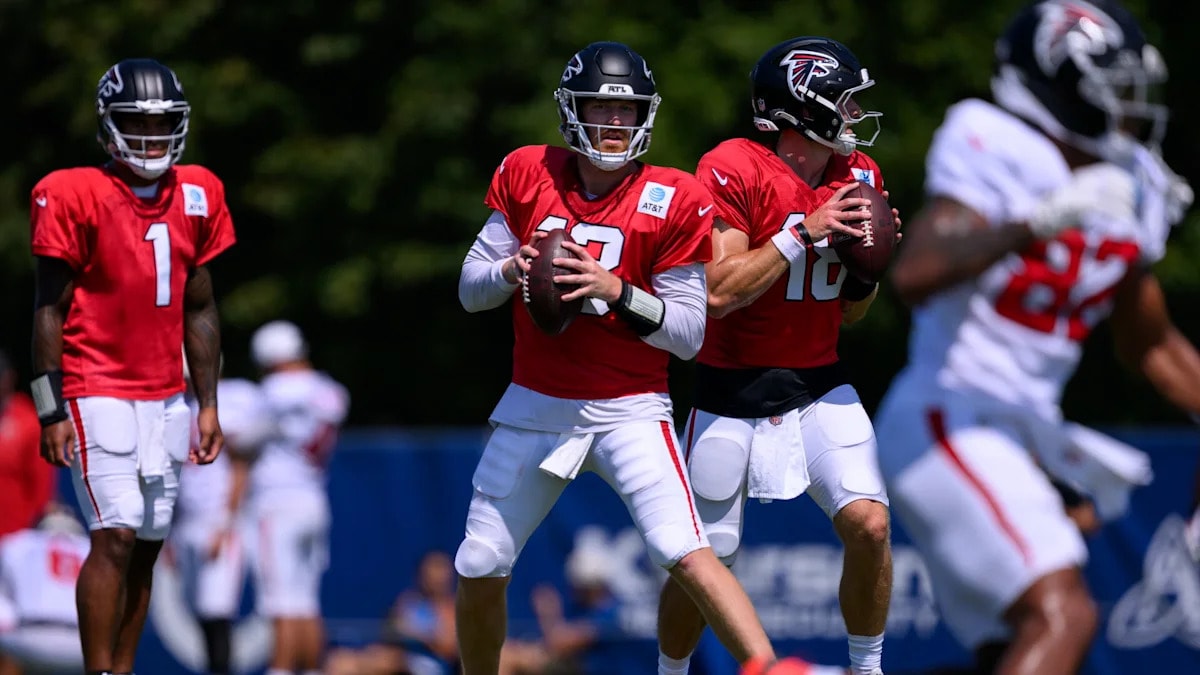
For the Falcons, the headline isn’t simply the number. It is what the number suggests about their quarterback room and how they are managing risk. With four players at the position on the active roster, Atlanta is effectively building in extra redundancy, so a single injury or performance issue does not automatically force the team into a simplified plan or a sudden reliance on an unfamiliar skill set.
This roster approach also aligns with an NFL environment where quarterbacks are expected to process quickly and handle complex protections, especially as defenses diversify coverage and pressure packages. Teams have learned that quarterback play can swing the entire rhythm of a game. When coaches decide the margin for error is thin, they often prefer a deeper internal group rather than a quick fix from the outside.
The broader trend around the league is also part of the context. While carrying four quarterbacks was once rare, multiple franchises have experimented with it in recent seasons, and it has started to show up more often as teams balance quarterback development with the realities of the weekly grind. The Falcons being part of that group positions them among teams leaning into the idea that quarterback depth is a controllable variable, not a gamble.
That said, there is always a tradeoff. A fourth quarterback costs roster space, which can mean less flexibility at another spot, and it can also create hard choices when injuries elsewhere force teams to make cuts. The Falcons will still need the quarterback group to justify the extra active roster spot through performance in preseason action, readiness in practice, and effectiveness when called upon.
What to watch next is how the Falcons distribute reps once the regular season approaches, how quickly the active quarterback group settles into clear roles, and whether the team uses the fourth quarterback as a true emergency option or as an investment in longer-term growth. If the move leads to smoother offensive continuity and less disruption when conditions change, it could become a model other teams follow. If it forces roster compromises elsewhere, the Falcons may view the experiment as a short-term necessity rather than a new standard.
Why It Matters
- Quarterback depth can reduce offensive disruption if starters are forced out or performance issues emerge.
- More teams carrying four quarterbacks suggests the position is becoming even more central to weekly roster planning.
- The decision can influence how coaches manage preseason and early-season reps and game-week preparations.
- If the strategy pays off, it may contribute to a broader shift in how active rosters are constructed around the quarterback position.
Key Facts
- The Atlanta Falcons have carried four quarterbacks on their 53-man roster.
- Carrying four quarterbacks was historically uncommon in the NFL but is increasing in frequency league-wide.
- The move reflects a roster-building strategy that prioritizes quarterback depth and system readiness.
- A fourth active quarterback creates roster tradeoffs that can affect flexibility at other positions.