
THE APEX TIMES
Fantasy Football Draft Slots in 2026: Analyst Joel Smyth Says Position Choice Can Drive Your Plan
With fantasy drafts approaching across common league formats, Joel Smyth’s 2026 breakdown focuses on how draft-slot placement affects the best path to building a roster, especially when roster construction preferences and scoring rules collide.
Fantasy football drafts begin in earnest as managers look for an edge before training camps even fully settle into routine. In a new 2026 guide, fantasy analyst Joel Smyth tackles a question that sounds simple but often decides outcomes early in the season: if you can choose your draft slot, which positions offer the best setup for your roster build.
Smyth’s premise is straightforward. Draft position is not just about who you pick first. It shapes the entire order of decisions, which alters what runs first, which tiers of players you can target before others do, and how often you “see” a player group before it becomes inaccessible. In his view, the biggest value of being able to pick a slot is turning your draft into a plan rather than a reaction.
The 2026 approach Smyth outlines is organized around common league settings, including standard league structures and popular variations that change player values. That matters because the quarterback position, the way running backs are prioritized, and the role of wide receivers can shift depending on scoring. In formats that reward receiving volume heavily, Smyth’s framing emphasizes that slot choice can influence how cleanly you can secure top-end production at premium positions before the middle rounds compress into a crowded range of similarly graded players.
Smyth also treats “turn” mechanics as part of the slot advantage. In many snake drafts, certain draft positions line up so that you swing through your roster in a way that either reduces the number of times you are forced to pivot off your preferred player targets. Even when managers use the same rankings, the order of picks can change whether a desired tier is still available when your turn arrives, especially in leagues with sharp managers who draft positionally and follow similar player pools.
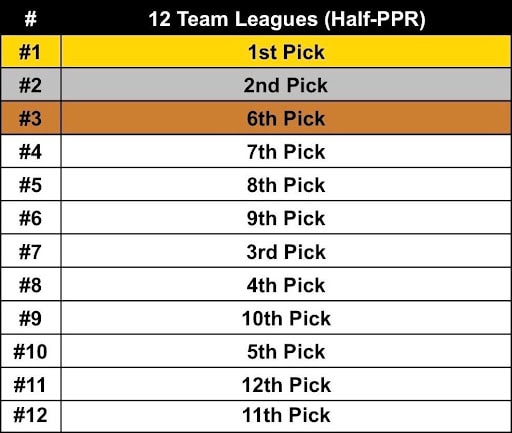
Another major theme is that slot value is not universal across managers. A team that wants to build around a specific strategy, such as attacking running backs early or prioritizing a certain receiver archetype, can benefit from a slot that matches how those tiers typically come off the board. Smyth’s breakdown is built to reflect those differences, which is why his “favorite spots” are presented in the context of both draft-slot placement and the league format used for the selection.
For commissioners and managers who haven’t locked in a draft format, Smyth’s focus offers a practical takeaway: before worrying about which player will be available at the top of the board, decide what kind of roster you are trying to build. If your league is half-PPR, full-PPR, or uses a quarterback emphasis, the relative value of positions can change, and that increases the importance of picking a draft slot that supports the timing of those decisions.
The next test for any slot-driven strategy is execution on draft day. Managers still have to adapt when other owners deviate from expected behavior, and rankings do not always translate perfectly across formats. But the core point of Smyth’s 2026 guide is that when slot choice is available, it should be treated like a meaningful input into roster construction, not a cosmetic preference. As 2026 draft dates approach, managers will be watching how the first-round dynamics and early tier runs differ by format, which ultimately decides whether a “favorite” slot turns into a consistent advantage.
Why It Matters
- Draft-slot selection can change which player tiers are still available when managers receive their next pick in a snake format.
- Scoring settings influence how different positions are valued, and Smyth’s emphasis ties slot choice to format-specific roster building.
- Managers who treat draft slot as a strategic input rather than a minor convenience may reduce the need for last-minute pivots.
- As drafts move toward 2026, understanding slot mechanics can help managers anticipate early runs and plan around them.
Key Facts
- Fantasy football analyst Joel Smyth published a 2026 guide on drafting when managers can choose their draft slot.
- The guide breaks down draft-slot preferences in the context of common league settings.
- Smyth frames draft position as something that can affect the structure of a draft plan across an entire roster.
- His approach connects slot placement to how player tiers and position value can shift based on scoring formats.