
THE APEX TIMES
Fantasy Roundtable Highlights the One Player Analysts Keep Getting Stuck on for 2026 Rankings
As fantasy football drafts for 2026 approach, a new analyst roundtable argues that the most difficult rankings are rarely the obvious top-tier names, but the tougher evaluations farther down the board.
Fantasy football drafts for 2026 tend to sort themselves quickly at the very top: elite workloads and established touchdown profiles usually make players like Bijan Robinson, Jahmyr Gibbs, and Ja’Marr Chase straightforward choices. But a Yahoo Sports fantasy roundtable puts the focus on what happens after that. The hard part is ranking the next tier of options when usage projections become less stable and the assumptions you used in previous seasons no longer hold.
The roundtable frames the ranking problem as a “rest of the player pool” issue, where small changes can create big fantasy swings. Analysts have to weigh outcomes like role adjustments, team changes, and the ripple effects that come from incoming rookies. In that environment, players who might look similar on paper can carry very different fantasy paths, depending on how a season’s first true workload settles.
A key theme in the discussion is that “easy ranking” is often a function of familiarity. Once an elite player’s touch rate, target share, or game-script value is known, fantasy projections become a matter of fine-tuning. By contrast, the players that are hardest to rank are frequently the ones with more moving parts, including uncertain opportunity, unclear pecking-order transitions, or a situation where recent performance does not guarantee the same output at the same level.
The roundtable also points to timing as a reason rankings can stay difficult. Fantasy drafts are decided before the full season context becomes clear, so analysts have to blend offseason information with probability. When that offseason information involves questions such as how quickly a new player can absorb a role, or how an offense might distribute volume differently, the ranking process can stall for even experienced drafters.
While the report emphasizes that multiple factors can complicate rankings, it highlights a practical takeaway for fantasy players: the biggest draft-day advantage often comes from knowing where your rankings diverge from the consensus. If multiple analysts say there is one specific player they are struggling to slot, that suggests the broader market could be overconfident in either direction, even if the player’s talent is obvious.
The roundtable is not presented as a checklist of who will win or lose in 2026. It is framed as an evaluation problem, where the same available information can reasonably lead analysts to different answers. That matters because fantasy scoring rewards production, but production depends on opportunity, chemistry, health, and role stability, and any of those can shift quickly once the season begins.
For readers preparing for 2026 drafts, the most useful “watch next” item is not a single player ranking as an absolute truth, but the conditions that make these players difficult to evaluate. As training camp and preseason data accumulate, analysts typically refine the projections that are most uncertain in August, especially for players whose value depends on workload projections rather than established production alone.
In short, the roundtable’s message is about process: the top names are familiar, but the real ranking stress test is the middle and lower tier, where roles can change and new players can reshape opportunity. The “one player” each analyst is struggling with is a report that, for at least that part of the board, certainty may be less common than fantasy managers assume. That uncertainty is where draft strategy often gets decided, and where updates during the preseason period are most likely to matter.
Why It Matters
- Fantasy value in 2026 is likely to hinge less on recognizing elite talent and more on correctly projecting opportunity and role stability.
- If multiple analysts are stuck on the same “hardest to rank” player for their board, that suggests the wider market may have blind spots about uncertainty.
- Draft-day decisions can be shaped by August-to-preseason updates that clarify workload and target distribution, especially for players whose role is less established.
- The roundtable’s framing underscores that fantasy rankings are probability judgments, not guarantees, and that uncertainty can be a differentiator for informed drafters.
Sources
Key Facts
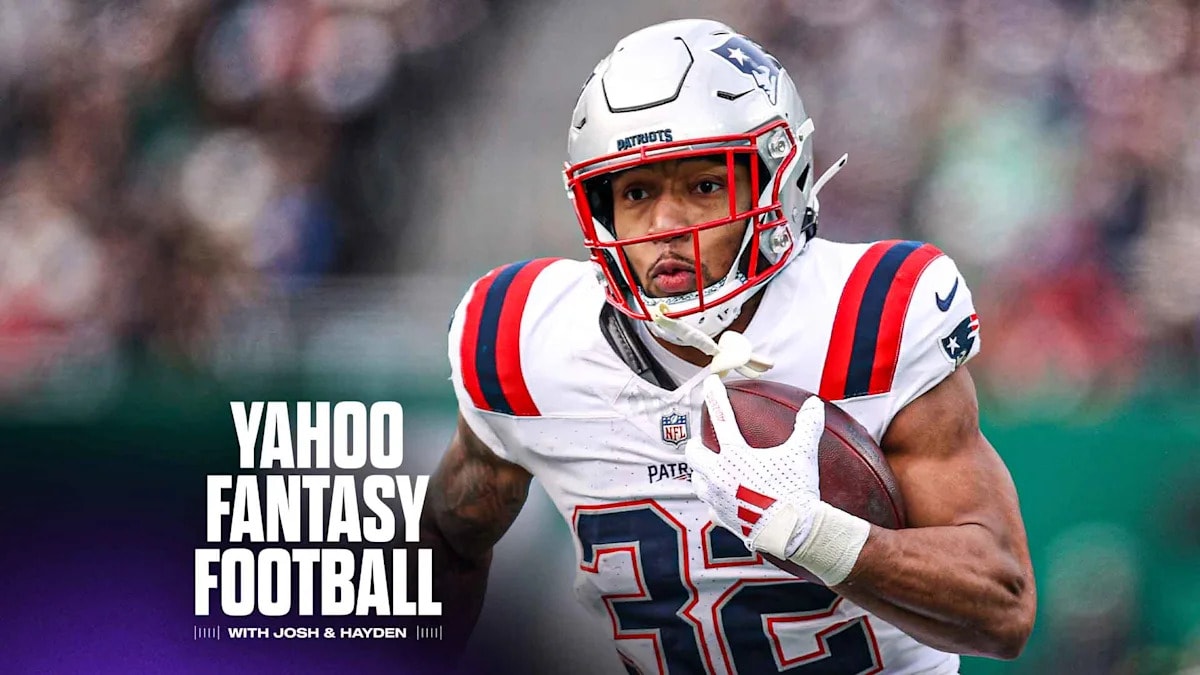
- Yahoo Sports published a fantasy football roundtable focused on which player each analyst finds hardest to rank for the 2026 season.
- The roundtable contrasts the easy process of ranking top options with the difficulty of evaluating the rest of the player pool.
- The discussion identifies familiar top-tier names such as Bijan Robinson, Jahmyr Gibbs, and Ja’Marr Chase as examples of players that are generally easier to slot early.
- The roundtable attributes ranking difficulty to factors including injuries, changing teams, and the impact of incoming rookies on usage and opportunity.
- The piece emphasizes that analysts must project roles before a full season context is available, which can create uncertainty even for talented players.