
THE APEX TIMES
Florida’s Jon Sumrall ramps up involvement with defense after South Carolina showing
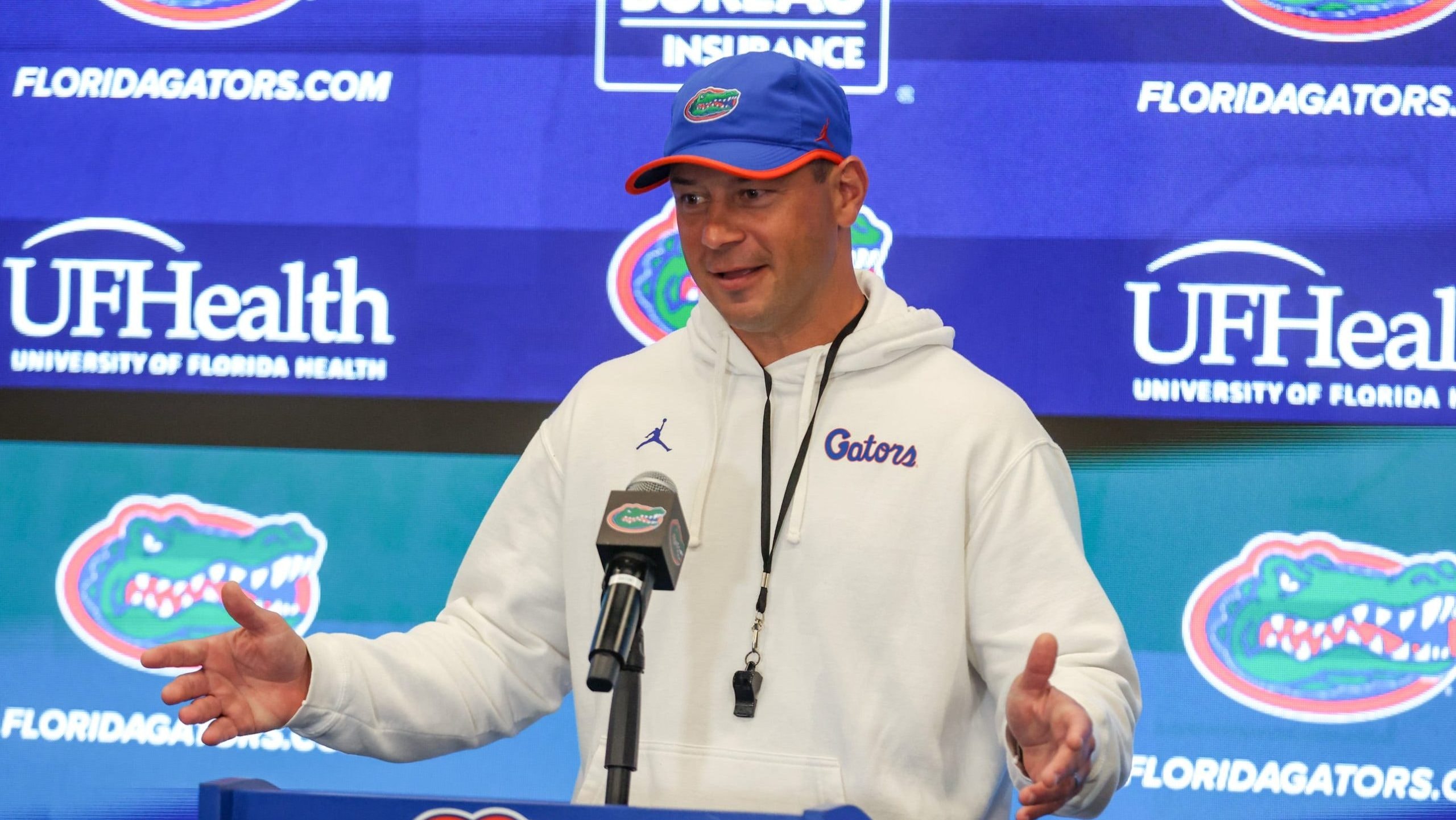
After a difficult performance against South Carolina, Florida’s coaching staff is leaning more heavily on Jon Sumrall as the Gators look for faster defensive corrections and clearer execution.
Florida is making a clear personnel-and-process adjustment on the defensive side, with coach Jon Sumrall increasing his involvement with the Gators’ defense following what Saturday Down South described as a “debacle” against South Carolina. The move indicates that the staff is trying to tighten decision-making and communication during a stretch where defensive problems have been hard to contain.
The timing matters. A game against a conference opponent is usually where defensive teaching points become most visible, and the staff’s response after that loss suggests Florida believes the issues are not only schematic, but also operational: assignments, leverage, and in-game adjustments. Rather than treating the breakdown as a one-off, the program is choosing to intervene directly in how the defense is coached.
According to the report, Sumrall’s added involvement is meant to “increase” his hands-on role in the defensive process, implying more direct oversight of preparation and more frequent engagement during defensive breakdowns. For a college football program, that kind of shift often reflects a need for faster identification of recurring errors and a more direct path from film review to what players are coached to do the next week.
From a football standpoint, the defense’s role in limiting big plays and sustaining stops is typically the dividing line between competitive and uncompetitive weeks, especially inside the SEC. When a defense underperforms in a single game against a familiar opponent, it forces questions about whether the scheme is failing, the personnel does not fit the scheme, or the players are not processing the game plan quickly enough under stress. A coordinator or senior assistant stepping deeper into the day-to-day defensive work generally aims to address all three possibilities.
Florida’s next defensive test will reveal whether the added coaching presence translates into better execution on the field, including more consistent alignment, cleaner coverage communication, and fewer breakdowns that allow opponents to convert early advantages into sustained drives. If the improvements show up quickly, it would validate the staff’s approach of tightening coaching involvement rather than waiting for broader changes.
For now, Saturday Down South’s account frames the adjustment as an immediate corrective step after the South Carolina game, not a wholesale rebuild. The larger storyline for Florida is whether the increased attention from Sumrall leads to measurable improvement in defensive efficiency as conference play continues.
The report also underscores a practical point in college football coaching: when problems persist, programs often respond by reallocating responsibility internally. In Florida’s case, the staff is putting more of the defensive burden on Sumrall to help the defense respond in real time, which is often the key difference between fixing issues over a week and repeatedly seeing the same mistakes carry forward.
Why It Matters
- A defensive staff reshuffle in responsibility can be a fast lever for improving execution during conference play.
- If Sumrall’s increased involvement produces cleaner film corrections, Florida can stabilize games by limiting big plays and sustaining stops.
- The next week’s performance will help determine whether the issue is primarily scheme, fit, or communication under pressure.
- Florida’s defensive trajectory affects not only single-game outcomes but also how confidently the program can game-plan on offense in the weeks ahead.
Sources
Key Facts
- Florida’s Jon Sumrall is increasing his involvement with the team’s defense following a difficult performance against South Carolina, according to Saturday Down South.
- The report frames the South Carolina game as a “debacle,” suggesting significant defensive shortcomings.
- The staff’s response indicates a focus on faster defensive correction and clearer in-game execution.
- The adjustment is presented as a coaching-process change rather than an announced roster transaction or schedule update.