
THE APEX TIMES
Florida State will hold its depth chart until later, citing how the Seminoles deploy players
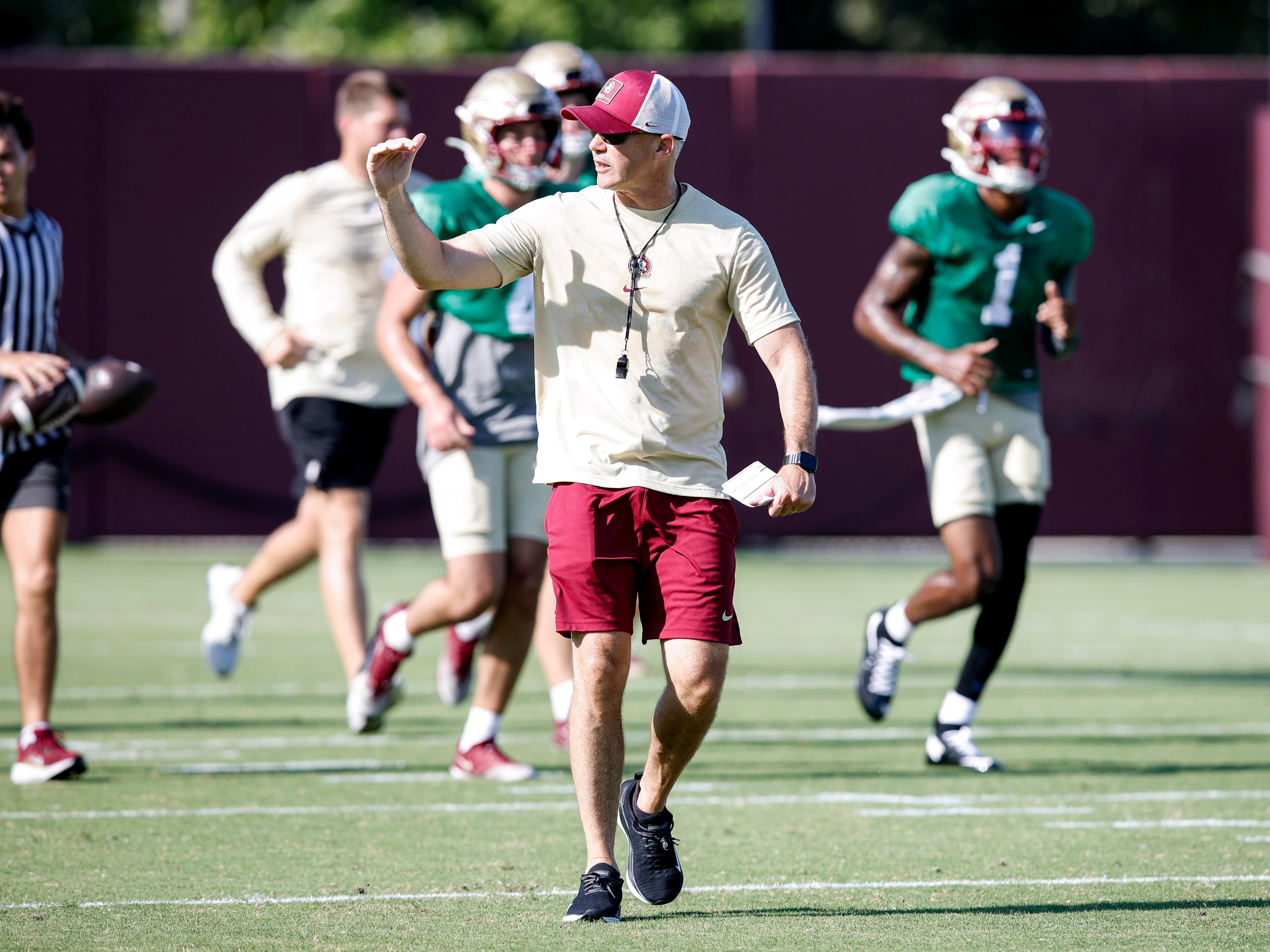
Ahead of its season-opening game against New Mexico State, Florida State is choosing not to publish a first-look depth chart, a decision driven by head coach Mike Norvell’s stance on the way the program uses personnel.
Florida State is entering its season opener without a publicly released depth chart. The Seminoles will not post a two-deep or position-by-position lineup in advance of their first game against New Mexico State, an approach first reported by Kolby Crawford of Noles247 and later picked up by Yahoo Sports.
The decision reflects a specific philosophy from Norvell, who has previously been skeptical of the value a depth chart offers when a team’s weekly plan requires flexible usage. According to Yahoo Sports’ report, Norvell said he has a “distaste” for depth charts, pointing to the way Florida State varies player roles and looks. In other words, the staff does not want the first public listing to imply a fixed pecking order when the preparation process is built around different packages, matchups, and player functions.
For fans and opponents, depth charts have become a quick reference point. They can suggest starters, highlight established roles, and provide a baseline for scouting. Florida State’s choice to hold that information means the Seminoles are asking their opponents to wait for practice-week decisions or to rely more heavily on film and observed reps rather than a published document.
The contrast is especially relevant in college football because depth charts can quickly become a storyline that extends beyond the field. Once a chart is released, it tends to be interpreted as a statement of certainty even though teams regularly reshuffle responsibilities based on situational factors, practice performance, health status, and game-plan specifics. Florida State’s approach, as characterized in the report, aims to prevent that mismatch between what a chart implies and what the roster actually does on Saturdays.
Florida State still has to sort out roles between now and kickoff, and the absence of a chart does not remove the competition that goes with earning first-team reps. But the program is choosing timing over transparency. It also places more weight on how the staff communicates internal expectations and on what is visible through practice availability, media day coverage, and any later announcements closer to kickoff.
For New Mexico State, the benefit of Florida State withholding a chart is limited to a planning window. Coaches build game preparation on tendencies, assignments, and personnel groupings, so they will still have plenty to study through offseason footage. Even so, the lack of an official depth chart can slightly complicate how quickly scouts can translate that film into a straightforward “who starts where” projection.
The key question now is what Florida State does provide later. When the Seminoles do release depth information, whether through a game-week update or a post-practice lineup, the contrast will offer a clearer picture of how the coaching staff is prioritizing particular roles for the season opener. Until then, the focus will shift to practice-week positioning, role clarity, and how Norvell’s personnel flexibility shows up in the earliest scripted segments of the game.
Why It Matters
- It changes how both teams and fans interpret the early-season roster picture, placing more emphasis on observed personnel usage than a printed lineup.
- For Florida State, it reinforces a system built around flexibility and matchup planning instead of a fixed hierarchy at each position.
- For New Mexico State, it removes one quick scouting artifact, though game-week planning will still rely heavily on film and personnel packages.
Sources
Key Facts
- Florida State will not release a depth chart ahead of its season-opening game against New Mexico State.
- The report was first published by Kolby Crawford of Noles247 before being carried by Yahoo Sports.
- Yahoo Sports attributes the decision to head coach Mike Norvell’s expressed distaste for depth charts.
- Norvell’s rationale, as described in the report, centers on how Florida State uses players in varied roles that can make a static chart misleading.