
THE APEX TIMES
Frank Reich credits Geno Smith’s “photographic memory” for how the Jets’ offense runs
As the Jets’ offensive coordinator breaks down what makes Geno Smith difficult to disguise, the emphasis is not just on physical tools, but on processing speed and recall. Reich says the quarterback’s mind helps plays show up cleanly, even when defenses try to complicate reads.
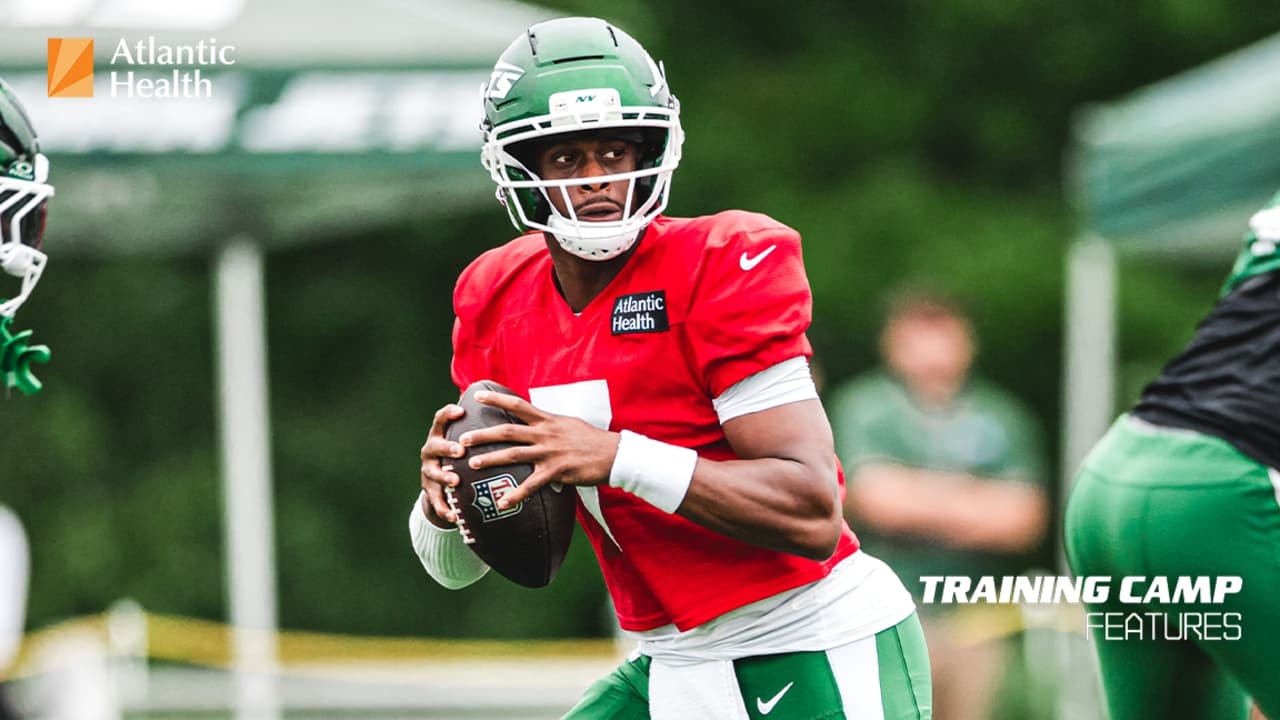
On Sunday, Jets offensive coordinator Frank Reich described Geno Smith in unusually mental terms, arguing that the quarterback’s advantage starts upstairs. Speaking with the Jets organization ahead of the 2026 season, Reich said he believes Smith has what amounts to a “photographic memory,” suggesting that the way he learns, stores, and retrieves information is as important as his throwing mechanics or arm strength.
Reich’s point was less about mystique and more about how an NFL offense functions in real time. Quarterback play requires rapid diagnosis, quick verbal and mental execution, and clean transitions when coverage rotations, leverage shifts, or disguised looks create uncertainty. In Reich’s framing, Smith’s preparation shows up as a smoother connection between what the play is supposed to be and what it needs to become once the defense is on the field.
The Jets’ coaching staff can also benefit from that kind of recall because it reduces the “noise” that can collect around a complicated system. Reich drew attention to the idea that play verbiage, the language of concepts, and the intended path of each action can become second nature for the quarterback, meaning fewer steps are lost when the pace increases. The result, at least from Reich’s perspective, is an offense that stays coherent when the margin for error is thin.
That matters for the Jets because quarterback stability and offensive rhythm are recurring themes for teams trying to convert practice work into consistent game plans. A quarterback who processes quickly and remembers precisely can also be more decisive when a single adjustment changes where the ball should go. Reich’s comments implicitly place Smith’s mental workload in the center of the offense’s identity, not as a supporting detail.
Reich’s description also speaks to how veteran quarterbacks separate themselves during installation-heavy weeks and under accelerated competitive pressure. Training camp and preseason periods are where teams test answers to timing issues, coverage looks, and protection calls. If a quarterback retains the “why” behind a play, then the system can adapt without constantly restarting from scratch.
Still, it is worth separating praise from measurement. “Photographic memory” is a coach’s characterization, not a tracked stat. The Jets will ultimately need outcomes that can be verified in game situations, including completion quality, decision-making under pressure, and the offense’s ability to stay on-script against live defensive disguises.
The next item to watch is whether the mental clarity Reich described translates into fewer off-schedule moments, sharper adjustments, and more consistent execution as the season approaches. If the Jets’ offense looks tightly connected, it may be because the quarterback is doing more than repeating plays. It may be because, according to Reich, he is retrieving them cleanly, like pages from a book.
For now, Reich’s comments provide a clear lens on how the Jets’ staff views Smith’s impact. In an NFL where defenses try to confuse and quarterbacks must simplify, Reich is arguing that Smith’s mind does the heavy lifting, making the physical part of the job easier to perform.
Why It Matters
- If Reich’s description matches what fans see on game days, it can help the Jets maintain offensive continuity even when defenses disguise coverages or pressures.
- Quarterback recall and processing speed can influence how quickly the Jets adjust in the middle of possessions.
- As the Jets work toward the regular season, a mental advantage can reduce miscommunications and off-timing execution.
- How Smith carries the offense can shape the team’s identity, especially if the staff intends to run a concept-heavy approach.
Key Facts
- Jets offensive coordinator Frank Reich said he believes Geno Smith has a “photographic memory.”
- Reich tied Smith’s mental approach to how the offense executes concepts and play verbiage.
- The comments were delivered by the Jets organization on Aug. 23, 2026.
- The Jets’ discussion focused on processing and recall as part of quarterback performance.
- Reich’s framing centered on decision-making and execution when defensive looks create uncertainty.