
THE APEX TIMES
Frank Reich Says He’s Liked What He’s Seen This Spring From the Jets Offense and QB Geno Smith
The new offensive coordinator points to early offseason work as he settles into the rhythm of New York’s offense and evaluates how Geno Smith is handling the details.
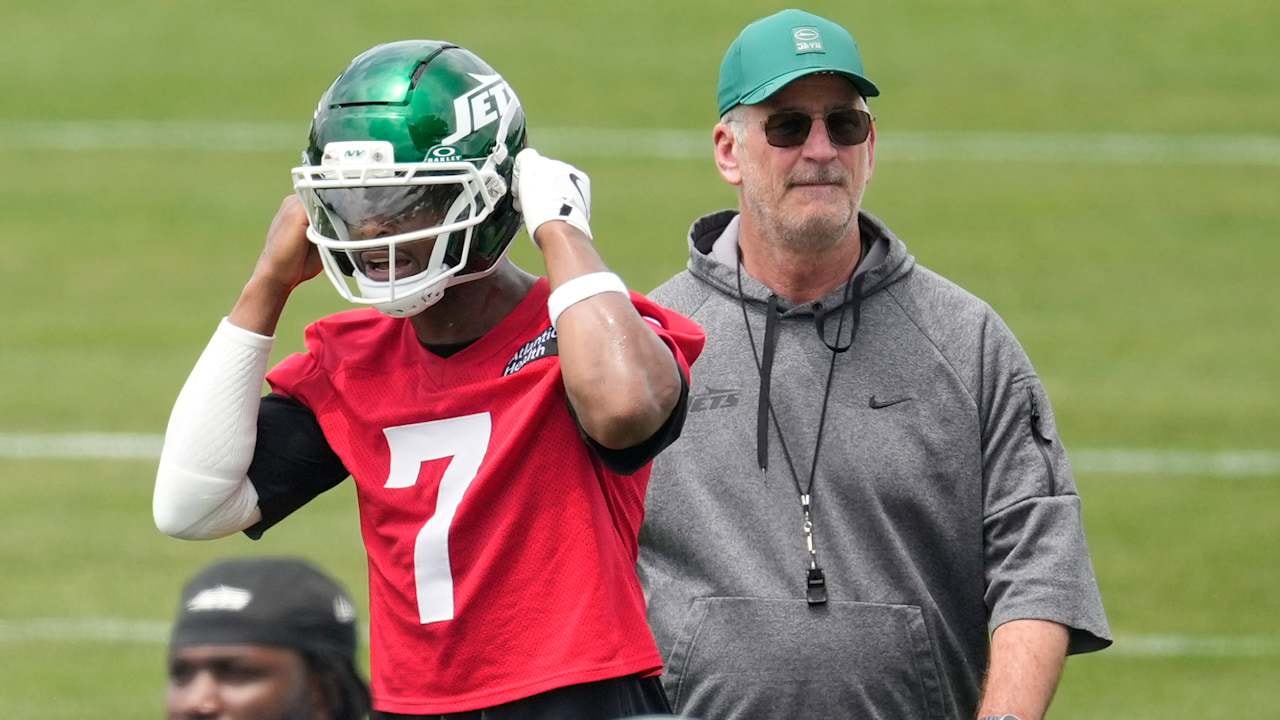
New York’s offense is taking shape under Frank Reich, and the offensive coordinator says his first look at the Jets’ spring work has been encouraging, particularly at the quarterback position. In a team-issued update, Reich discussed what he has seen from the offense during the offseason program and highlighted Geno Smith’s approach as the team continues building toward training camp.
Reich’s perspective is partly shaped by a long history at quarterback in the NFL. According to the Jets, his playing career began with 13 seasons as a mostly backup, a role he described as “always-comeback-ready.” That background matters because spring evaluations in the NFL are not only about scheme, but about readiness, communication, and how a quarterback processes the pace of practice when the work is constantly changing.
His coaching career, meanwhile, has put him on the other side of those same realities. The Jets’ release notes that most of the last 20 years have come as an NFL coach, including four seasons as an offensive coordinator and six seasons as a head coach. Reich’s experience gives the Jets a play-calling framework that is built around situational football and the tempo demands of modern NFL offenses, even as he and his staff install their version of that approach in New York.
For Smith, Reich’s comments frame the spring as a time for execution and understanding. Rather than focusing on outcomes, the Jets’ statement emphasizes how Reich is evaluating the day-to-day process. In offseason football, quarterbacks are constantly tested on cadence, protection adjustments, and translating coaching points into consistent reads. Reich’s public praise is a sign that, at least so far, Smith has been aligning with what the new offensive staff wants to see.
The broader context is that the Jets are in an offseason reset phase for their offensive identity. Bringing in Reich places a coach with extensive coordinator and head-coaching experience at the controls of the offense. For the quarterback room, that kind of change often means more than terminology. It can shift how progressions are ordered, how the team handles scripted sequences versus live adjustment periods, and how the offense anticipates coverage rotations before the snap.
Reich’s message, as presented by the Jets, is careful. He does not portray spring as a finished product, and he frames his assessment as what he has seen so far. That distinction is important because spring practice is about installation and evaluation, not game planning under full regular-season constraints. The next meaningful checkpoint will come as the Jets move from spring work into the heavier workload of training camp, where timing is tested and the roster depth charts start to lock in.
Still, the emphasis on Smith provides a clear through-line. Reich’s career as both a quarterback who spent years waiting for opportunities and as a coach responsible for offensive systems suggests he will judge Smith on more than raw mechanics. The early optimism from the Jets indicates the staff believes Smith is doing the foundational work required to operate the offense efficiently as the details continue to come together.
For fans, the key thing to watch is how quickly the offense shows cohesion once the calendar turns. Reich’s spring comments are a starting point, but the real measure will be whether the Jets can sustain execution during longer practice blocks and carry that consistency into preseason work and the regular-season opener. The quarterback’s ability to process adjustments on the fly will likely remain central to the story as the offseason progresses.
Why It Matters
- A new offensive coordinator typically changes the day-to-day rhythm of installation, and spring evaluation helps define how quickly the unit can learn and execute.
- Quarterback leadership is often the centerpiece of offseason transitions, and Reich’s comments suggest Smith is fitting into the staff’s process early.
- How the Jets handle offensive efficiency and communication during camp will influence their ability to win games consistently once the schedule begins.
- Reich’s background as both a long-time quarterback backup and an experienced NFL coach shapes how he is likely to assess readiness and in-practice decision-making.
Sources
Key Facts
- Frank Reich, the Jets’ offensive coordinator, said he has liked what he has seen from the Jets’ offense during the spring offseason program.
- The Jets’ update highlighted Reich’s evaluation of quarterback Geno Smith.
- The team said Reich spent his first 13 NFL seasons primarily as a mostly backup quarterback.
- The Jets’ release states Reich has spent most of the last 20 years coaching in the NFL.
- The team’s release notes Reich has four seasons of offensive coordinator experience and six seasons as a head coach.
- Reich’s remarks were framed as an early look at offseason work rather than a finished product.