
THE APEX TIMES
Freddie Freeman and Jason Heyward’s long friendship now plays out in a new Dodgers role
When Freddie Freeman and Jason Heyward first met as teenagers, it was the start of a bond that carried through major league seasons with the Atlanta Braves and Los Angeles Dodgers. Now, their relationship is taking a behind-the-scenes turn as Heyward moves into the Dodgers’ front office, and Freeman describes how the news traveled through their longtime circle.
Freddie Freeman’s recent look back at his friendship with Jason Heyward is less about nostalgia for its own sake and more about how baseball relationships get carried forward. Freeman and Heyward first met when they were 16, then became teammates as their careers overlapped in the majors. In a sport where acquaintances come and go with trades and call-ups, their story has remained unusually consistent for two decades, built on familiarity that long predates the clubhouse calendar.
The timing of that familiarity matters now because Heyward has transitioned into the Dodgers’ front office. According to Freeman, Heyward did not immediately give him the direct heads-up about securing a job there. Freeman said he had not been told by Heyward, nor had he heard it from other former Dodgers teammates, which shaped how the news ultimately reached him.
Freeman indicated that he had started to hear “rumblings,” but he still chose to let Heyward break the news in his own time rather than force the conversation early. That detail underscores the dynamic of their relationship, where the information may arrive indirectly, but the friendship governs the response. For Freeman, it was not just about what the move meant professionally, but how it was communicated to someone who has known Heyward since their teenage years.
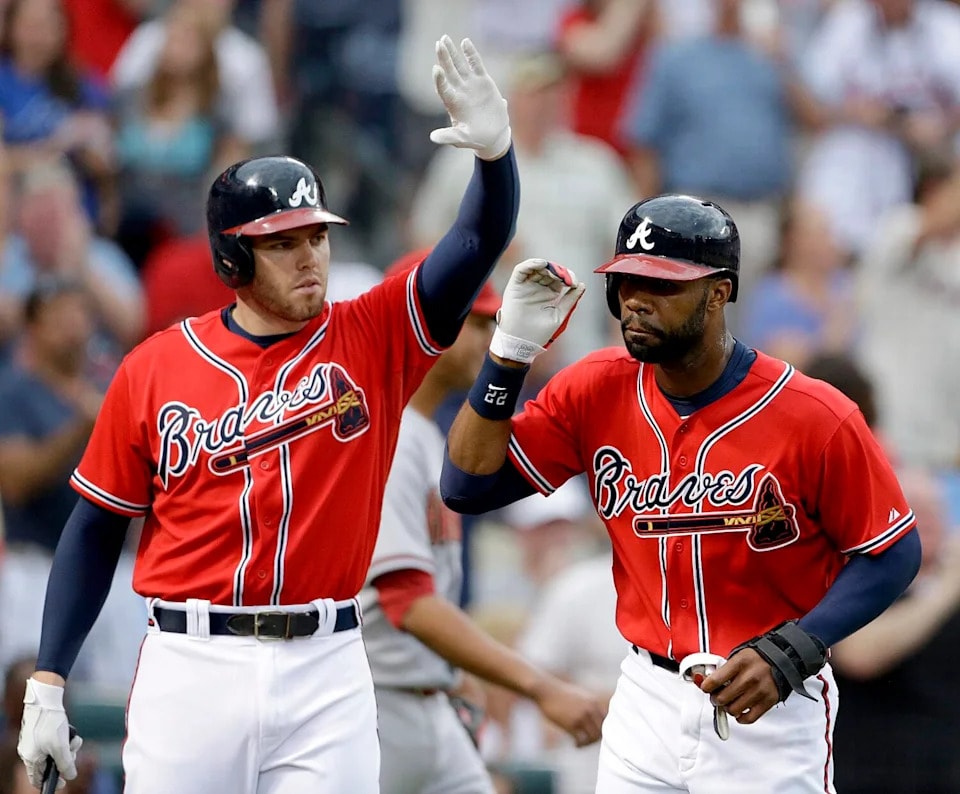
Their connection is also rooted in shared on-field moments. A photo associated with the story shows Heyward and Freeman high-fiving in a June 2013 game against the Arizona Diamondbacks, a brief scene from a period when both were regularly present in the Dodgers’ day-to-day rhythm. Moments like that help explain why off-field developments can feel different when they are tied to a personal history, not just organizational chart changes.
For the Dodgers, a front-office hire like Heyward’s carries a practical appeal that is common in MLB: organizations value people who understand the game from the player perspective and can translate those experiences into evaluations, communication, and development. Freeman’s comments do not detail job responsibilities, but they frame the move through a personal lens, highlighting that Heyward’s baseball knowledge and relationships have depth beyond his playing résumé.
The larger baseball context is how friendships persist across eras. Both men have spent years inside the culture of elite competition, and their familiarity suggests why professional transitions can be smoother for those with longstanding trust. What comes next is less about confirming new roles through speculation and more about watching how that relationship continues to intersect with Dodgers decision-making, particularly as the team navigates the long grind of roster building.
With the story focused on relationship and timing rather than operational details, the most important takeaway may be what Freeman emphasized without adding spice: the friend part came first, and the professional part arrived when it was ready to be shared. As the season continues, the public will learn more only as the organization and Heyward’s work becomes visible in the ways MLB front offices show themselves: through development, roster construction, and long-term strategy.
Why It Matters
- A front-office transition is one of the most influential shifts in MLB because it affects roster-building and development decisions long after a player’s on-field career ends.
- Freeman’s framing highlights how Dodgers personnel choices can be shaped by trusted relationships and firsthand baseball context.
- Their long history underscores a broader theme in the sport: MLB networks and friendships often outlast roles and titles.
- How Heyward’s transition is executed will be monitored through organizational outcomes rather than public comments tied to the personal storyline.
Sources
Key Facts
- Freddie Freeman and Jason Heyward first met when they were 16.
- Freeman and Heyward were teammates with the Atlanta Braves and the Los Angeles Dodgers.
- Freeman said Heyward obtained a job in the Dodgers’ front office.
- Freeman said he had not received a direct heads-up from Heyward or from former Dodgers teammates, but he heard indirect rumblings.
- Freeman said he chose to let Heyward break the news himself.
- The story includes a June 2013 game photo showing Heyward and Freeman high-fiving while both were with the Dodgers.