
THE APEX TIMES
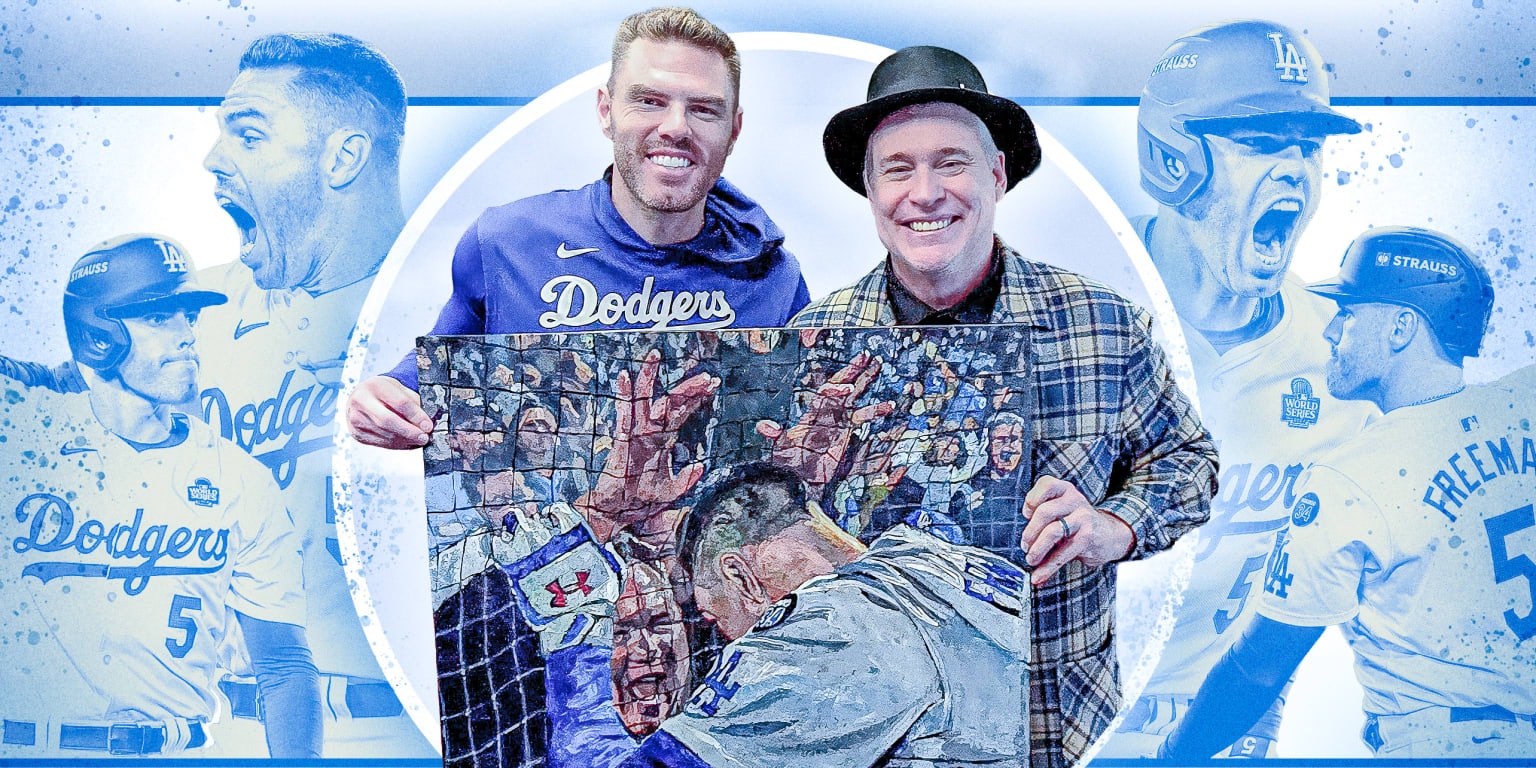
An artist who paints live inside Dodger Stadium captured Freddie Freeman’s World Series emotion with his father, turning a postseason pause into a work of art that now carries its own kind of permanence.
During the bottom of the 10th inning of Game 1 of the 2024 World Series at Dodger Stadium, Freddie Freeman’s World Series scene did what those nights in October always do, it condensed a year of anticipation into one decisive heartbeat. For Opie Otterstad, it also produced a new image to hold onto. Otterstad was on the concourse atop the right field bleachers, having stepped out from his art gallery in the ballpark, taking a break while he worked on a live painting.
The painting, as described by MLB, focused on Freeman’s World Series moment with his father, a specific mix of shock and joy that the postseason often creates in families as much as it does in ballparks. The piece was captured at Dodger Stadium’s elevated view of the action, with Otterstad documenting the scene in real time rather than waiting for the moment to pass and become memory.
Otterstad’s location mattered. Standing at that vantage point, he was not simply watching history unfold, he was translating it. His studio-in-the-stands approach turned a corner of the stadium into a workspace, then into a gallery, then into a display space for fans who wanted to see the game through a different medium. The MLB account describes Otterstad taking a break from his live work to catch the World Series atmosphere where it was happening.
In the telling, the emotional point is not just that the painting depicts a World Series moment. It is that the artwork is part of Otterstad’s ongoing relationship with the place. MLB reports that Otterstad intends to keep what he made, describing it as something he “gets to have forever.” In sports terms, that is a curious kind of ownership, one that parallels what Freeman’s moment represents, permanence in the wake of a game built on what is temporary.
The connection between family and baseball is a familiar one, but the way it is presented here is different. Freeman’s October moment is well known for its stakes, yet Otterstad’s focus is on the people within it, using paint to preserve the feeling that often gets swallowed by highlights. The painting becomes a companion to the official record, not a substitute for it, reminding viewers that the postseason does not register only in stats.
For Dodgers fans, the story also lands on a familiar stage. Dodger Stadium is not only a venue, it is a setting for traditions that extend beyond the field. MLB’s description places Otterstad’s gallery and live painting inside that larger ballpark culture, suggesting that on nights like Game 1, the art and the baseball share the same deadline, the moment itself.