
THE APEX TIMES
FSU’s first-punch play, then the bigger question: a column argues Mike Norvell’s teams fade when the script breaks
A Yahoo Sports column looks at how Florida State’s offense can look sharply organized under Mike Norvell, but questions whether the Seminoles have been able to sustain that command once the game turns.
Florida State’s week of October drama started the way the Seminoles often want to start under Mike Norvell. In the matchup against Louisville on Friday night, the opening drive was built like a statement: 14 plays, 11 runs, and a touchdown that put FSU in front early. The approach mattered because it suggested a familiar advantage for Norvell when things are going right, control at the line of scrimmage, and a commitment to finishing drives the hard way.
The column then pivots from the first drive to what came after. After Louisville turned the ball over on downs, Florida State’s next possession became the lens for a larger critique. The argument, as framed by the column, is not that FSU can script a strong initial drive, but that the team’s identity can soften when it has to adjust quickly to adversity. In other words, the opponent does not just need to stop the opening plan. The question is whether FSU can keep answering once the game requires different answers.
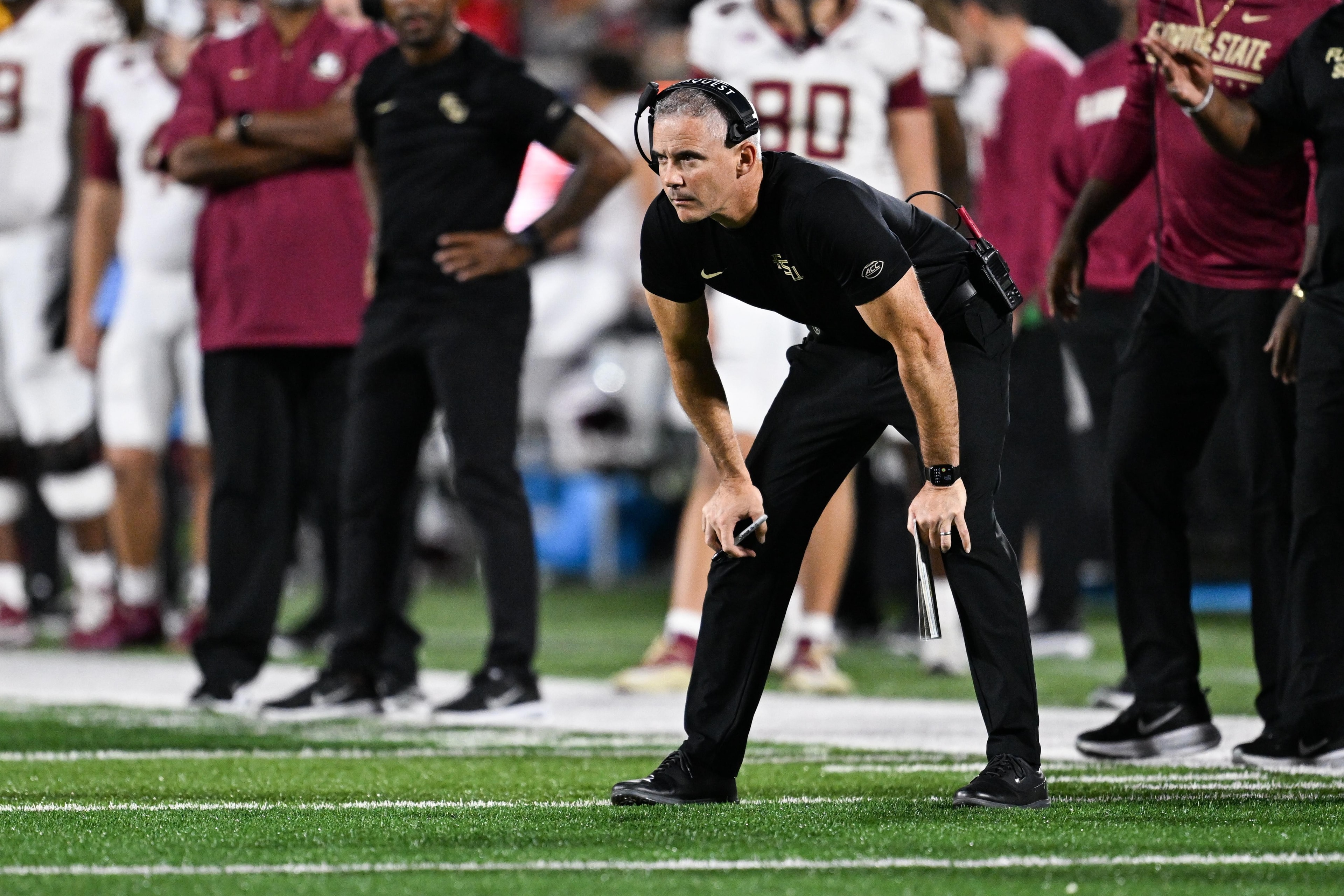
The core idea of the piece is tied to “command” and “response.” Norvell, the column suggests, was responsible for why FSU could start with authority against Louisville, with the head coach also serving as the offense’s play caller. That dual role is designed to help teams react in real time, but the column treats this period of Norvell’s tenure as something more ambiguous. It describes these “waning years” as a time when execution can be sharp at the beginning and then harder to maintain when momentum shifts.
There is also a team-building angle behind the critique. When a program is young, or when a roster is in transition, sustaining drive-to-drive continuity can be difficult. A well-run first drive can still be a sign of preparation, but it does not necessarily predict how a team will handle back-to-back disruptions: a turnover that changes field position, a defensive stand that flips field urgency, or a series where the opening plan no longer produces clean outcomes.
The column’s strongest point is the contrast it draws between the start and the rest of the game, a pattern it implies has defined recent stretches. It is less a technical breakdown of play design and more a measurement of resilience, the ability to keep the offense moving even after the opponent forces you off script. In that framing, “inability to respond to adversity” is not about one drive. It is about whether the program has been able to convert an early edge into a sustained performance.
For Florida State and its fans, the immediate takeaway is that opening-drive excellence can coexist with bigger questions. A touchdown drive on 14 plays, 11 runs, and a fast swing after a Louisville turnover are tangible indicators of coaching structure. The unresolved issue, according to the column, is whether that structure has translated into consistent second- and third-order adjustments when the game becomes less predictable.
What to watch next is how Norvell’s offense looks after it is forced to chase. If Florida State can continue to control tempo and efficiency after momentum shifts, the column’s critique will look overstated. If the Seminoles repeatedly lose their offensive rhythm once a plan stops working, the debate about “command versus response” will remain central to the program’s evaluation.
Because this item is a column, not a game recap with complete statistical accounting, some of its broader claims should be treated as interpretive rather than proven through detailed evidence in the available text. Still, its emphasis on response under pressure is a clear lens for future games, especially when Florida State faces opponents that can change the defensive looks early and then punish predictability late.
Why It Matters
- If Florida State’s offense can only reach its best form early, it becomes easier for opponents to neutralize the threat by changing what they do after the first few series.
- The critique ties coaching identity to execution under pressure, which is often the difference between competitive seasons and seasons that stall.
- Norvell’s dual role as head coach and play-caller increases the stakes of how the offense adjusts after the first plan fails.
- How FSU responds to adversity can influence recruiting and retention, because recruits evaluate both play-making and stability in tough situations.
Key Facts
- Florida State faced Louisville on Friday night in the game referenced by the column.
- The column describes FSU’s opening drive as 14 plays with 11 runs, ending in a touchdown to take a lead.
- The column notes Louisville turned the ball over on downs after FSU’s initial scoring.
- The piece argues that Mike Norvell’s teams can script early command, but questions their ability to respond to adversity later.
- The column highlights Norvell’s role as head coach and offensive play-caller in explaining why the first drive looked well designed.