
THE APEX TIMES
George Lombard Jr. makes an error for a sixth straight game, a troubling wrinkle in Yankees’ call-up calculus
New York’s evaluation of the young shortstop has long emphasized defense, but a new run of mistakes has created “dubious history” while the team weighs his role at the Major League level.
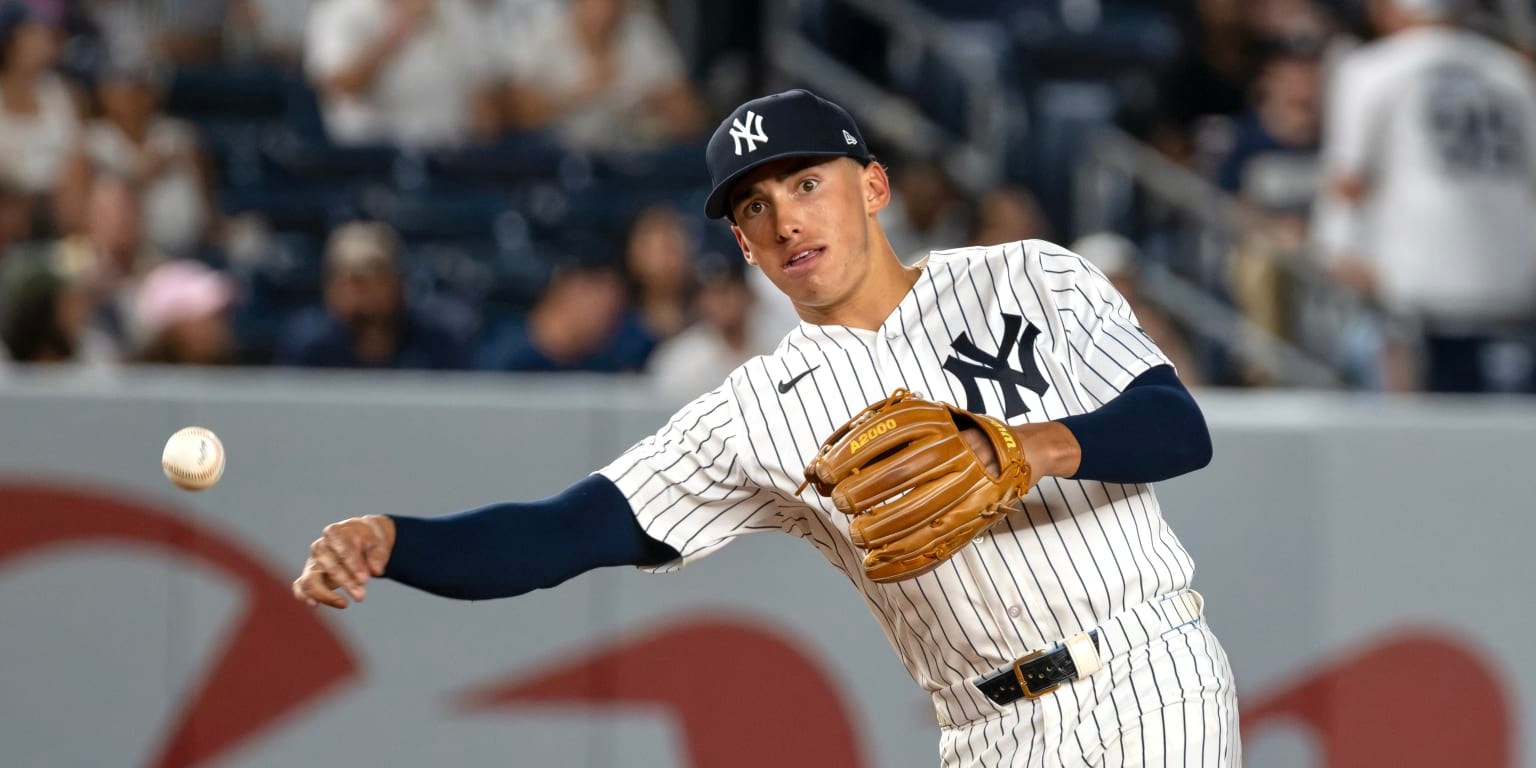
The Yankees’ decision-making around George Lombard Jr. has never been only about bat speed and attention-getting upside. In their internal assessment, his fielding profile has been central, with the organization pointing to the idea that his defense could translate quickly once he reached the Majors. On Friday, though, Lombard’s progress picked up a different label: according to an MLB report, the shortstop recorded an error for the sixth consecutive game, tying him to a stretch the outlet described as “dubious history.”
Lombard’s sequence matters because it comes during the same window in which New York has been weighing what kind of everyday defender he can become. The Yankees have framed him as more than a prospect to be “developed,” suggesting instead that he could contribute right away in the field. In that context, a repeated error streak is not just a rough patch. It puts pressure on the narrative that he can be a quick, stabilizing presence at a position that demands clean footwork, communication, and trust on routine and semi-routine plays.
MLB’s write-up places the spotlight on the pattern itself, not a single moment. An error can happen for reasons that are hard to detect from the stands, including bobbled exchanges, misreads off the bat, or timing issues with pitchers and baserunners. Over six straight games, though, the pattern becomes part of the evaluation. It forces the organization to look past highlights and ask a sharper question: can the young infielder limit the small breakdowns that swing innings and, eventually, games?
General manager Brian Cashman has publicly discussed Lombard’s defensive potential in terms of immediate readiness. The MLB report references Cashman’s expectation that Lombard could be a “plug and play” option in the field, reflecting an organizational belief that the adjustment may be less about learning fundamentals from scratch and more about syncing timing and rhythm with Major League tempo.
The Yankees’ challenge is that shortstop is the center of a Major League infield, and errors are rarely isolated. They can change the way a pitcher attacks hitters, alter the range a second baseman plays behind, and strain the trust that makes a defense operate smoothly. Even when a team plays the next pitch with professionalism, repeated miscues can create a feedback loop, especially for a player adjusting to the speed of throws and the frequency of hard-hit balls.
From a player-development standpoint, the immediate takeaway is typically process-based. With an error streak, the coaching focus often narrows to fundamentals that look almost boring when they are taught but become decisive when the margin tightens, like receiving position, glove path, and the decision-making that determines whether to throw through traffic or secure the ball first. The Yankees, in evaluating Lombard for Major League minutes, will likely want evidence that his mistakes are trending toward correction rather than repeating the same flaw.
For Lombard, the next test is whether he can slow down the ball-in-play outcomes and stop the error string from becoming a longer chapter. For New York, the next test is how they balance the broader value of his upside with the immediate cost of defensive mistakes. If the “plug and play” idea is correct, the Yankees will expect the organization’s instruction and Lombard’s adjustments to show up quickly. If not, this stretch becomes a reminder that readiness is not a switch you flip, it is a series of days you earn.
What to watch next is straightforward but telling. Look for whether Lombard’s errors stop after this six-game run, and also watch how the team positions him defensively and manages the innings around his at-bats. The Yankees have a clear reason to keep him progressing, but the field will determine how quickly that progress can be trusted at full speed.
Why It Matters
- A continued error run would complicate the Yankees’ confidence in Lombard as an everyday option at shortstop.
- Defensive miscues can influence pitching plans and infield spacing, affecting team performance beyond the single play.
- The Yankees’ “plug and play” framing makes every extended stretch of mistakes more consequential for how quickly they trust Major League innings.
- How Lombard responds to this phase will shape the organization’s next roster decisions and coaching approach.
Key Facts
- The Yankees have been assessing George Lombard Jr. for Major League impact, with emphasis on his defensive profile.
- MLB reported that Lombard made an error in each of six consecutive games, described as “dubious history.”
- The report frames the errors as a new wrinkle during the same period that the Yankees considered his promotion readiness.
- MLB’s coverage references Brian Cashman’s expectation that Lombard could be a “plug and play” contributor defensively.
- The stakes for Lombard are especially high at shortstop, where errors can affect the whole infield’s rhythm.