
THE APEX TIMES
Georgia looks to turn a milestone win into a quicker separation from Auburn after report of missing top defender
Auburn may be without its best defensive player when the teams meet again soon after Georgia picked up its first win in Tuscaloosa since 2007, a result that underscores how quickly the Bulldogs are trying to move on.
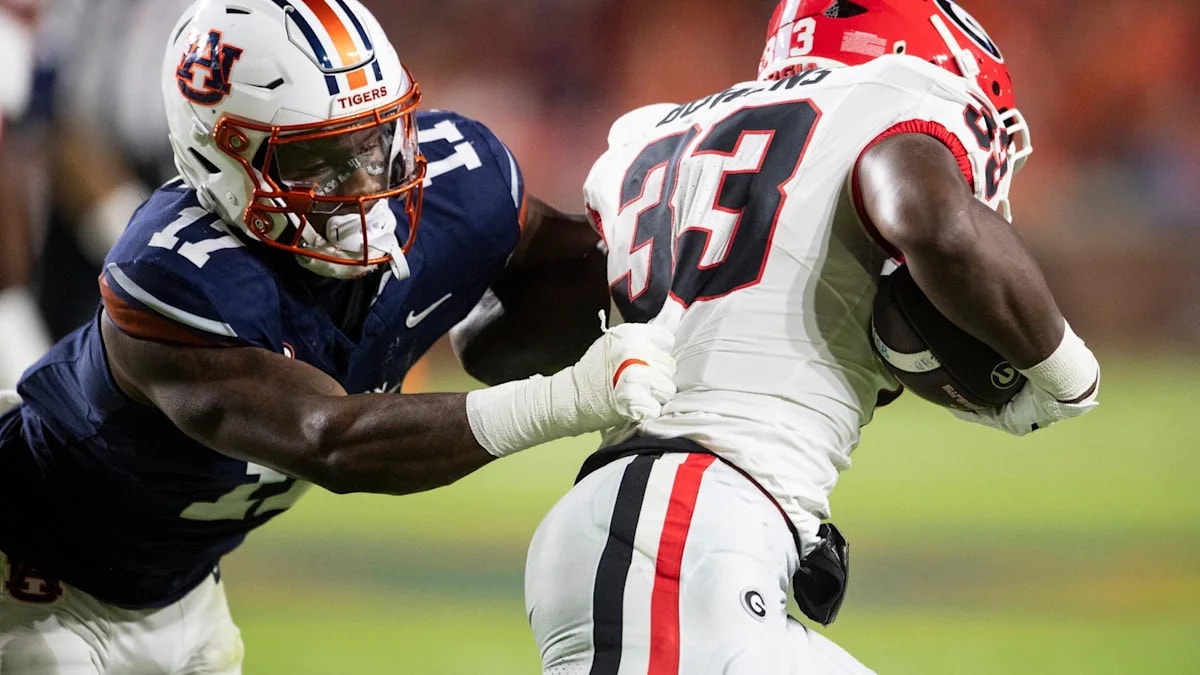
Georgia’s next test against Auburn could come with an unusual wrinkle, at least if the latest reporting holds: Auburn may be missing what the story describes as its best defensive player. For Georgia, that matters less because it “solves” anything and more because it shifts the week’s preparation, particularly the plan for attacking Auburn’s most disruptive defensive identity. In the SEC, even small personnel changes on defense can alter how a team calls plays, what formations get prioritized, and where the ball is asked to go on offense.
The context is that Georgia is not treating its Alabama road win as an isolated moment. The report frames the Bulldogs as trying to “turn the page” quickly after one of their biggest regular-season victories of the Kirby Smart era, and it emphasizes the historic nature of the win in Tuscaloosa. Georgia’s trip to Alabama’s home stadium had not produced a win since 2007, a drought that made the outcome feel bigger than a single weekend. When a rivalry game breaks that kind of pattern, coaches and players typically spend the following week managing emotional momentum and shortening the time between high-water games and the next opponent’s strengths.
In practical terms, if Auburn’s top defensive player is unavailable, Georgia’s staff is likely to see both opportunities and risks. Opportunities, because the opponent’s most reliable pressure or coverage element may be absent, potentially changing matchups in the pass game and the timing of the run defense. Risks, because Auburn will respond with an adjusted scheme and a “next-man-up” focus that can lead to sharper attention to assignments, especially in a game with SEC pride baked into the preparation. Georgia’s offense, even with a reported defensive advantage, still has to win on base downs, protect the ball, and sustain drives, since Auburn can still contest space and force third-down decisions that determine whether the game plan can be executed.
For Auburn, the report’s central point is a familiar midseason reality. Defensive stars do not just add production, they also set the tone for how aggressively a defense plays the run fits, how quickly it closes gaps, and how much confidence the secondary has in the pass-rush to reach quarterbacks on time. When that player is sidelined, the defense typically has to recalibrate its protections and disguise fewer looks, or it tries to compensate by asking other players to take on expanded roles. That kind of shift can reveal whether the rest of the unit is prepared for a different tempo and responsibility map.
Georgia, meanwhile, has to balance immediate preparation with the larger picture of what a win over Auburn would represent in the SEC. Auburn and Georgia have a history of turning the “next” game into a statement about identity, not just results. Georgia’s coaching staff is likely to measure the team’s ability to play its normal brand of football without letting the Alabama win inflate the margin for error. The Bulldogs’ challenge is to convert their confidence into disciplined execution, particularly on third downs and in the red zone, because the team that earns conversion rate control in these matchups usually dictates how long the opponent stays on the field.
If Georgia does get Auburn without its best defensive player, the most important takeaway may be how Auburn’s preparation compensates, and how Georgia responds to that compensation. The week’s defensive plan for Auburn, the run-game looks Georgia sees, and whether Auburn can create negative plays or force early downs matter more than the “name” of the missing starter. What to watch next is whether Georgia’s offense can consistently find advantageous matchups against the adjusted coverage and pressure packages, and whether the Bulldogs’ defense can keep the game from turning into a track meet built on second chances.
At the same time, because the report describes the situation as Georgia “catching” a break with Auburn sitting the best player, rather than quoting an official confirmation, there is room for change. Availability decisions in college football can evolve with late-week practice reports and game-day statuses. Georgia can plan for possibilities, but execution on the field remains the only reliable barometer, regardless of who ultimately takes the first snap for Auburn.
Why It Matters
- A possible absence of Auburn’s top defensive player could change Georgia’s weekly offensive preparation and in-game matchup dynamics.
- Georgia’s ability to move quickly from a historic road win is a measure of team maturity and operational focus.
- In the SEC, defensive personnel shifts can affect third downs, red-zone outcomes, and how effectively each team controls tempo.
- How Auburn adapts without its reported best defender can indicate whether the Tigers’ depth and scheme flexibility are ready for the rest of the season.
Sources
Key Facts
- The reporting says Georgia may face Auburn without Auburn’s best defensive player.
- Georgia’s road win in Tuscaloosa was described as the first since 2007.
- The report characterizes the win as one of the biggest regular-season victories of the Kirby Smart era.
- The Bulldogs are described as trying to move on quickly from the Alabama result and focus on the next opponent.
- The matchup is framed as an SEC rivalry with personnel availability affecting game planning.