
THE APEX TIMES
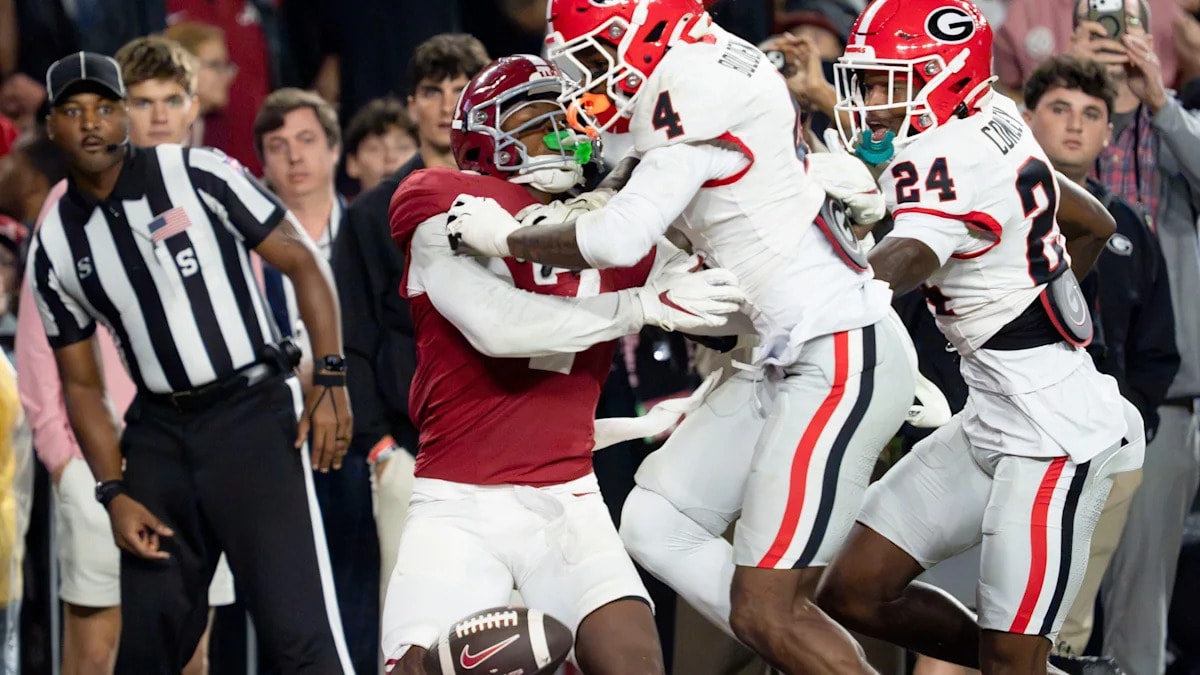
Georgia safety KJ Bolden says he’d want pass interference called on Alabama play where flag was not made
Bolden addressed a controversial no-call involving Alabama, framing it as a split-second judgement call that he believes would have looked different depending on which side of the play he was on.
Georgia safety KJ Bolden is weighing in on one of the most talked-about officiating moments from the Bulldogs’ matchup with Alabama, saying he would have wanted a pass interference penalty called had he been on the other side of the play.
In an interview reported by Yahoo Sports, Bolden explained that a flag he was involved in was not a pass interference penalty call in his view, but he also said his reaction would have been different if the same outcome had happened against Georgia. His comment underscores how quickly “no-call” moments can shape player perceptions, especially in the secondary where contact and leverage can be interpreted multiple ways.
The context matters because college football pass interference decisions often hinge on positioning at the point of contact and on whether the contact is judged to be disruptive enough to qualify under the rules. When the officials do not throw a flag, players on both teams may believe they were either denied a protective call or punished by an overly technical reading, even when replay review is not available or does not overturn the original decision.
Bolden’s stance reflects a wider reality in the sport: players can disagree with a call and still respect the idea that officiating is performed in real time. His specific phrasing, as reported, points to the emotional and practical impact of no-calls, because the same play can be evaluated from two angles. He suggested that his willingness to see a penalty would increase if his team were the one being affected, even if he personally does not categorize the contact as interference from his perspective.
For Georgia, the comment arrives with the program’s defense continuing to prioritize communication and consistency in the back end. A safety’s job is not only to break on routes, but also to be the defensive voice when plays go sideways. When players publicly discuss officials, it can also serve as a reminder of how the defensive unit expects its standards to be judged, and what it will focus on regardless of whether flags are thrown.
Alabama-GEorgia games carry high stakes every year, and officiating controversy tends to linger because these contests frequently involve high-level receivers and tight coverage. Even without changing the outcome of any particular play in this discussion, Bolden’s remarks are likely to be pulled back up by fans and analysts when examining whether the rules were applied consistently across the game.
What to watch next is how Georgia handles the practical side of such moments: whether the defense adjusts its spacing and route-reading approach, and whether the program emphasizes composure after disputed plays. Bolden’s remarks also set a tone for how Georgia’s defensive leaders may address officiating topics going forward, balancing accountability with an acknowledgment that different frames can lead to different conclusions.
Why It Matters
- Disputed no-calls can influence how players and coaches evaluate officiating consistency, even when the immediate play outcome is fixed.
- Public comments from a defensive leader can affect team focus, composure, and how the secondary prepares for contact-heavy matchups.
- Alabama-Georgia games are frequently scrutinized, so officiating debates can shape broader public narratives about gameplay and rule enforcement.
Key Facts
- Georgia safety KJ Bolden discussed a controversial no-call against Alabama involving pass interference.
- Bolden said he would have wanted pass interference called if he were on the opposite side of the play.
- Bolden characterized the no-call as not being a pass interference penalty from his perspective.
- The comments were reported by Yahoo Sports on October 13, 2026.