
THE APEX TIMES
Get to Know: Kendrick Law, the Lions’ newest speed-and-yards-after-catch weapon
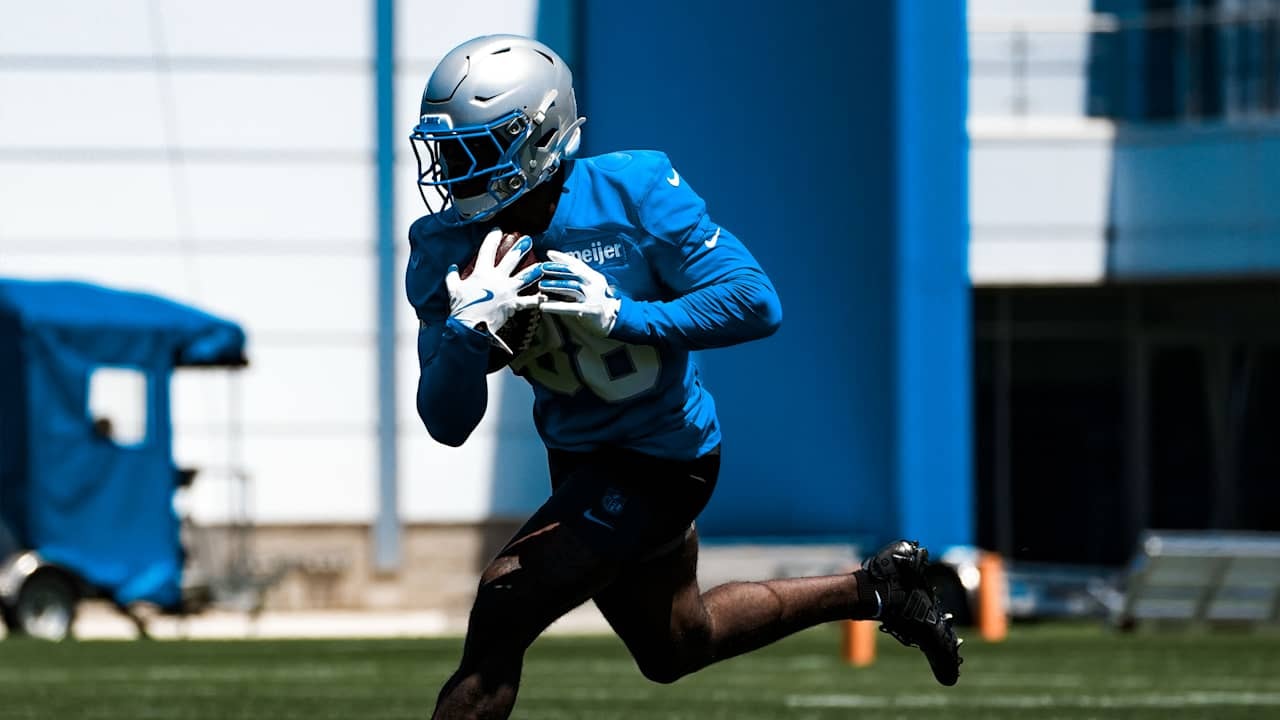
Detroit’s fifth-round pick is arriving as a compact, quick-twitch wide receiver whose college production skewed heavily toward plays made after the catch.
The Detroit Lions have introduced their latest rookie, wide receiver Kendrick Law, selected in the fifth round as the team continued to build for explosive, space-oriented offense. In a “get to know” spotlight from the Lions, Law is framed as the kind of receiver fans can picture making quick reads, winning matchups in confined areas, and turning short targets into chunk gains.
Law’s football path began with three seasons at Alabama, then a transfer to Kentucky for his senior year. The Lions noted the Kentucky season as the springboard for his draft opportunity, and multiple offseason reports tied his profile to a specific skill set: catching the ball early in routes and converting it into yardage after contact and open-field separation.
During his time at Kentucky, Law totaled 53 receptions for 540 yards and three touchdowns, producing most of that production after the catch, according to reporting that followed the pick. That distribution helps explain why Detroit’s scouting conversation has centered on quickness and burst as much as traditional downfield route running. In other words, the Lions are adding a receiver whose value can show up on plays that start fast but do not necessarily look like it on the stat sheet at first.
The Lions’ draft-selection details also matter for context. Detroit moved up 13 spots in the fifth round to select Law at No. 168 overall, using a compensatory fifth-round pick and an additional selection to climb. That is the sort of move teams make when they believe a player fits a role they want now, not later, especially at receiver where offensive systems often need multiple skill profiles rather than just one archetype.
What drew attention, beyond the production, was Law’s testing and how it translated to athletic movement. Detroit Football Network, in its pre- or post-draft evaluation, described Law as measuring at 5-foot-11, 193 pounds and posting a 4.45-second 40-yard dash, along with a 42-inch vertical jump. That combination supports the “accelerate quickly and separate” theme, particularly on slants and short-area routes where leverage and timing are everything.
Still, the transition from college to the NFL is rarely straightforward for receivers with a compact skill profile. Evaluations around Law have pointed to a limited route-tree usage in college and a question of how polished his route nuance is as routes stretch beyond the first read. Even for players who make their money after contact, the NFL raises the bar on separation at multiple depths and on consistent releases that hold up against press coverage.
For Lions fans, Law represents a bet on an offensive detail: can Detroit turn a short, quick play into a gain large enough to change field position and tempo. The immediate next step is how he handles route timing, catching in traffic, and run-after-catch decision-making against NFL speed, because those are the phases where his college profile is likely to be most visible. Training camp and the early preseason work will be the clearest indicators of whether his role expands beyond packages designed for quick touches into more consistent field snaps.
Why It Matters
- Law’s profile aligns with an offense that can create chunk plays without requiring every target to be a full route-depth development.
- Because Detroit traded up for him, the team likely views his role as more than a bench project, making training camp reps especially consequential.
- His college production being heavy after the catch suggests that his NFL value may depend on how consistently he can win in space and secure the ball through contact.
- Receiver evaluation often reveals itself in preseason usage, so where Law lands in the rotation can hint at Detroit’s plans for early-season offensive identity.
- If Law becomes a reliable short-area threat, it can reshape coverage responsibilities for other Lions pass catchers by forcing defenses to respect quick conversions.
Sources
Key Facts
- The Detroit Lions selected wide receiver Kendrick Law in the fifth round, using a trade-up to move up 13 spots and pick him at No. 168 overall.
- Law spent his first three collegiate seasons at Alabama before transferring to Kentucky for his senior year.
- In Kentucky’s 2025 season, Law recorded 53 receptions for 540 yards and three touchdowns, with a large portion of his production coming after the catch.
- The Lions introduced Law as part of an offseason “get to know” series profiling the team’s newest rookie.
- Law is listed as 5-foot-11 and 193 pounds, and Detroit Football Network reported a 4.45-second 40-yard dash and a 42-inch vertical jump.