
THE APEX TIMES
Giants close spring phase, set sights on training camp in West Virginia
New York’s offseason workload moved through strength and conditioning, playbook installation, and a full-team practice stretch, finishing with training camp next on the calendar.
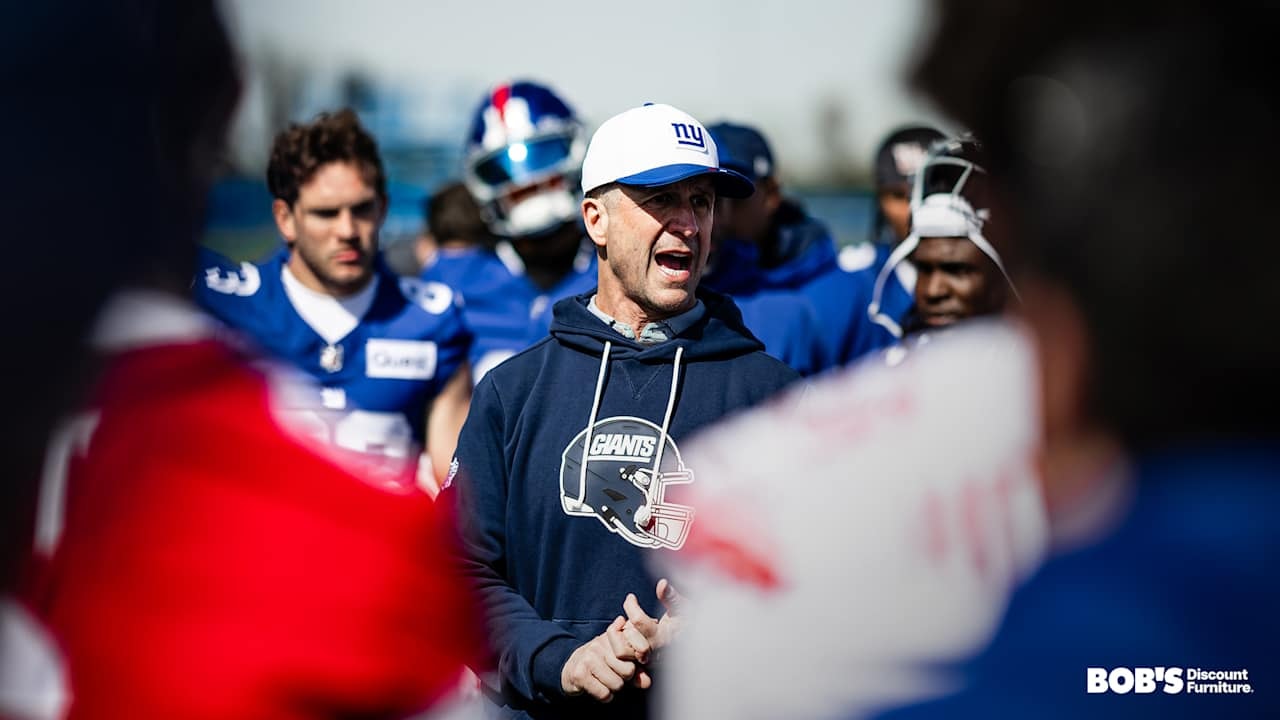
The New York Giants have wrapped up their spring football program, a nine-week build that the team described as its bridge from offseason conditioning into structured, team-wide football preparation. The next major step for the roster will be training camp in West Virginia, where practices typically tighten further and the emphasis shifts toward performance in a more game-like environment.
According to the Giants’ announcement, the spring timeline featured a deliberate ramp. The program began with strength and conditioning work and then progressed into installing the team’s playbook. That sequencing matters because it allows coaches to introduce concepts and formations while players are still settling into the offseason conditioning baseline.
The organization also pointed to an extended block of practice sessions that included a dozen full-team practices. Full-team work, particularly in the later portion of spring, is one of the clearest windows into how well the coaching staff can translate playbook language into repeatable execution, including timing in protection and coverage, communication on assignment, and situational practice habits.
Spring football for an NFL team is not designed to produce immediate headline numbers the way the regular season does. Instead, it functions as a synchronization period for units that have to operate as a single system. For the Giants, the emphasis described in the update, strength and conditioning followed by installation and team practice, indicates a focus on fundamentals and continuity rather than sudden schematic overhauls.
In training camp, those spring foundations generally meet a different set of demands. Camps are typically where the depth chart starts to separate more clearly through sustained reps, where competition is tested against a heavier practice cadence, and where the coaching staff can evaluate how players respond under the physical and mental load that resembles the regular-season week-to-week rhythm.
There is one important caveat to keep in mind when reading spring summaries: without the regular-season context of opponents, snap counts, and game-state pressures, spring work is best understood as preparation and process. The Giants’ update highlights the structure of that process, but it does not, by itself, provide a reliable forecast for specific positions or week-one roles.
What to watch next for New York is how quickly the team translates the spring phase into camp execution. The biggest storylines usually include how the offense and defense handle play-calling in full-speed reps, how consistently the team performs on the same calls across multiple days, and how quickly new or developing players earn trust with the system. Training camp in West Virginia is the next checkpoint for those answers.
Why It Matters
- Spring football determines how smoothly an NFL team transitions into training camp, especially the timing between conditioning and complex play installation.
- A longer, full-team practice block increases the amount of system work players get together, which can influence early camp evaluation.
- Training camp in West Virginia is the next stage where the Giants’ coaching staff can test execution at a higher intensity.
- For fans, the spring-to-camp sequence is often the first real indicator of which units are building chemistry and command over assignments.
Key Facts
- The Giants announced they have completed a nine-week spring football program.
- The spring plan included a progression from strength and conditioning to playbook installation.
- New York’s spring included a dozen full-team practices, according to the team announcement.
- The Giants’ next scheduled phase is training camp in West Virginia.
- The update frames spring football as preparation for the team’s upcoming camp workload rather than a competition against game opponents.