
THE APEX TIMES
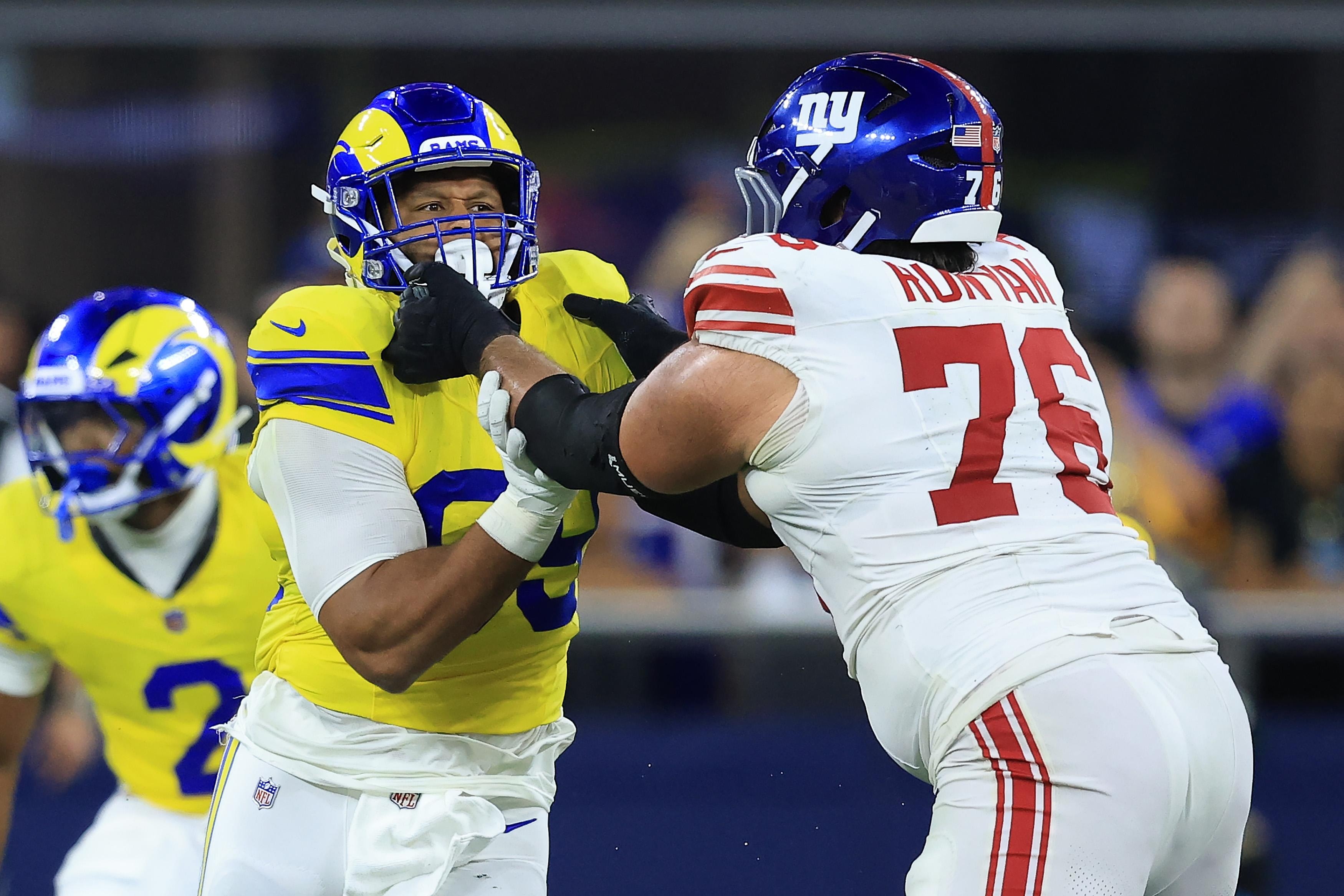
Giants keep grinding early, with OL Jon Runyan Jr. a focal point in optimistic progress report
New York is 3-1-1 after five weeks, and an NFL offensive line anchored by Jon Runyan Jr. has become a key storyline as the Giants look for steadier execution.
The New York Giants are 3-1-1 through five weeks, and the team’s early-season narrative has been less about clean, repeatable football and more about surviving inconsistency while looking for dependable structure. In a progress report framed around offensive line tackle Jon Runyan Jr., the emphasis is on what has improved, what is still catching up, and why the Giants can afford optimism even if the season has not gone to plan in every phase.
Runyan’s importance is straightforward in football terms: as an offensive lineman, he sits in the group that determines whether a quarterback can operate within rhythm and whether the run game can generate manageable angles. When a team is trying to stabilize protections and gain traction in the running game, the line’s cohesion often becomes the easiest place for fans and coaches to identify indicates of progress, even when the results across the whole roster are uneven.
The “optimistic progress report” framing matters because the Giants’ record through five weeks shows they have still been able to earn victories and remain competitive, despite the broader league reality that early-season execution swings quickly between weeks. A team can move to 3-1-1 and still feel like it is searching for answers, which is why internal improvements, particularly along the line, become more than day-to-day coach talk.
One takeaway from the report is that the Giants are not treating early games as a final evaluation of the roster’s ceiling. Instead, they are measuring development. For an offensive line, development is often slow and uneven, shaped by communication, timing, and chemistry between linemates, plus how the unit adjusts to different defensive fronts week to week. Even without every game being played at a consistent level, the presence of an experienced anchor can help a line absorb stress and recover quicker when things do not go perfectly.
The second theme is that progress can be real even when the rest of the team is not fully settled. Offensive lines can improve in pockets: pass protection can be stronger against certain looks while still being vulnerable against others, or the run game can be more effective in some schemes even if it stalls in others. The Giants’ willingness to keep building on specific areas, rather than chasing wholesale changes, aligns with what teams typically do when they believe they can get more out of the same core with better timing.
A third, practical point is how the Giants’ identity can be shaped by protecting their quarterback and making the pocket more usable. When the line performs at a high enough level, it gives the offensive plan choices, not only in obvious passing downs but also in second-and-short and third-and-medium situations that become more manageable when the quarterback has time. In that sense, the Runyan storyline is not just about one player. It is about whether New York’s offensive structure can hold up long enough to let the rest of the offense play faster.
Finally, the report’s optimistic angle sets up what to watch next: whether the Giants’ line improvement translates into fewer breakdowns, more consistent run lanes, and smoother protections across different defensive wrinkles. If New York can keep stacking games while turning early-week adjustments into repeatable habits, the 3-1-1 record becomes less of a snapshot and more of a foundation.
That said, this is an early look. A five-week sample is rarely enough to declare the Giants fully “fixed” or fully “solved,” especially for a unit that operates under week-to-week matchup pressure. The most reliable way to judge the report’s optimism will come from how the Giants perform when the schedule turns more demanding and opponents game-plan specifically for New York’s tendencies. For now, Runyan and the offensive line stand out as a reasonable barometer for whether the team’s best football is getting closer to the surface.
Why It Matters
- If the Giants’ offensive line continues to improve, it can stabilize protections and widen play-calling options for the quarterback.
- Early identity in the NFL is often built through line play, particularly for teams trying to reduce weekly execution swings.
- A competitive record like 3-1-1 creates a clearer path to contend for the playoffs, but only if internal progress reduces late-game volatility.
Key Facts
- The New York Giants are 3-1-1 through five weeks.
- A progress report centers on offensive lineman Jon Runyan Jr. and the Giants’ early-season development.
- The report characterizes the season as moving forward despite not going to plan in many ways.