
THE APEX TIMES
Giants’ offense faces a test of predictability after Jaxson Dart’s injury
With New York turning to veteran Jameis Winston at quarterback, the offense will be judged less by who is throwing and more by how quickly it evolves to keep defenses guessing.
The New York Giants enter a key stretch of their season with a central football problem that is not entirely about execution, it is about predictability. After Week 2, the Giants were forced to adjust their approach when starting quarterback Jaxson Dart suffered a season-ending injury. The change quickly became operational, because Jameis Winston stepped in as the team’s full-time starter the following week against the Tennessee Titans.
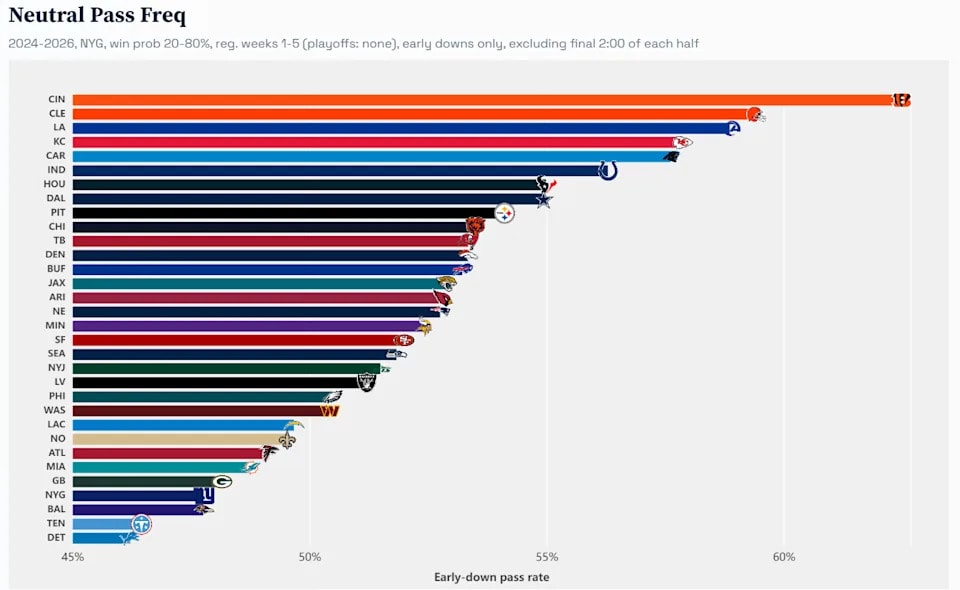
The Giants’ record provides some early comfort, but it also sets a standard. According to Yahoo Sports, New York is 3-1-1 despite the quarterback disruption. That matters because it suggests the offense can still produce enough to win, yet it also raises a sharper question for the coaching staff: can the Giants expand their playbook and play faster in ways that prevent opponents from settling into a game plan aimed at a specific style of quarterback play?
Offensive unpredictability is often discussed in broad terms, but it shows up in specific decisions. Defenses can build constraints around timing, route concepts, and how a passer handles pressure. When a new quarterback becomes the week-to-week plan, even minor schematic preferences can become noticeable to opponents. If the Giants lean too heavily on familiar patterns, the offense may start to look like a repeatable checklist, one that safeties and linebackers can anticipate.
Winston’s role, as described in the Yahoo Sports report, is not temporary in the way fans typically associate with a spot start. He became the Giants’ full-time starting quarterback after Dart’s injury, which means the offensive identity has to align with him for the weeks ahead. That does not necessarily require abandoning everything the team was doing earlier in the season, but it does increase the need to scrutinize third-down structures, red-zone looks, and the balance between passing and play-action tendencies.
The Titans matchup is a notable reference point because it was the first game after the starting quarterback shift. A single opponent cannot define a whole season, but Week 3 game planning is where teams often reveal whether they will open up their offense or lean on a narrower set of concepts designed for protection and rhythm. If New York wants to keep winning, the report indicates it needs to become less predictable, which typically translates to more varied distributions of formations, targets, and situational play-calling.
Still, there are limits to what can be concluded from the available information. The Yahoo Sports piece frames the need for change as an overarching offensive challenge, but it does not provide a granular breakdown of play-by-play tendencies, target patterns, or scheme adjustments. For that reason, it is best to treat this as a tactical storyline rather than a confirmed diagnosis of exactly what is failing. What can be said is that the quarterback transition has created a natural reason to rethink how the offense attacks pressure and how it uses its skill personnel to shift coverage responsibilities.
As the Giants move deeper into the season, the next few weeks will offer clearer answers. Watch whether the offense increases its variety without sacrificing efficiency, particularly on drives that require sustained conversion, and whether Winston’s full-time role leads to expanded passing concepts that keep defenses uncomfortable. New York’s record suggests resilience, but the longer the season goes, the more teams will be tested on their ability to adjust beyond simply replacing the quarterback who got hurt.
If the Giants can broaden their offensive identity around Winston rather than merely re-scripting around him, they will make their wins harder to explain and easier to repeat. If they cannot, predictability will become its own opponent, and defenses will eventually force the Giants to prove they can score without relying on the same patterns.
Why It Matters
- A full-time quarterback change increases the risk that an offense can become schematic-ly predictable to opponents.
- If the Giants do not vary concepts and play-calling, defenses can plan around recognizable patterns and reduce explosive outcomes.
- The Titans game functions as an early indicator of whether New York will broaden its passing approach immediately or stay in a narrower comfort zone.
- How quickly the offense adapts around Winston will shape New York’s ability to sustain drives and convert on key downs later in the season.
Key Facts
- The New York Giants were 3-1-1 as of Week 2 outcomes referenced in the report.
- The Giants’ Week 2 season-ending injury to starting quarterback Jaxson Dart forced an immediate quarterback change.
- Jameis Winston became the Giants’ full-time starting quarterback the next week against the Tennessee Titans, according to Yahoo Sports.
- The report’s central claim is that New York may need to open its offense and become less predictable to keep winning.