
THE APEX TIMES
Good, bad and uncertain: What the Lakers’ early preseason is revealing
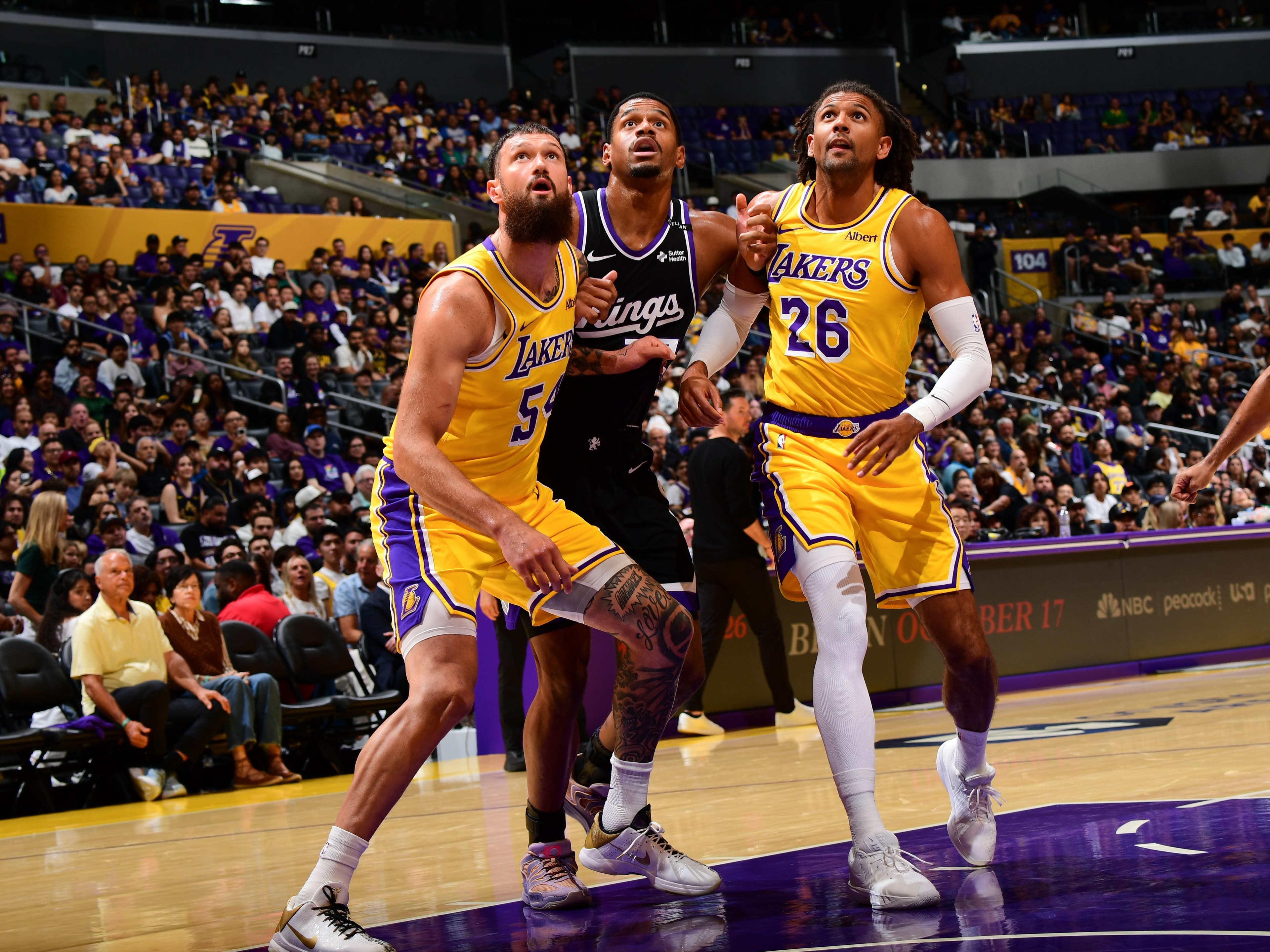
With only a small sample of games played, early Lakers preseason impressions are already pointing to a few clear strengths, a few recurring problems, and a set of questions that will not resolve quickly enough to ignore.
The Lakers’ preseason so far has offered a mixed first look, even if the numbers are still too small to treat anything as settled. In a piece examining the early returns, Yahoo Sports framed the situation as a study in contrast, where encouraging signs coexist with rough edges and a layer of uncertainty that is hard to interpret when rotations are still in flux.
The “good” part of the early evaluation centers on the idea that something can be built quickly, even in preseason. The same way teams experiment with coverage or shot types, preseason is where an offense and its decision-making habits start to show through, especially on possessions that repeat: how quickly actions develop, whether spacing holds under pressure, and whether the same offensive sequence can be executed more than once without breaking down.
The “bad” comes from the inevitable preseason conditions that also affect the work of evaluating it. Yahoo Sports emphasized that early trends can still be distorted, because players are sorting through limited minutes, unfamiliar combinations, and variations in how aggressively opponents defend. When execution slips, it can be about fundamentals, but it can also be about timing and personnel fit, which are still being sorted.
There is also a “murky” element that matters for how fans and the organization interpret these weeks. Yahoo Sports suggested that early impressions can lead to overcorrection, with observers treating preseason as a referendum on a team’s ceiling rather than a rehearsal stage. That murkiness is not just about shot-making or turnovers. It is about choices, meaning the lineup and tactical decisions the Lakers are making as they weigh what to emphasize now versus what to hold back.
For the Lakers, the practical takeaway is that preseason should be judged for process more than outcomes. If the team is repeatedly able to run its offensive sets with the timing it is trying to install, the “good” becomes meaningful. If the team repeatedly stalls or reverts to low-quality options, the “bad” is still worth tracking, even if a deeper explanation later emerges. Either way, the early sample size means conclusions should be tentative.
What to watch next is how those early patterns evolve as the preseason tightens. If the Lakers’ lineup continuity improves and their offensive sequences look cleaner against more familiar defensive looks, that would be evidence that preseason experiments are moving toward something repeatable. If the same execution problems recur even as rotations stabilize, then the preseason would start to function less like preparation and more like a warning sign.
Why It Matters
- Preseason impressions can help identify whether a team’s offensive and rotation experiments are producing repeatable habits.
- Because preseason is not the regular season, overreacting to outcomes risks misreading what is actually being built.
- For the Lakers, early consistency in execution and lineup chemistry would strengthen the case for any long-term tactical identity.
Key Facts
- Yahoo Sports assessed the Lakers’ preseason through an early snapshot, emphasizing that the sample size is limited.
- The evaluation is framed as a mix of positive takeaways, negative takeaways, and areas that remain unclear.
- The article emphasizes the difference between process (what a team is trying to do) and outcomes (what happens in any single game).
- The central theme is how early-season “choices” and execution in preseason can reveal trends, even when interpretation is uncertain.