
THE APEX TIMES
Gutierrez points to joint practices as preseason’s real proving ground for Raiders-Texans work
With exhibition games losing their role as a test of true football, Oakland’s approach to joint sessions emphasizes controlled chaos, communication, and repeatable improvement.
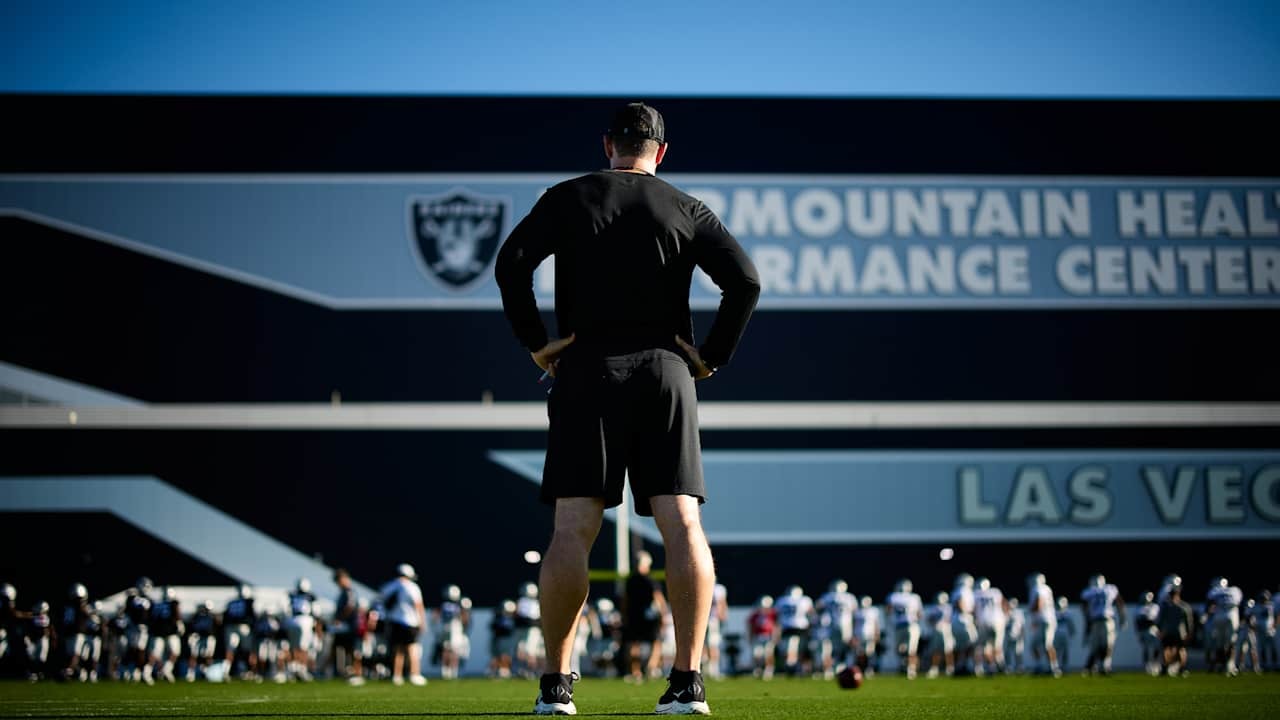
Joint practices, not exhibition games, have increasingly become the closest thing NFL teams have to a real-life evaluation during the preseason. On Tuesday, Raiders coverage highlighted the idea that these controlled sessions create the conditions for players to be pushed by a speed-and-structure opponent while coaches still keep the reps clean enough to teach. The point is not simply to compete. It is to learn, correct, and move forward with tangible progress before the regular season picture becomes set.
In that framework, the Raiders’ message around work with the Texans centered on what “real improvement” looks like in August. Rather than treating practices as a static walkthrough, Raiders officials framed joint work as a proving ground where timing, assignments, and discipline are stressed by an opponent that can match the pace of game planning. The emphasis, according to the team’s own write-up, is on the balance between intensity and control, the kind of environment where players can feel pressure without turning every rep into a loss of structure.
The Raiders also tied the approach to experience, noting that veteran offensive lineman Kolton Miller has been through the offseason rigors of joint practices enough times to understand how quickly sessions can turn chaotic if communication breaks down. Miller’s familiarity with that “rigmarole,” as the Raiders described it, fits the broader logic of joint practices: the reps are messy in the way football is messy, but they are curated for coaching. Teams can identify whether a unit is reacting fast enough, communicating clearly enough, and playing within the scheme quickly enough to be ready when September arrives.
For teams like the Raiders, the preseason challenge is consistent even when the opponents change. Players must keep their fundamentals reliable under contact and tempo, while coaches must decide what they need more of and what can be simplified. Joint practices concentrate that problem. They force group work to align with game-like movement and decision-making, and they reveal where a team’s identity is strong enough to hold up against an opponent rather than just a playbook scenario.
There is also a human element to how these sessions matter. Joint practices can test leadership, especially for players who know the difference between “getting through a rep” and “executing a rep the right way.” When the team’s coverage describes the sessions as a sweet spot, it points to the idea that the best evaluations happen when players are challenged in a contained setting that still supports adjustments.
Looking ahead, the Raiders-Texans joint work should be read less like a referendum on what the regular season will look like and more like a diagnostic. The next step is whether the lessons from those sessions carry into subsequent practices and, ultimately, into the final preseason period where decisions about roles start to harden. If joint practices are truly the proving ground, the improvements teams can point to in assignment execution, communication, and play speed become the most practical story to watch as the calendar turns.
Why It Matters
- Joint practices can show whether a roster’s fundamentals hold up when tempo increases and opponents can match formations and movement.
- Better communication and cleaner assignment execution during these sessions can translate into more reliable group performance early in the regular season.
- For coaches, joint practices provide a clearer report on what needs simplification versus what can be expanded as game plans tighten.
Key Facts
- The Raiders described joint practices as the preseason’s true proving ground, replacing the evaluative role of exhibition games.
- The team’s coverage framed joint practices as controlled intensity that still allows coaching and correction.
- Raiders coverage specifically referenced offensive lineman Kolton Miller and his experience with the preseason joint-practice environment.
- The article centered on the Raiders’ work with the Texans during preseason training camp.