
THE APEX TIMES
Henry Bolte’s speed is turning into a real MLB calling card for the Athletics
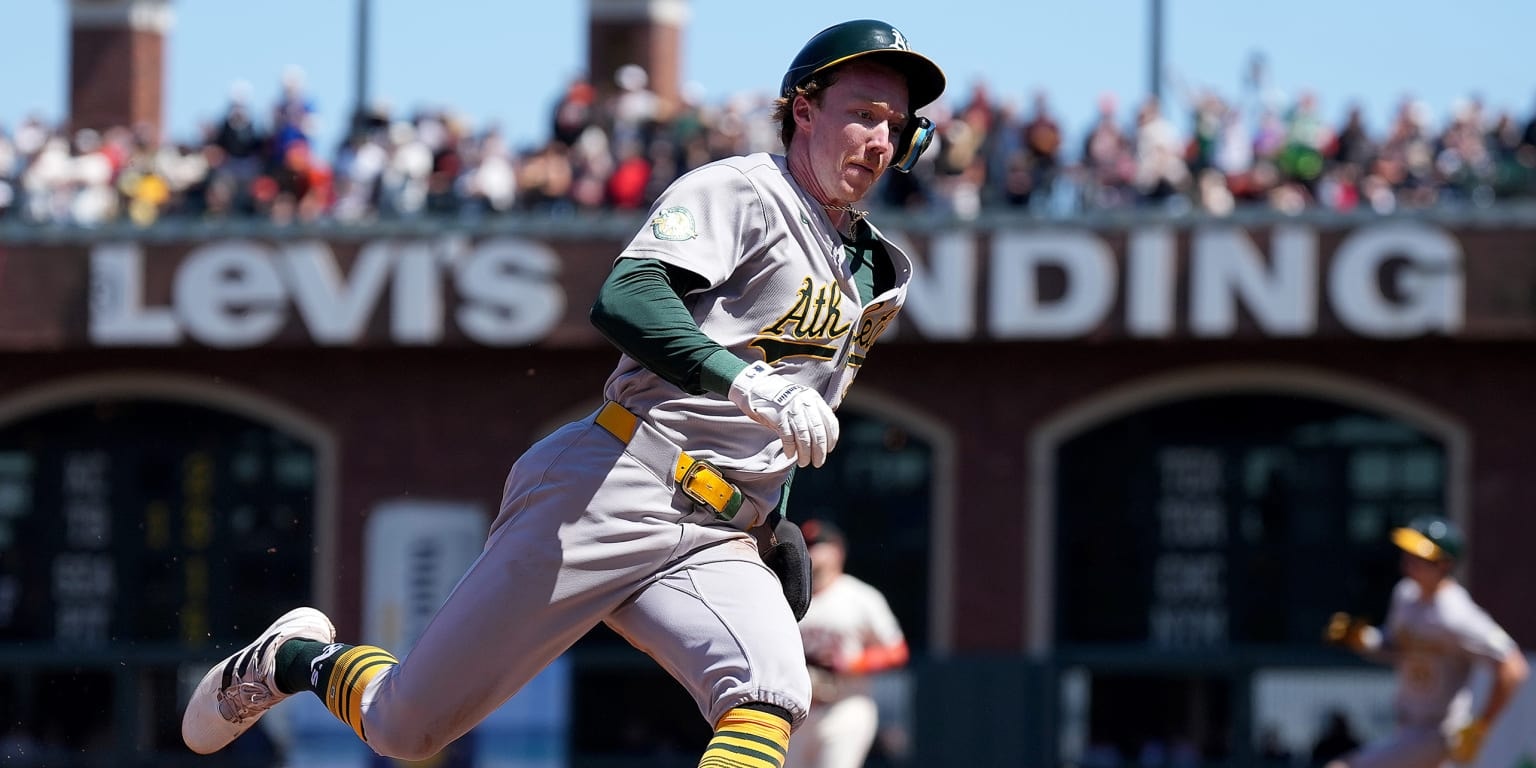
In a stretch that has followed his May 13 debut, Henry Bolte’s burst to first base and top-end running have stayed loud for Oakland.
Henry Bolte’s July impressions are built on an early, repeatable theme: he gets to base with unusual speed, and opposing defenses have to respect the way he moves once the ball is in play. When the Athletics promoted the rookie, the message was visible immediately, and MLB’s account of his second hit from that May 13 debut framed it as a preview of what Oakland has been seeing in his early big league weeks.
That preview came on a 2-2 pitch against St. Louis starter Matthew Liberatore. Bolte hit a ball down the third-base line that reached the bag quickly, traveling 48 feet with an exit velocity of 58.8 mph. MLB also reported the probability of a hit on the batted ball was just 14%, a reminder that the outcome was more about sprint execution than raw contact. Nolan Gorman’s throw pulled Alec Burleson off first, but Bolte was already too far ahead with his first-steps acceleration.
The Athletics have emphasized that speed as a stable part of Bolte’s game, not a one-week novelty. According to MLB, Bolte beat the ball to the bag with a sprint speed of 31.3 feet per second, more than one second faster than what Statcast labels as “elite.” In baseball terms, that gap matters because it compresses reaction time for infielders and shortens the window for throws to become outs, especially on balls hit toward the lines.
After those early moments, Oakland has continued to find Bolte on the bases, and MLB’s summary places his batting results in the same neighborhood. In the 44 games since his promotion, Bolte’s batting average has hovered around.300, with the Athletics viewing the hit tool as the foundation while the power side catches up. The club’s approach, as described by manager Mark Kotsay, is to keep Bolte’s speed intact rather than overcorrect his swing.
Kotsay, speaking to MLB, said “The one thing that doesn’t generally slump is speed,” and added that Bolte has infield hits now and that “power will come” as development continues. MLB also noted the coaching focus has included getting him into his legs to elevate the ball more, while still “not changing much” about Henry. That balance is the central challenge for fast infield starters, because hitters who rely on legs often get asked to swing harder once they are already succeeding at reaching base.
The backstory is also part of the current story. MLB described Bolte’s reputation as a power-and-speed prospect before his promotion, including the way he flashed in the Minors after being selected by Oakland in the second round of the 2022 Draft. The Athletics’ confidence now looks tied to a straightforward idea: if he continues to get on base the way he has, even modest power increases will compound his value as extra-base threats begin to arrive more consistently.
What to watch next is whether Bolte can expand the damage beyond the batted-ball profile that helps him beat it out. Speed can keep him on the field and keep baserunners moving, but the next step is producing more gap and lofted contact at the plate, the kind of power the Athletics expect to “arrive in due time.” If his average holds and his extra-base rate rises, Oakland will have a rookie who is not just exciting on the bases, but also a long-term offensive component.
Why It Matters
- For the Athletics, a speed-focused rookie who reaches base at a strong clip can change game-to-game roster usage, creating pressure on every defensive shift and pickup throw.
- Bolte’s combination of elite sprint speed and a hit tool that has produced an average around.300 gives Oakland a stable catalyst even when power is still developing.
- If Bolte’s power grows as expected, his value could expand from infield-hit production to a fuller on-base-to-extra-base offensive profile, a key ingredient for a competitive build.
- The developmental question now is whether the coaching emphasis on elevating contact can be added without diluting the speed that has driven his early success.
Key Facts
- Henry Bolte’s second hit of his May 13 MLB debut showcased his speed impact against Cardinals starter Matthew Liberatore.
- On a 48-foot batted ball with an exit velocity of 58.8 mph, MLB reported the play had only a 14% chance of becoming a hit, yet Bolte still beat it to first.
- MLB reported Bolte sprinted to the bag at 31.3 feet per second, more than one second faster than Statcast’s “elite” label.
- In the 44 games since his promotion, Bolte’s batting average has hovered around.300.
- Manager Mark Kotsay told MLB that speed “doesn’t generally slump,” and that the power is expected to come later.
- Kotsay and the Athletics described working on getting Bolte into his legs to elevate the ball more, while avoiding major changes to his approach.
- MLB noted Bolte was selected by the Athletics in the second round of the 2022 Draft.