
THE APEX TIMES
Hillsborough County approves its share of Rays’ $2.3 billion stadium plan, with the new ballpark slated near Buccaneers’ home
The Hillsborough County Commission voted to move forward with its $796 million commitment to a mixed-use entertainment district that includes a new 31,000-seat Tampa Bay Rays stadium, replacing the domed Tropicana Field.
Hillsborough County cleared a major milestone in Tampa Bay’s next major sports development, approving its portion of a $2.3 billion stadium project for the Tampa Bay Rays. The Hillsborough County Commission voted 5-2 on Friday to approve a $796 million share tied to a broader mixed-use entertainment district, according to Yahoo Sports.
The planned ballpark is described as a 31,000-seat venue located near Raymond James Stadium, which is the home of the NFL’s Tampa Bay Buccaneers. That proximity, and the shared entertainment district concept, underscores how Tampa Bay officials are thinking about game-day traffic and year-round activity across multiple franchises rather than treating each venue as a standalone facility.
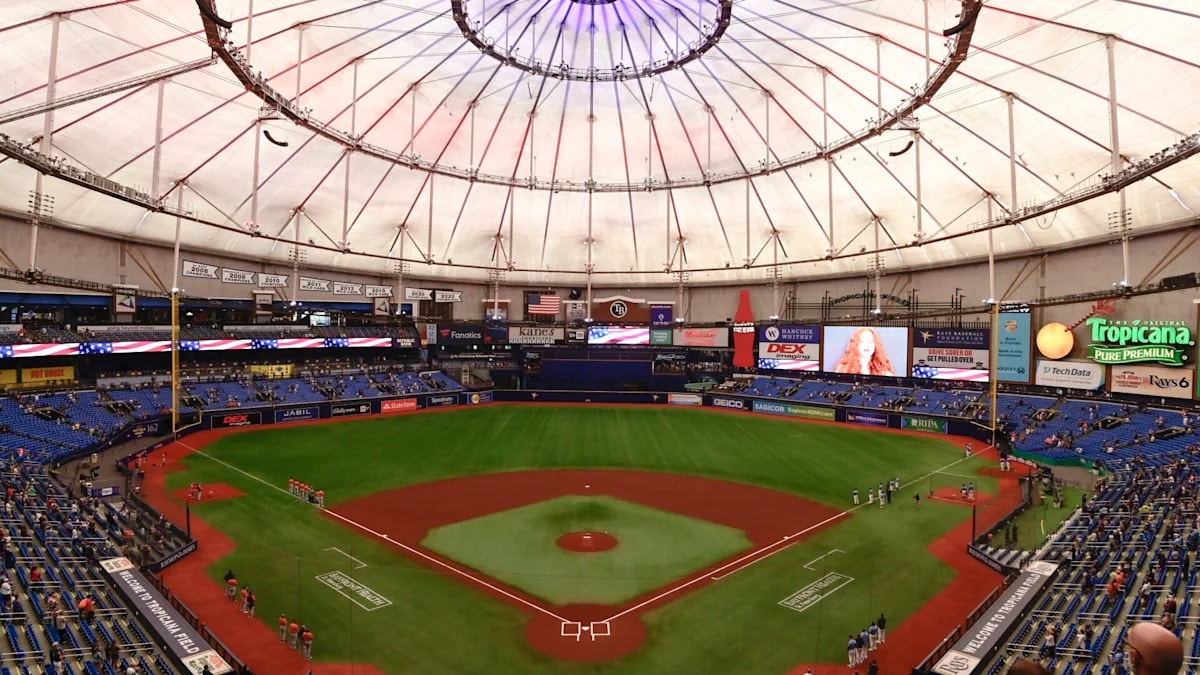
The Rays’ proposed stadium would replace Tropicana Field, the long-standing domed home where the team has played since the Trop opened. As outlined in the report, city officials approved the Rays’ related financing plan a day earlier, setting up county approval as the next hurdle in a multi-step public financing process.
A key feature of the plan is that the stadium sits within a larger mixed-use district, meaning the public financing commitment is not only tied to the field but also to commercial and development components around it. That structure is designed to spread economic activity beyond baseball and create ongoing foot traffic, with sports serving as the anchor draw for the wider redevelopment footprint.
While the vote indicates county alignment on financing, it does not by itself resolve every operational or construction detail that typically follows a public funding commitment. Stadium projects of this scale often require additional approvals, final contracting, and permitting before construction schedules can be locked in, and the total timetable can depend on how quickly those steps move.
For the Buccaneers, the Rays project is not a direct roster or scheduling story, but it changes the broader stadium neighborhood. Coordinating transportation demand, security planning, and event scheduling becomes more complex as more venues and more events concentrate in the same area, particularly on weekends when NFL and other events can overlap.
For Tampa Bay’s baseball future, the county vote moves the Rays one step closer to leaving Tropicana Field and transitioning to a new, purpose-built stadium. The next items to watch are whether county approval triggers additional final project milestones, and how the combined mixed-use plan is shaped to ensure it supports both baseball and the surrounding sports and entertainment calendar.
Why It Matters
- It advances a major sports infrastructure project that would modernize the Rays’ home venue and reshape Tampa Bay’s downtown-to-stadium development pattern.
- The near-adjacency to Raymond James Stadium increases the importance of coordinated traffic, security, and event scheduling across baseball and NFL-related demand.
- A new, purpose-built stadium can significantly alter the Rays’ game-day experience and long-term facility strategy, with implications for franchise planning.
- The mixed-use district approach could shift how often the stadium area hosts events outside of the Rays season, affecting the local sports-and-entertainment calendar.
Sources
Key Facts
- Hillsborough County Commission voted 5-2 to approve the county’s $796 million share of a Rays stadium financing plan.
- The overall stadium project is reported at $2.3 billion and is tied to a mixed-use entertainment district.
- The new Tampa Bay Rays stadium is described as a 31,000-seat facility.
- The planned ballpark is set near Raymond James Stadium, home of the NFL’s Tampa Bay Buccaneers.
- The stadium would replace Tropicana Field.
- City officials approved their part of the financing plan the day before county approval, according to the report.