
THE APEX TIMES
History Month reminder: how ownership stakes in the Celtics once extended to the New York Stock Exchange
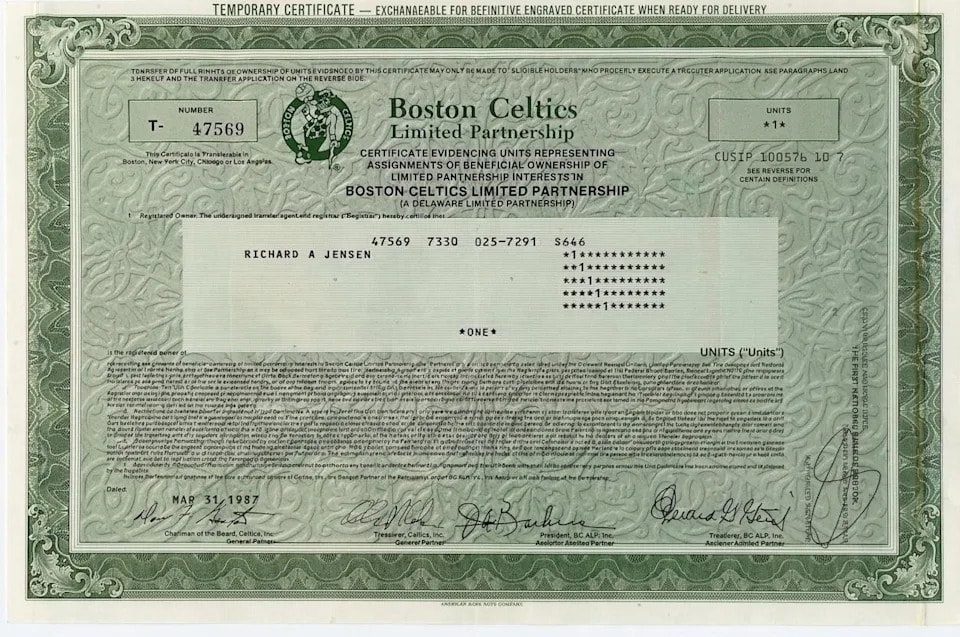
During a stretch that ran from 1986 to 2002, the Boston Celtics were traded on the New York Stock Exchange, a rarity in a league built around privately controlled franchises. It was also the era when Red Auerbach’s influence shaped the organization’s culture, from coaching to the careers of the players who followed him.
Boston’s Celtics have always carried the weight of tradition, but one unusual chapter made that tradition visible even to people who had no direct connection to basketball. From 1986 to 2002, the Celtics were traded on the New York Stock Exchange, meaning an ordinary investor could, at least in theory, own a piece of the team’s financial story, not just its on-court legend.
The timing matters because those same years overlapped with the organizational steadiness associated with Red Auerbach’s tenure. The idea, as described in the Celtics’ History Month reflection, is that the franchise functioned as a template of continuity: first Auerbach coached the team, and then, often, the players he coached later became part of what the organization did, returning to the Celtics in roles that extended Auerbach’s philosophy rather than replacing it.
That continuity showed up in the way the franchise looked and operated. The reflection points to visual markers of stability, including the fact that the uniforms did not noticeably change during the period being discussed and that banner after banner of the same plain type accumulated in the rafters of the old Boston Garden. In other words, the organization did not treat success as something temporary or cyclical. It treated it as something repeatable.
The team’s history also built a kind of continuity in how players were honored. As the account describes it, one by one, player numbers were retired and raised to the lofty position above the most storied court in the National Basketball Association. Those rituals are typically understood as sports pageantry, but they also serve as institutional memory, reinforcing that the Celtics expected excellence to recur, and that the people who delivered it would be woven into the club’s identity.
The Celtics’ stock-exchange period is an odd detail to pair with basketball’s normal cadence of team-building, but it helps explain why the franchise feels different in historical storytelling. Basketball ownership is usually presented as an internal, private matter between franchise leaders and the communities around them. Here, the Celtics’ story included a financial thread that reached beyond the usual boundaries, turning the franchise into something that could be tracked like a public asset.
Still, this is where caution is warranted. The History Month piece frames the “anyone could own a piece of the Celtics” concept through the lens of the team’s public trading window and the organizational stability associated with Auerbach’s years. What it does not do, at least in the portion available here, is lay out specifics such as the exchange mechanics for shares, who held what at different moments, or how individual investors translated that ownership into influence. Readers should treat the broader takeaway as cultural and structural, not as a guide to how ownership worked day to day.
Going forward, the useful angle is to see how the Celtics’ identity has been constructed across multiple dimensions at once. There is the on-court tradition that shows up in banners and retired numbers. There is the organizational continuity linked to Auerbach and the ripple effect of players becoming part of the club’s future. And there is the rare financial detail of being publicly traded for a defined period, a reminder that sports history is sometimes also business history.
Why It Matters
- It underscores how franchise identity in the NBA is built not only through basketball talent, but through institutional continuity and long-running rituals of recognition.
- The public-trading period adds a rare business-history layer to Celtics lore, showing that the team’s footprint once extended into mainstream financial markets.
- The Auerbach-linked narrative suggests why the Celtics’ success is remembered as repeatable rather than isolated, reinforcing a coaching and culture legacy.
Key Facts
- The Boston Celtics were traded on the New York Stock Exchange from 1986 to 2002.
- A Celtics History Month reflection describes Red Auerbach’s tenure as an era of strong organizational stability and tradition.
- That reflection portrays a link between Auerbach coaching the Celtics and the idea that players he coached later became part of the Celtics’ coaching or basketball lineage.
- The account describes the uniforms as not changing during the period discussed and highlights the accumulation of similarly styled banners in the rafters of the Boston Garden.
- The reflection also describes how Celtics player numbers were retired and raised above the court as part of the franchise’s enduring honors.