
THE APEX TIMES
Hot Read: The Eagles’ “bubble” argument returns, with pressure mounting around Philadelphia’s ceiling
A Yahoo Sports column frames the Eagles’ season as a slow-burn failure mode, warning that the warning signs are there before the collapse becomes obvious.
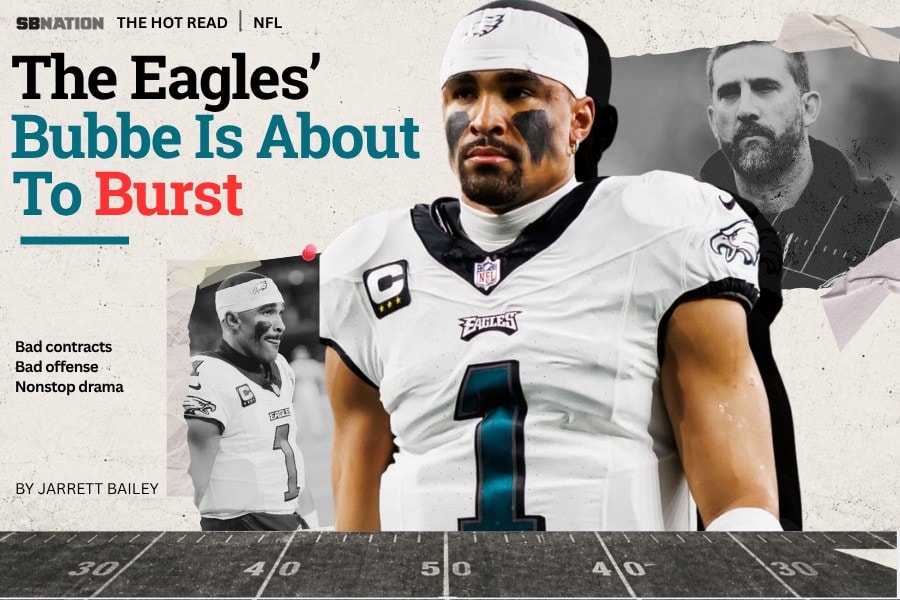
Philadelphia is again the subject of a sharp, pessimistic NFL commentary piece, with Yahoo Sports arguing that the Eagles’ “bubble is about to burst.” The column is not reporting a single new incident, transaction, or injury. Instead, it is built around a familiar sports idea: when a team is headed toward a major breakdown, the signs tend to show up well before the final, undeniable moment.
The writer draws a parallel to the 2008 financial crisis, describing how reckless lending created a structure that looked stable until it did not. The analogy is intentionally provocative, but the underlying sports translation is straightforward. In this view, Philadelphia’s current profile is less about isolated moments and more about systemic weaknesses that have not been resolved in a way that inspires long-term confidence.
In the NFL, that type of argument usually centers on a few broad categories: roster composition, the balance between short-term fixes and long-term stability, and whether the team is building a sustainable pathway to wins rather than chasing outcomes that can vanish quickly. When media narratives shift toward “bubble” language, it typically means the perceived margin for error is shrinking, and every late-game sequence, third-down stand, or turnover becomes heavier than usual.
The most important detail about this specific story is that it is a column, not a league memo and not a beat report. It reflects an outside assessment of the Eagles’ direction, not confirmed front-office decisions or verified internal issues. That distinction matters for readers, because commentary can be revealing about pressure and expectations without being a source of concrete facts about what is happening inside the building.
Still, the choice of framing indicates something about the Eagles’ stakes. Philadelphia is a franchise that carries a reputation for high standards, and in-season expectations often rise quickly when results do not match the brand. Even without citing a specific injury or roster move, the argument implies that the Eagles have reached a point where optimism has to be earned, not assumed, and where skepticism can spread faster than the team can quiet it.
From a competitive standpoint, “bubble burst” narratives are most dangerous when they start driving the storyline of the season. Opponents, fans, and even broadcasters can begin looking for a pattern rather than evaluating each game on its own details. For Philadelphia, the practical challenge is to keep execution from becoming secondary to managing the emotional weight of a collapsing narrative.
What to watch next is not just whether the Eagles win or lose, but how the team responds to criticism that paints the season as inevitable decline. If the Eagles can generate clean problem-solving under stress, that would directly counter the “systemic failure” premise. If mistakes compound and the same flaws reappear, the column’s language will likely gain reinforcement, because sports history remembers the teams that corrected early and the teams that waited until the damage was already done.
Why It Matters
- Media narratives can intensify scrutiny, shaping how every late-game moment is interpreted for the rest of the season.
- If “bubble” language becomes dominant, opponents can benefit from believing a pattern exists and timing pressure accordingly.
- For Philadelphia, the challenge is to answer criticism with execution rather than defending a storyline.
Key Facts
- Yahoo Sports published an opinion column titled “The Hot Read: The Eagles’ bubble is about to burst” on October 13, 2026.
- The piece argues that the Eagles are headed toward a major breakdown and that warning signs appear before the collapse is visible.
- The column uses a 2008 financial crisis analogy to explain its thesis about instability becoming apparent later than people expect.
- The article is commentary and does not, by itself, establish specific verified changes such as transactions, disciplinary actions, or injuries.