
THE APEX TIMES
Hot-seat heat turns to Florida State’s Mike Norvell, with UNC and Wisconsin also under scrutiny entering 2026
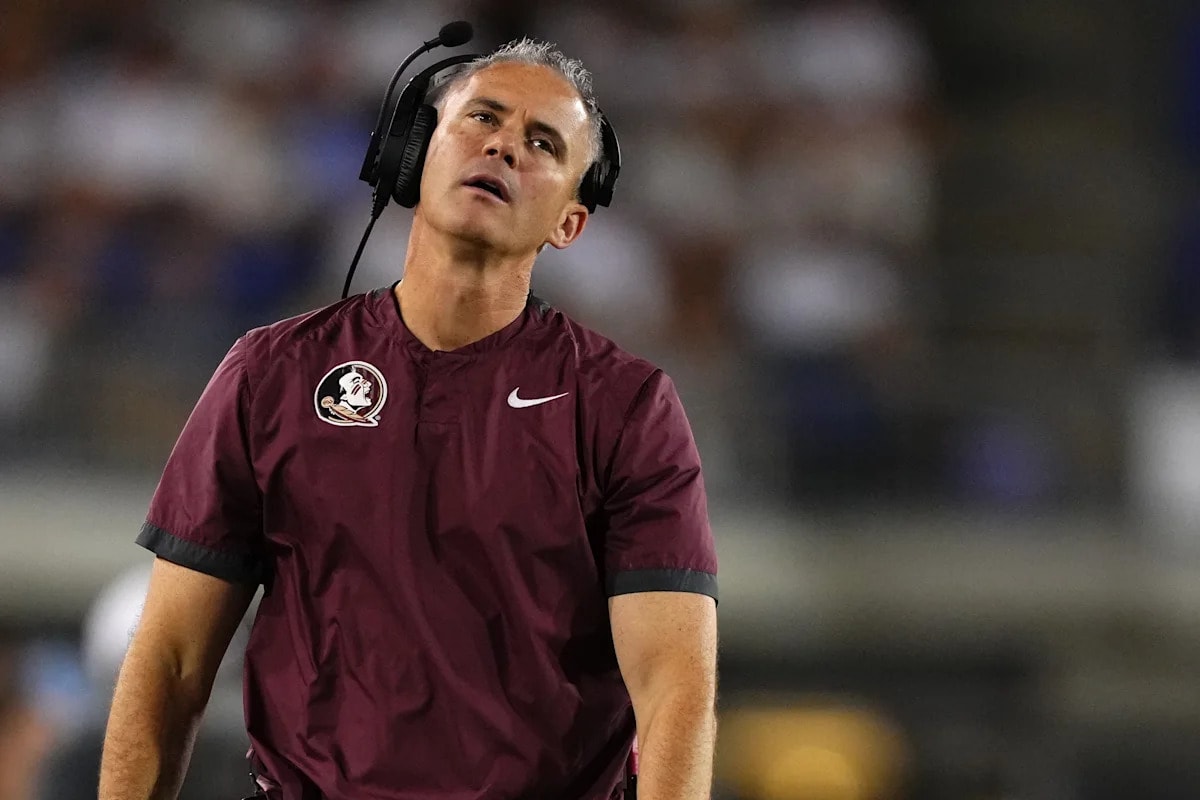
A new season brings renewed pressure to coaches whose recent results, program fit, and expectations collide, with Florida State’s Mike Norvell drawing the most attention after a sharp turn from 2023 success.
Entering the 2026 college football season, the coaching carousel is no longer just a preseason conversation, it is a week-to-week stress test. A Yahoo Sports feature framed the biggest hot seats across the sport, highlighting Florida State’s Mike Norvell as the most exposed figure of the group, alongside Bill Belichick at North Carolina and Luke Fickell at Wisconsin.
For Norvell, the pressure is rooted in contrast. Florida State produced an unbeaten regular season in 2023, setting a high internal benchmark for sustained relevance. Since then, the team has gone 7-18, turning what looked like momentum into a steep drop in results. That kind of swing matters in a sport where recruiting cycles and roster continuity are built around trajectory, not potential.
The same premise applies to North Carolina and Bill Belichick, though the framing is less about a specific win-loss line in the feature and more about the overall direction. Yahoo’s piece characterized Belichick’s start at UNC as a stretch in which “nothing has gone write,” placing the program’s expectations and the coach’s reputation into direct conflict. In plain terms, a coach with Belichick’s résumé is not hired to blend in, and the early returns are judged as much by program identity as by the scoreboard.
Wisconsin and Luke Fickell were treated as a separate flavor of risk, described as being on “thin ice.” Fickell’s situation underscores another familiar college football reality: even strong coaching hires can become controversial if the program falls short of what fans, administration, and conference peers expect in the near term. The Wisconsin mention is notable because it suggests that standards across major programs remain high, and that the margin for patience shrinks when results do not match the preseason narrative.
These three cases also share a structural theme. Hot-seat conversations do not start in August. They build from repeated indicates across recruiting, development, and execution, and they intensify once a program’s baseline expectation is established. Florida State’s 2023 success created a reference point that now works against Norvell, while UNC and Wisconsin are being evaluated on whether their coaching changes can translate quickly into consistent on-field performance.
There is also a recruiting and roster-building layer to the pressure. When a team is in the middle of a results slide, it can affect how quickly assistant coaches retain top targets, how often transfers arrive to accelerate a rebuild, and how confidently players commit to long-term development. The cost of being late is high because college football rosters reset continuously, meaning the “next year” that coaches talk about can arrive before the foundation is fully visible.
As 2026 approaches, the watch points are straightforward: can Florida State stabilize results after a difficult stretch that totals 7-18 since the unbeaten 2023 regular season, can North Carolina show a clearer competitive identity under Belichick, and can Wisconsin avoid further downward momentum under Fickell. The season does not need perfect wins to change the temperature, but it does need forward motion, because in modern college football the gap between “building” and “falling behind” can narrow quickly.
Why It Matters
- Hot-seat pressure can shape recruiting momentum and roster decisions, because program credibility affects both high school recruiting and transfer interest.
- A quick shift in on-field identity can lower the temperature, but repeated underperformance tends to harden scrutiny within athletic departments.
- When multiple blue-chip programs are evaluating coaching direction at the same time, it increases competition for talent and accelerates the timeline for improvement.
Sources
Key Facts
- Yahoo Sports highlighted three coaches as the most discussed hot-seat figures entering the 2026 college football season: Mike Norvell (Florida State), Bill Belichick (North Carolina), and Luke Fickell (Wisconsin).
- The piece described Norvell’s Florida State era as a steep contrast after an unbeaten regular season in 2023.
- Florida State has gone 7-18 since that unbeaten 2023 regular season, according to the Yahoo Sports summary.
- The feature characterized Belichick’s early period at North Carolina as not going as planned, using language suggesting poor overall outcomes.
- Wisconsin’s situation under Luke Fickell was framed as being on “thin ice.”